O que é Escuta Ativa e Como Dominá-la
Descubra o que é escuta ativa e aprenda as habilidades essenciais e técnicas práticas para transformar seus relacionamentos profissionais e pessoais.
Kate, Praveen
August 20, 2025
Vamos ser honestos: todos nós já estivemos em uma conversa onde ouvimos cada palavra, mas retivemos quase nada. Acontece. Essa é a diferença crucial entre ouvir passivamente e escutar ativamente.
Ouvir é apenas um processo biológico. É o zumbido baixo do seu ar condicionado ou o trânsito do lado de fora da sua janela — acontece automaticamente, sem nenhum esforço real da sua parte.
Escutar ativamente, por outro lado, é uma habilidade que você precisa praticar. Pense nisso como um músico afinando cuidadosamente sua guitarra para atingir a nota perfeita. Você está intencionalmente focando toda a sua atenção para compreender, reter e responder de forma ponderada ao que alguém está realmente dizendo.
Essa escolha consciente é o que transforma um monólogo unilateral em uma troca real, de mão dupla.
"A maioria de nós pensa que somos bons ouvintes. Nós acenamos. Deixamos as pessoas falarem. Esperamos até que elas terminem… e então fazemos o nosso ponto. Mas na maior parte do tempo, não estamos realmente ouvindo — estamos apenas recarregando."
Simplesmente deixar as palavras passarem por você significa que a informação se vai em minutos. Mas quando você realmente escuta, você está construindo uma ponte de compreensão e respeito. É a diferença entre apenas reconhecer a presença de alguém e genuinamente valorizar sua perspectiva.
Escuta Ativa é uma Habilidade que Pode Ser Aprendida
A escuta ativa não é um talento inato — é uma habilidade desenvolvida através de intenção e prática. Qualquer pessoa pode melhorar sua capacidade de ouvir focando na compreensão, memória e respostas ponderadas em conversas cotidianas.
Então, como você faz a transição de ouvir para escutar? É mais do que apenas ficar quieto. Envolve alguns comportamentos-chave:
- Prestar atenção total: Isso significa guardar o telefone, silenciar seu monólogo interno e dar ao orador seu foco ininterrupto.
- Mostrar que você está engajado: Sinais não verbais simples como acenar com a cabeça, manter contato visual e inclinar-se ligeiramente fazem uma grande diferença.
- Fornecer feedback: Parafraseie ou reflita sobre o que você ouviu para ter certeza de que entendeu corretamente. Um simples "Então, se eu entendi corretamente..." pode fazer maravilhas.
Escolher escutar ativamente é uma pequena mudança que pode mudar fundamentalmente suas interações, tanto no trabalho quanto em sua vida pessoal.
Audição Passiva vs. Escuta Ativa Resumidamente
Para tornar a diferença cristalina, vamos detalhar como essas duas abordagens se comparam lado a lado. Você verá rapidamente que uma é uma função padrão e automática, enquanto a outra é uma habilidade consciente que constrói relacionamentos.
| Atributo | Audição Passiva | Escuta Ativa |
|---|---|---|
| Esforço | Automático e sem esforço | Intencional e focado |
| Foco | Dividido ou em outras tarefas | Totalmente no orador |
| Objetivo | Simplesmente deixar o som entrar | Compreender totalmente a mensagem |
| Linguagem Corporal | Distraída, vazia ou desengajada | Atenta, acenando com a cabeça, contato visual |
| Resposta | Atrasada, irrelevante ou nenhuma | Pensada, oportuna e relevante |
| Resultado | Mal-entendidos, informações perdidas | Relacionamentos mais fortes, clareza |
Em última análise, a tabela mostra que, enquanto ouvir é algo que simplesmente acontece com você, escutar é algo que você faz pelos outros. É uma escolha que comunica respeito e promove uma conexão genuína.
Os Componentes Essenciais da Escuta Genuína
A escuta ativa não é apenas uma coisa; é uma mistura poderosa de habilidades distintas que trabalham em conjunto. Gosto de pensar nisso como um banquinho de três pernas — se uma perna estiver bamba, tudo desmorona. Para realmente entender o que é escuta ativa, você precisa dominar esses três pilares que transformam o simples ouvir em engajamento real e genuíno.
Esses elementos se complementam, criando uma estrutura sólida para uma comunicação que realmente funciona.
Compreendendo a Mensagem Completa
Primeiro, temos a compreensão. Isso é muito mais do que apenas ouvir as palavras que alguém está dizendo. Compreensão verdadeira significa que você está ativamente juntando a mensagem em todos os níveis — prestando atenção ao tom, à linguagem corporal e à corrente emocional que flui sob suas declarações.
É a diferença entre ouvir um colega dizer: "Estou bem" e, na verdade, ver a leve hesitação e os olhos baixos que lhe dizem que ele está longe de estar bem. A compreensão exige sua atenção total para obter a imagem completa, não apenas um instantâneo verbal.
Retendo Informações Chave
Uma vez que você captou a mensagem, o próximo passo é a retenção. Esta é a capacidade do seu cérebro de realmente armazenar e recordar o que foi compartilhado. Sem isso, mesmo a escuta mais focada é temporária. É bastante chocante, mas a pessoa média lembra apenas cerca de 50% de uma conversa logo após ela acontecer. Espere 48 horas, e esse número cai para menos de 25%. Você pode ler mais sobre essas estatísticas de escuta para ver quão rápido esquecemos sem um esforço consciente.
Essa rápida perda de informação é exatamente por que a retenção é tão crucial. Trata-se de criar ganchos mentais para as coisas importantes, garantindo que a conversa deixe uma marca duradoura em vez de simplesmente desaparecer.
A imagem abaixo detalha a diferença fundamental entre apenas ouvir e realmente escutar — que é onde a retenção começa.
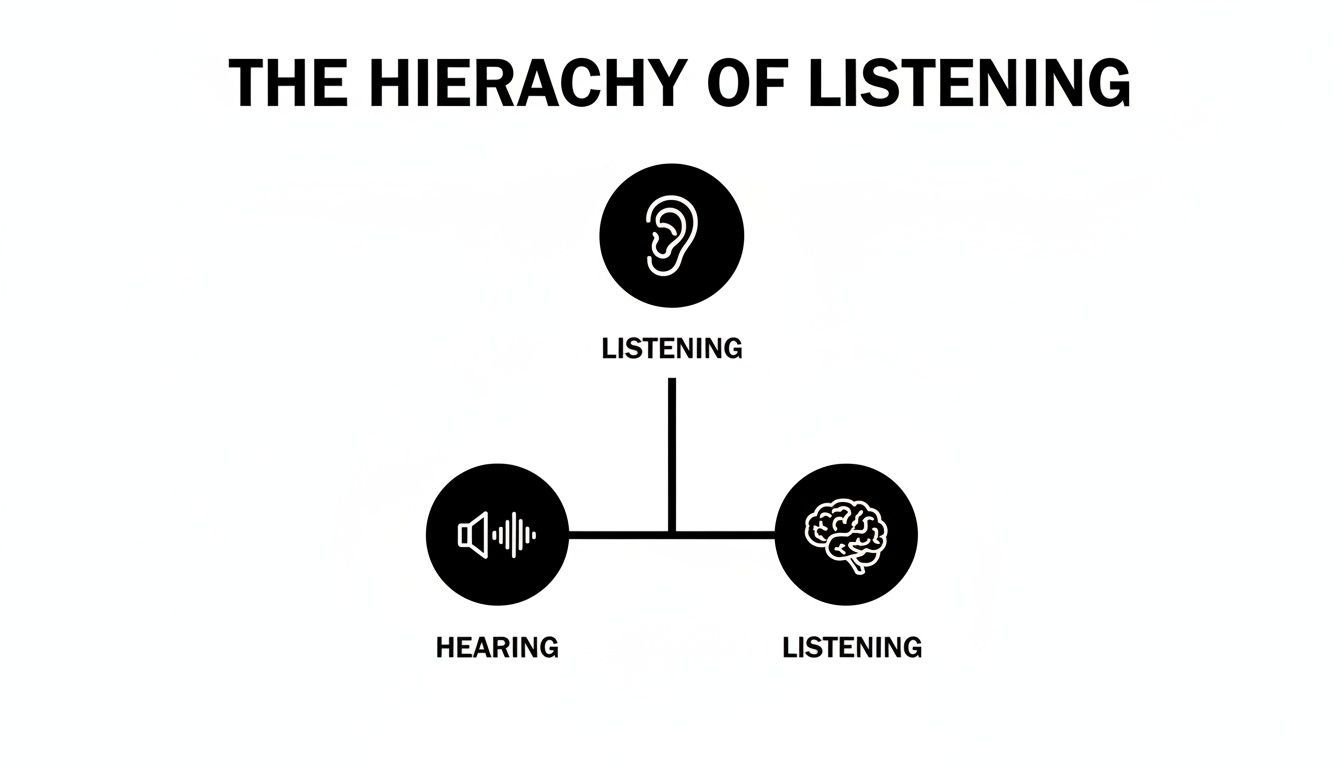
Como você pode ver, ouvir é passivo. Simplesmente acontece. Escutar, por outro lado, é um processo ativo que engaja totalmente seu cérebro.
O Trabalho Moderno Exige Escuta Ativa Mais do Que Nunca
Em locais de trabalho digitais acelerados, ouvir tornou-se mais difícil devido a interrupções constantes. À medida que a colaboração se torna mais remota e complexa, a escuta ativa não é mais opcional — é essencial para clareza e confiança.
Respondendo com Intenção
Finalmente, chegamos ao terceiro componente: responder. Uma resposta ponderada é a prova definitiva de que você estava ouvindo ativamente. Isso não se trata apenas de esperar sua vez de falar ou de formular mentalmente uma réplica enquanto a outra pessoa ainda está falando.
Uma resposta eficaz mostra que você compreendeu e reteve a informação. Ela valida o orador e confirma que sua mensagem foi verdadeiramente recebida.
Isso pode se manifestar de algumas maneiras diferentes:
- Parafraseando: "Ok, então, se eu entendi corretamente, o principal problema é..."
- Fazendo perguntas de esclarecimento: "Você pode me contar um pouco mais sobre o que aconteceu depois disso?"
- Reconhecendo sentimentos: "Nossa, isso parece ter sido uma experiência incrivelmente frustrante."
Quando esses três componentes — compreensão, retenção e resposta — estão funcionando juntos de forma harmoniosa, você cria um ambiente construído sobre confiança e entendimento real e mútuo.
O que a Escuta Ativa Melhora na Vida Diária?
Compreensão Clara
A escuta ativa reduz mal-entendidos ao garantir que as mensagens sejam totalmente processadas. Isso leva a menos suposições, melhor alinhamento e conversas mais produtivas.
Relacionamentos Mais Fortes
As pessoas se sentem valorizadas quando são verdadeiramente ouvidas. A escuta ativa constrói segurança emocional, respeito e confiança a longo prazo em relacionamentos pessoais e profissionais.
Melhor Tomada de Decisão
Ao ouvir atentamente, você obtém acesso a informações mais completas. Isso permite que você tome decisões informadas em vez de reagir com base em um entendimento parcial.
Crescimento Pessoal e Profissional
Bons ouvintes se destacam como líderes e solucionadores de problemas. Com o tempo, essa habilidade aumenta a confiança, a influência e o avanço na carreira.
Por Que a Escuta Ativa é o Seu Superpoder Profissional
Então, o que a escuta ativa realmente faz por você no mundo real? Em um ambiente profissional, não é apenas uma habilidade interpessoal — é uma vantagem estratégica. É a ferramenta que constrói pontes, impede conflitos antes mesmo de começarem e cria uma cultura onde as pessoas genuinamente querem colaborar.
Quando os membros da equipe se sentem ouvidos, eles se tornam mais engajados e inovadores. Mal-entendidos desaparecem, a produtividade aumenta e os projetos simplesmente fluem melhor porque todos estão na mesma página. Isso não é sobre ser legal; é sobre criar um ambiente onde um ótimo trabalho possa realmente acontecer.
A escuta ativa também ajuda os líderes a melhorar o desempenho da equipe construindo segurança psicológica. Quando as pessoas se sentem seguras o suficiente para expressar ideias ou preocupações sem medo de serem ignoradas, toda a organização melhora.
Construindo Confiança e Influência
A confiança é a base de qualquer relacionamento profissional sólido, e você a constrói uma conversa de cada vez. A escuta ativa é a maneira mais rápida de conquistá-la. Quando você dá a alguém sua atenção total, você está enviando um sinal claro: "Eu valorizo o que você tem a dizer." Esse simples ato constrói rapport instantâneo e fortalece sua influência.
Isso não é apenas um pressentimento; há dados para comprovar. Pesquisas mostram uma lacuna enorme nos índices de confiança diretamente ligada à qualidade da escuta de um líder. Líderes avaliados como maus ouvintes mal alcançaram o 15º percentil em confiabilidade. Os ótimos ouvintes? Eles dispararam para o 86º percentil.
A conclusão é simples: tornar-se um ouvinte excepcional é um dos caminhos mais diretos para se tornar um líder confiável e respeitado.
Aprimorando Sua Trajetória de Carreira
Em última análise, dominar a escuta ativa é um investimento direto no crescimento da sua própria carreira. É uma parte fundamental das poderosas habilidades de comunicação executiva que fazem você se destacar da multidão. Ajuda você a negociar melhores acordos, liderar equipes de forma mais eficaz e construir uma rede profissional que realmente significa algo.
Os benefícios se acumulam ao longo do tempo:
- Resolução de Conflitos: Você pode cortar o ruído para encontrar a raiz de uma discordância e guiar as pessoas em direção a um terreno comum.
- Relacionamentos com Clientes: Você entenderá o que seus clientes realmente precisam, o que leva a clientes mais felizes e melhor retenção.
- Potencial de Liderança: As pessoas são naturalmente atraídas por líderes que ouvem. Quando você faz os outros se sentirem vistos e valorizados, eles querem segui-lo.
Ao tornar essas habilidades uma prática consistente, você se posiciona como o solucionador de problemas de referência e um colega respeitado, abrindo portas para sua próxima grande oportunidade.
Superando as Barreiras para a Escuta Eficaz
 Se a escuta ativa é um superpoder tão grande, por que ela é tão rara? A resposta honesta é que nosso mundo moderno é praticamente construído para sabotá-la. Estamos lutando uma batalha constante contra obstáculos externos e internos que tornam o foco genuíno um desafio enorme.
O culpado mais óbvio é o fluxo interminável de distrações digitais. Notificações de e-mails, mensagens do Slack e aplicativos de mídia social nos mantêm em um estado de "atenção parcial contínua". Estamos sempre um pouco distraídos.
A Distração é o Maior Inimigo da Escuta
Fazer várias coisas ao mesmo tempo durante as conversas reduz severamente a compreensão e a memória. Sem foco intencional, informações importantes são perdidas, relacionamentos enfraquecem e mal-entendidos aumentam.
Pesquisas comprovam isso — um estudo descobriu que 64% dos profissionais acreditam que ouvir ficou mais difícil no local de trabalho digital, e um impressionante 80% admitem fazer multitarefas durante chamadas em conferência. Você pode aprofundar essas estatísticas sobre escuta no local de trabalho aqui.
Domando seu Crítico Interior
Mas além do ruído externo, nossas próprias barreiras internas podem ser ainda mais difíceis de superar. Estes são os hábitos mentais que constantemente desviam nossa atenção do orador e de volta para nós mesmos.
A maior barreira para a escuta ativa é frequentemente nosso próprio monólogo interno — a voz que está ocupada preparando uma resposta, julgando o orador ou se distraindo com um pensamento aleatório.
Esses bloqueios internos aparecem de algumas maneiras comuns:
- Formulando uma refutação: Em vez de ouvir para entender, ouvimos apenas o suficiente para descobrir o que vamos dizer em seguida.
- Gatilhos emocionais: Uma certa palavra ou tópico atinge um nervo, e nós simplesmente nos fechamos. Nossas emoções tomam conta e paramos de processar o que está sendo dito.
- Vieses pessoais: Todos nós temos ideias preconcebidas que podem colorir o que ouvimos, fazendo com que tiremos conclusões precipitadas ou façamos suposições.
Superar essas barreiras requer um esforço consciente para silenciar sua mente. Um primeiro passo simples e prático é desativar todas as suas notificações antes de uma conversa importante.
Recursos que Removem Barreiras de Escuta
IA de última geração
Alimentado pelo Whisper da OpenAI para precisão líder na indústria. Suporte para vocabulários personalizados, arquivos de até 10 horas e resultados ultra rápidos.

Importar de múltiplas fontes
Importe arquivos de áudio e vídeo de várias fontes, incluindo upload direto, Google Drive, Dropbox, URLs, Zoom e mais.
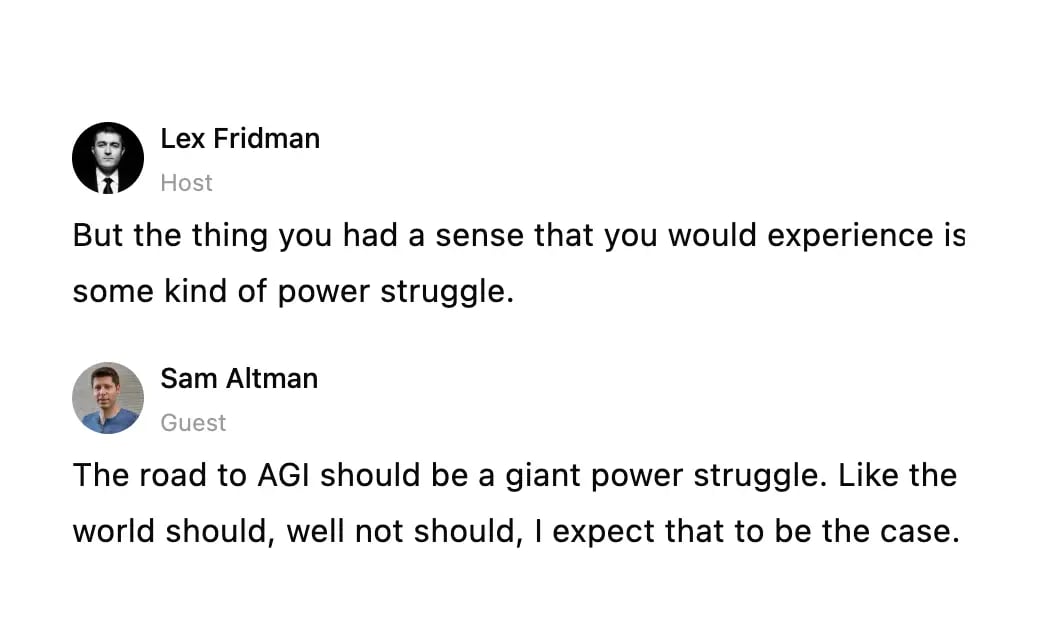
Detecção de falantes
Identifique automaticamente diferentes falantes nas suas gravações e rotule-os com seus nomes.
Outra ótima estratégia é descarregar a tarefa de lembrar de tudo. Usar um anotador de IA para Zoom pode capturar todos os pontos-chave para você, liberando-o para se concentrar totalmente na pessoa que está falando. Quando você para de se preocupar em perder detalhes, pode finalmente dar a eles sua atenção total.
Técnicas Práticas Que Você Pode Usar Hoje
 Conhecer a teoria é uma coisa, mas colocar a escuta ativa em prática é onde a mágica acontece. Aqui estão alguns métodos super simples que você pode começar a usar em sua próxima conversa.
Essas técnicas são projetadas para mostrar ao falante que você está engajado e totalmente presente.
Parafraseando para Confirmar o Entendimento
Uma das melhores maneiras de provar que você está ouvindo é resumir o que acabou de ouvir de volta para a outra pessoa com suas próprias palavras. O objetivo não é repetir como um papagaio, mas sim processar a mensagem e confirmar que você a entendeu corretamente.
Comece com frases simples e abertas para garantir que vocês estão na mesma página:
- "Então, o que estou ouvindo é que o prazo do projeto é a verdadeira fonte de estresse agora. Correto?"
- "Deixe-me ver se entendi. Você sente que precisamos de mais recursos antes de podermos passar para a próxima fase?"
Este pequeno passo pode evitar grandes mal-entendidos e faz o falante se sentir ouvido. Também é incrivelmente útil após uma longa discussão para resumir uma reunião, garantindo que todos saiam com os mesmos pontos-chave.
Fazendo Perguntas Poderosas e Abertas
Perguntas fechadas — aquelas que podem ser respondidas com um simples "sim" ou "não" — são assassinas de conversas. Perguntas abertas, por outro lado, são convites para o falante elaborar e compartilhar mais detalhes.
Em vez de perguntar: "Você terminou o relatório?", tente isto: "Como você achou o processo de elaboração desse relatório?"
Essa mudança de abordagem sinaliza curiosidade genuína. Você não está mais apenas atrás dos fatos; você quer entender a perspectiva deles. É um divisor de águas para construir uma troca real.
Refletindo Sentimentos para Mostrar Empatia
Sejamos honestos, às vezes a parte mais importante de uma conversa não são as palavras, mas o sentimento por trás delas. Reconhecer essas emoções é como você constrói uma conexão real. Você não precisa concordar com o sentimento, apenas mostre que o vê.
Tente usar frases que nomeiem a emoção que você está captando:
- "Parece que você se sentiu muito frustrado com toda essa situação."
- "Posso ver por que você ficaria desapontado com esse resultado."
Isso mostra que você está ouvindo em um nível muito mais profundo. Isso constrói confiança e faz as pessoas se sentirem seguras o suficiente para serem honestas.
A Escuta Cria Segurança Psicológica
Quando as pessoas se sentem ouvidas, elas são mais abertas e honestas. A escuta ativa incentiva a confiança, a abertura emocional e a colaboração, especialmente durante conversas difíceis ou sensíveis.
Seu Caminho para se Tornar um Comunicador Melhor
Dominar a escuta ativa é uma jornada, não um destino. É uma habilidade que você constrói intencionalmente, uma conversa de cada vez. Toda a prática realmente se baseia em três pilares: compreender verdadeiramente a mensagem, reter o que foi dito e responder com cuidado.
Dominar esses componentes ajuda você a construir confiança, evitar mal-entendidos e fortalecer genuinamente todos os seus relacionamentos. Isso não é apenas uma "habilidade interpessoal" – é essencial para tudo, desde a conexão pessoal até o sucesso profissional. Ouvir melhor, por exemplo, é a base para tirar atas em reuniões que realmente refletem o que foi decidido.
O ponto mais crucial é que pequenos esforços consistentes são o que fazem a diferença. Você não precisa ser perfeito da noite para o dia.
Seu caminho para se tornar um comunicador melhor levará naturalmente a relacionamentos mais fortes. Para quem procura explorar isso mais a fundo, há um guia gentil sobre como se comunicar melhor em relacionamentos.
Para começar, escolha apenas uma técnica deste guia. Experimente esta semana. Veja o que acontece.
Perguntas Frequentes sobre Escuta Ativa
Mesmo depois de você pegar o jeito do básico, as conversas do mundo real podem apresentar alguns desafios. Vamos abordar algumas das perguntas mais comuns que as pessoas têm ao colocar a escuta ativa em prática.
Qual é a Diferença Entre Escuta Ativa e Empática?
Ótima pergunta. Pense na escuta ativa como a base essencial – trata-se de garantir que você ouça e processe completamente o que a outra pessoa está dizendo. Você está focado nos fatos, nos detalhes e na mensagem principal.
A escuta empática é o próximo nível. Vai além de apenas entender as palavras e visa se conectar com os sentimentos do falante. Você não está apenas registrando que eles se sentem frustrados; você está tentando genuinamente entender por que eles se sentem assim do ponto de vista deles.
Posso Realmente Fazer Isso por Texto ou E-mail?
Você absolutamente pode, mas exige um esforço um pouco mais deliberado. Como você não pode depender do tom de voz ou da linguagem corporal, suas palavras precisam fazer todo o trabalho pesado para mostrar que você está engajado.
O truque é ser extra claro. Tente resumir o que eles disseram de volta para eles ("Então, se entendi bem, os principais problemas são X e Y?") e faça perguntas esclarecedoras antes de apresentar seus próprios pensamentos. Isso mostra que você dedicou tempo para absorver a mensagem deles em vez de apenas lê-la rapidamente.
Como Faço Escuta Ativa Quando Discordo Completamente?
É aqui que a escuta ativa realmente mostra seu poder. A chave é separar compreensão de concordância. Você pode mostrar a alguém que respeita e entende a perspectiva dele sem desistir da sua.
Comece com frases como: "Entendo por que você se sente assim" ou "Ajude-me a entender seu raciocínio sobre este ponto". Seu primeiro trabalho é compreender totalmente de onde eles vêm. Uma discordância produtiva só pode acontecer depois que a outra pessoa se sentir genuinamente ouvida.
Na Transcript.LOL, criamos ferramentas que permitem que você se concentre na conversa, não em fazer anotações.
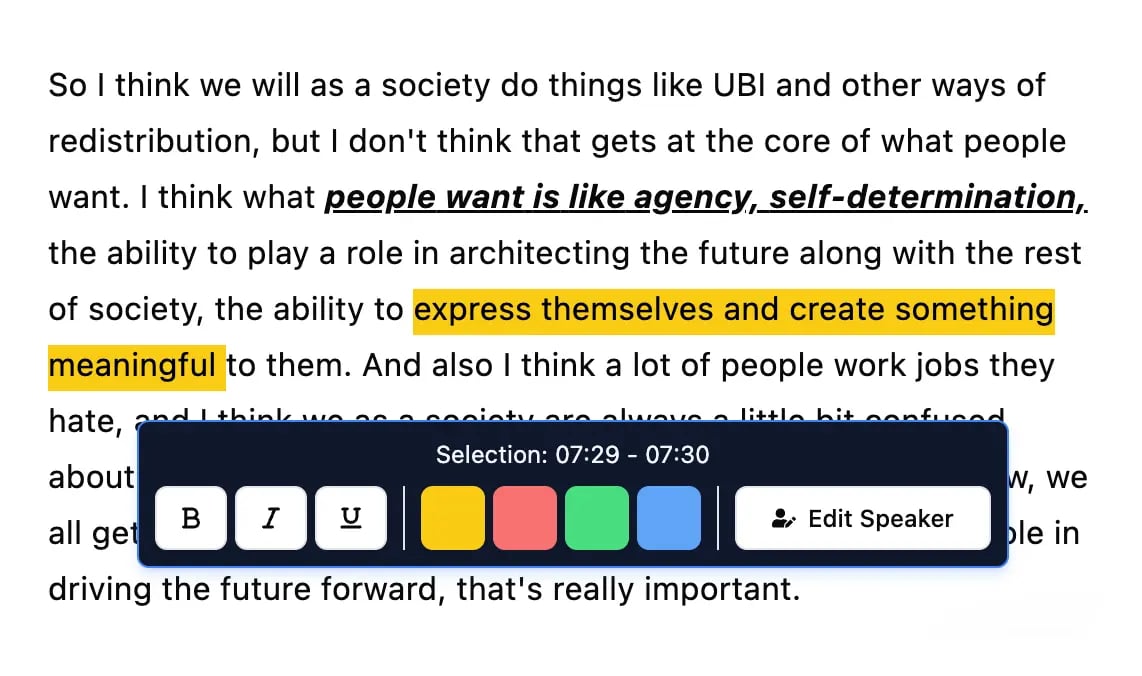
Ferramentas de edição
Edite transcrições com ferramentas poderosas incluindo buscar e substituir, atribuição de falantes, formatos de texto rico e destaque.
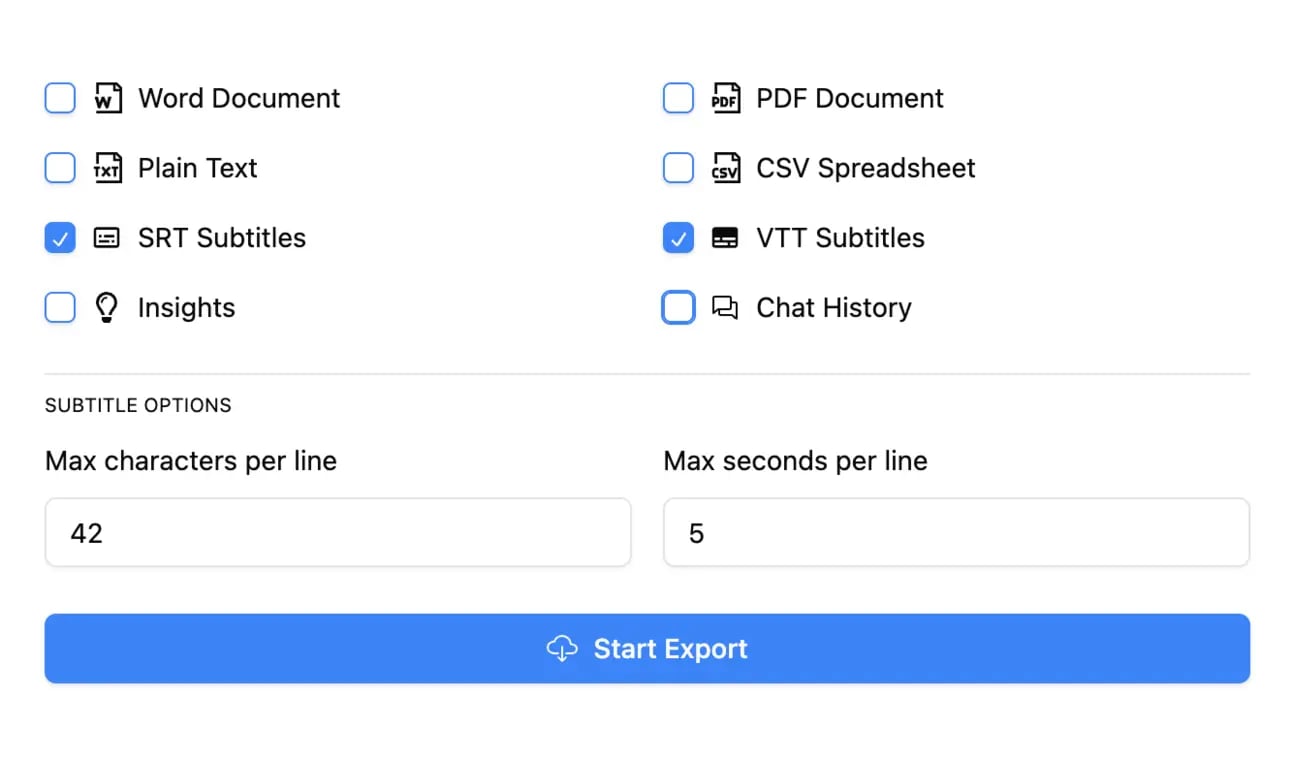
Exportar em múltiplos formatos
Exporte suas transcrições em múltiplos formatos incluindo TXT, DOCX, PDF, SRT e VTT com opções de formatação personalizáveis.
Resumos e Chatbot
Gere resumos e outros insights da sua transcrição, prompts personalizados reutilizáveis e chatbot para o seu conteúdo.
Nossa transcrição com tecnologia de IA captura cada palavra, para que você possa permanecer presente, praticar a escuta ativa e construir conexões muito mais fortes. Saiba mais sobre como o Transcript.LOL pode ajudar.