
Executive Communication Skills Training: Elevate Leadership
Master executive communication skills training to lead with clarity, inspire teams, and drive results with practical frameworks.
Praveen
June 26, 2024
O treinamento adequado em habilidades de comunicação executiva é muito mais do que algumas dicas sobre falar em público. É um mergulho estratégico profundo que oferece aos líderes as ferramentas para inspirar verdadeiramente suas equipes, gerenciar relacionamentos complicados com stakeholders e, finalmente, impulsionar o negócio. Os melhores programas são construídos sobre uma estrutura sólida, focando em objetivos claros, mensagens concisas e influência real.
Construindo uma Estrutura para Comunicação Executiva
Sejamos claros: a comunicação executiva não é uma "habilidade interpessoal" – é uma competência fundamental de liderança. Líderes que a dominam podem alinhar uma empresa inteira em torno de uma única visão, lidar com uma crise com desenvoltura e construir confiança inabalável. Mas sem uma estrutura adequada, a maioria dos programas de treinamento falha, oferecendo conselhos genéricos que ninguém se lembra uma semana depois.
Todo o processo tem que começar com um senso claro de propósito. Antes de fazer qualquer outra coisa, você precisa definir o que significa "vencer". Você está tentando tornar seus town halls mais envolventes? Aperfeiçoar apresentações para investidores? Ou dar aos líderes a confiança para gerenciar conversas difíceis um a um?
Qualquer que seja o objetivo, ele deve estar ligado a um resultado tangível para o negócio, seja aumentar os índices de engajamento dos funcionários, garantir um processo de gestão de mudanças mais tranquilo ou melhorar a percepção pública da empresa.
Os Três Pilares de uma Estrutura de Comunicação Sólida
Uma estrutura verdadeiramente robusta repousa sobre três pilares que se conectam e se complementam, guiando toda a jornada de treinamento. Essa abordagem garante que cada módulo e exercício prático tenha um propósito claro, movendo-se de objetivos de alto nível para a aplicação prática.
- Definindo Objetivos Claros: Este é o "porquê". Você precisa começar identificando as lacunas de comunicação específicas e definindo metas concretas e mensuráveis para o que deseja melhorar.
- Elaborando Mensagens Estratégicas: Com os objetivos definidos, o foco muda para o "o quê". É aqui que os líderes aprendem a pegar ideias complexas e destilá-las em mensagens claras e convincentes que ressoam com diferentes públicos.
- Desenvolvendo Influência Autêntica: O pilar final é o "como". Tudo se resume a entregar essa mensagem de uma forma que se conecte em um nível humano, construa credibilidade e realmente motive as pessoas a agir.
Este fluxograma mostra como esses três elementos — Objetivos, Mensagens e Influência — se unem para formar uma estratégia coesa.
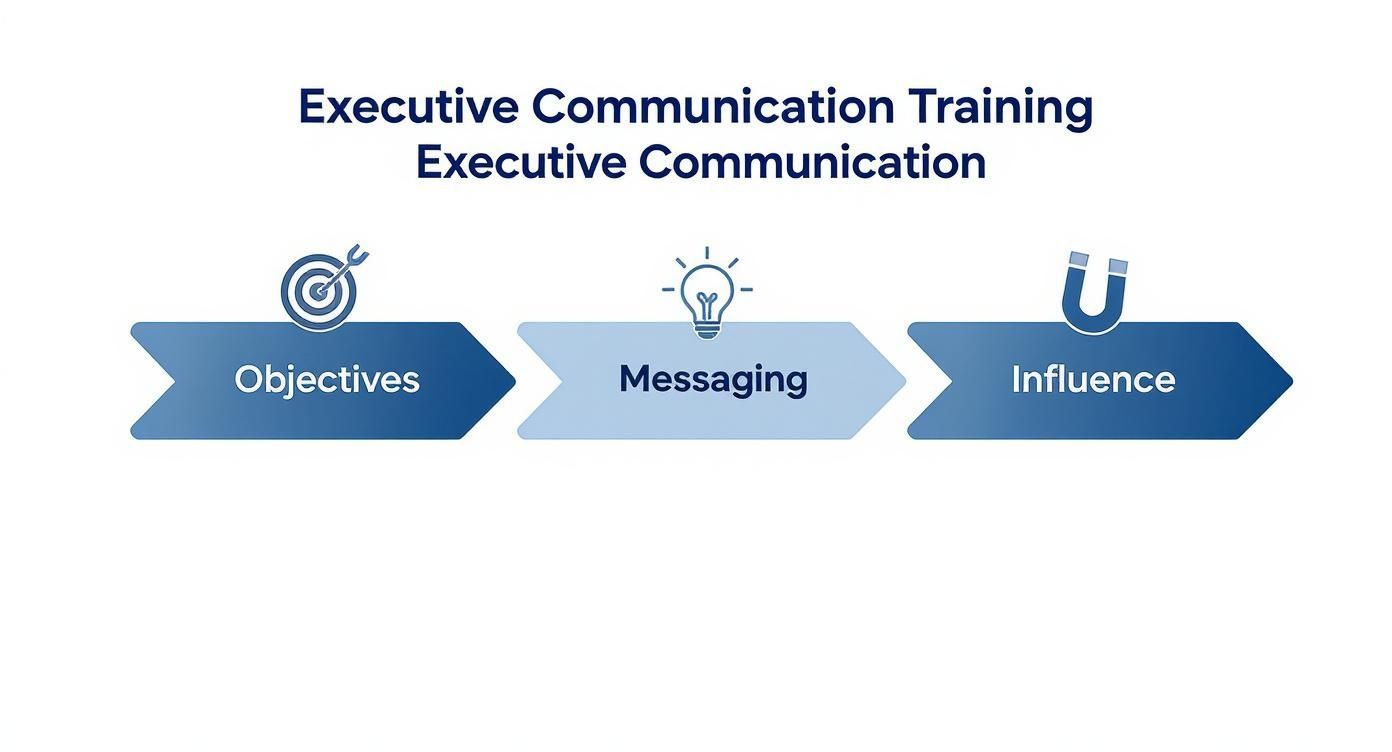
É um ótimo lembrete visual de que a comunicação poderosa é um processo estruturado, não um acidente feliz. Cada estágio estabelece a base para o próximo, culminando em uma liderança verdadeiramente impactante.
Os líderes mais convincentes não apenas compartilham informações; eles criam significado. Eles constroem uma narrativa que ajuda as pessoas a entender não apenas o que precisam fazer, mas por que isso importa.
Para ter uma visão mais ampla de como desbloquear o potencial da sua equipe, vale a pena explorar diferentes estratégias para treinamento de habilidades de comunicação eficaz. Também é incrivelmente valioso documentar e analisar essas conversas de alto risco. Ter um registro confiável de transcrições de conselhos executivos pode fornecer uma mina de ouro de dados para coaching e melhorias futuras.
Projetando um Currículo com Cenários do Mundo Real
Um programa de treinamento de comunicação executiva poderoso não é construído sobre teoria abstrata. Ele é forjado no fogo dos desafios do mundo real. O currículo precisa espelhar as situações de alto risco e alta pressão que os líderes navegam todos os dias. Isso significa ir muito além de dicas genéricas de apresentação e criar módulos que abordem diretamente os obstáculos de comunicação mais difíceis que eles enfrentam.
O objetivo é fazer com que o aprendizado pareça imediatamente relevante. O engajamento dispara quando um executivo pode conectar instantaneamente um módulo de treinamento a uma reunião difícil que teve na semana passada ou a um encontro geral que está por vir. Esse foco prático garante que as habilidades não sejam apenas aprendidas — elas são retidas e realmente aplicadas quando importam.
Core Benefits of Scenario-Based Learning
Real-World Pressure Simulation
Executives practice in environments that mirror true high-stakes moments. This builds confidence and reduces breakdowns in critical meetings.
Stronger Message Delivery
Leaders learn how to communicate clearly even when facing resistance, confusion, or emotional reactions.
Consistent Behavioral Growth
Repeated practice develops lasting habits, ensuring improvements stay long after the training ends.
Team Alignment & Trust
Better communication leads to more aligned teams, clearer expectations, and higher organizational morale.
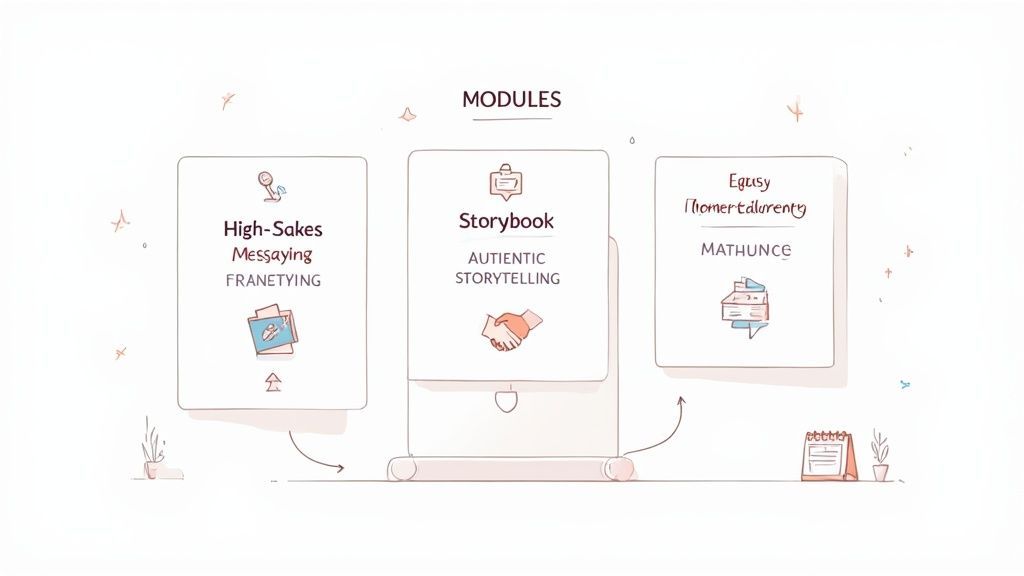
Core Modules for Executive Impact
A truly comprehensive curriculum is built around distinct, yet interconnected, skill areas. Each module needs a crystal-clear learning objective and must be packed with activities that feel just like the executive's actual work environment.
Why Generic Training Fails?
Most leadership training programs fall flat because they ignore real-world pressure scenarios. This information box warns readers that theory alone won’t change communication behavior unless it is tied to immersive practice.
Aqui está um detalhamento dos módulos de treinamento essenciais que devem formar a espinha dorsal de qualquer programa eficaz.
Módulos Essenciais para um Currículo de Comunicação Executiva
Um detalhamento dos módulos de treinamento essenciais, seus objetivos de aprendizado e atividades práticas chave para garantir o desenvolvimento abrangente de habilidades.
| Nome do Módulo | Objetivo Primário de Aprendizado | Atividade de Exemplo |
|---|---|---|
| Mensagens de Alto Risco | Destilar informações complexas em uma mensagem clara, concisa e convincente que se sustente sob pressão. | Os participantes elaboram e entregam um anúncio de três minutos sobre uma grande reestruturação organizacional, seguido por uma sessão de perguntas e respostas ao vivo com colegas. |
| Liderando com Narrativas Autênticas | Usar a narrativa para construir influência, inspirar ação e tornar dados densos e planos estratégicos memoráveis. | Executivos são encarregados de transformar um relatório trimestral em uma história convincente de progresso e visão futura para uma reunião geral. |
| Navegando Conversas Difíceis | Gerenciar conflitos, fornecer feedback difícil e manter relacionamentos durante interações tensas com confiança e empatia. | Role-playing de uma avaliação de desempenho com um membro da equipe de alto desempenho, mas disruptivo, focando na desescalada e em resultados acionáveis. |
| Dominando Relações com a Mídia e Investidores | Representar a organização com confiança para stakeholders externos, lidando com perguntas difíceis e controlando a narrativa. | Uma coletiva de imprensa simulada ou ligação com investidores onde os participantes são interrogados por treinadores interpretando o papel de jornalistas ou analistas céticos. |
Essa abordagem modular permite que você adapte o treinamento com base nas necessidades específicas de sua equipe de liderança. Alguns executivos podem precisar aprimorar sua influência interna, enquanto outros exigem preparação intensiva para a mídia.
Dando Vida a Cenários
A verdadeira mágica acontece quando os cenários parecem reais. Estudos de caso genéricos são fáceis de descartar. Em vez disso, você precisa criar situações que os líderes reconheçam em seus ossos.
Pense nesses tipos de sessões práticas:
- A Iniciativa Impopular: Você tem que anunciar uma nova política em toda a empresa que você sabe que será recebida com resistência. Seu trabalho é enquadrar a mensagem de forma a reconhecer as preocupações, ao mesmo tempo em que reforça sua importância estratégica.
- A Resposta à Crise: Uma notícia negativa sobre a empresa acabou de sair. Você tem uma hora para preparar uma breve declaração em vídeo para todos os funcionários que seja calma, transparente e tranquilizadora.
- O Pitch da Visão: Você está apresentando uma nova direção estratégica ousada e cara ao conselho. Seu objetivo é garantir o apoio entusiástico deles usando uma mistura de dados concretos e narrativas convincentes.
O aprendizado mais significativo não acontece em uma palestra. Ele acontece quando um executivo está em pé, com o coração acelerado, navegando em um cenário difícil que ele sabe que enfrentará em seu trabalho real. É aí que a teoria se torna habilidade.
A demanda por esse tipo de treinamento sofisticado está explodindo. O mercado de coaching executivo e desenvolvimento de liderança foi avaliado em cerca de US$ 9 bilhões nos últimos anos, um sinal claro de quão seriamente as organizações estão levando isso. Esse investimento é impulsionado pela compreensão de que a capacidade de um líder de se comunicar impacta diretamente os resultados financeiros e a vantagem competitiva. Você pode encontrar mais detalhes sobre o crescimento do mercado de coaching executivo em Kenresearch.com.
O Papel da Tecnologia no Design Curricular
Ferramentas modernas podem adicionar uma camada incrivelmente poderosa ao seu currículo. Gravar sessões práticas permite autoavaliação detalhada e feedback rico dos colegas.
Por exemplo, usar IA para transcrição de treinamento e workshops fornece um registro objetivo do desempenho de um líder. Eles podem analisar suas escolhas de palavras, identificar palavras de preenchimento e avaliar a clareza de sua mensagem sem viés. Esse tipo de tecnologia pode acelerar drasticamente sua curva de aprendizado.
Transformando Teoria em Ação: Prática e Feedback
Sejamos honestos: você não pode aprender a ser um orador cativante apenas lendo um slide. A maestria real na comunicação é construída na arena, não na sala de aula. Ela vem de fazer, repetir e receber feedback afiado e perspicaz. É aqui que conceitos abstratos se tornam habilidades enraizadas, e é por isso que qualquer programa sério de treinamento em habilidades de comunicação executiva tem que ser construído em torno de prática hands-on.
O objetivo é criar um laboratório de comunicação – um espaço seguro onde líderes possam tentar, falhar e tentar novamente sem consequências do mundo real. Tudo se resume a construir memória muscular para aquelas conversas de alto risco que definem suas carreiras.

Fazendo a Prática Parecer Real
Para que a prática seja eficaz, ela tem que ser realista. Os cenários precisam espelhar a pressão e a complexidade reais que os executivos enfrentam todos os dias. Quando um líder vê uma situação pela qual já passou, seu engajamento dispara. O aprendizado se torna pessoal e imediatamente útil.
Aqui estão alguns cenários de alto impacto que vi funcionarem maravilhosamente:
- A Tensa Atualização do Conselho: Um executivo tem que entregar resultados trimestrais decepcionantes. O conselho (interpretado por facilitadores ou colegas) é rigoroso. O objetivo não é apenas ler os números, mas gerenciar a sala, apresentar um plano de recuperação crível e manter a calma sob pressão.
- O Pitch Simulado para Investidores: Um líder tem dez minutos para apresentar uma nova ideia arriscada a um painel cético de "investidores". Este é um teste puro de sua capacidade de criar uma história poderosa, pensar rapidamente e projetar confiança inabalável.
- O Role-Play de Feedback Difícil: Um participante tem que dar uma avaliação de desempenho difícil a um membro sênior da equipe que é ao mesmo tempo valioso e causa atrito. É uma aula magna em equilibrar franqueza com empatia.
Esses tipos de exercícios são projetados para tirar as pessoas de suas zonas de conforto. Não se trata de acertar na primeira tentativa; trata-se de experimentar e ver o que funciona.
Construindo uma Cultura de Feedback entre Pares
O feedback do facilitador é valioso, é claro, mas um sistema estruturado de revisão por pares pode ser um divisor de águas. Ele transforma todos na sala em um coach, criando um senso compartilhado de responsabilidade. O truque é dar a eles um framework para que o feedback não seja apenas um vago "Bom trabalho!" ou, pior ainda, uma crítica excessivamente dura.
Um Framework Simples: O Modelo SBI
Uma ferramenta simples, mas incrivelmente eficaz, é o modelo Situação-Comportamento-Impacto (SBI). Ele dá às pessoas uma maneira clara e não julgadora de estruturar suas observações.
| Componente | Descrição | Exemplo |
|---|---|---|
| Situação | Identifique o momento exato. | "Durante a parte de perguntas e respostas do seu pitch para investidores..." |
| Comportamento | Descreva a ação observável, não sua opinião sobre ela. | "...você olhou para suas anotações durante toda a resposta à primeira pergunta." |
| Impacto | Explique como esse comportamento o afetou como ouvinte. | "Para mim, o impacto foi que isso quebrou a conexão que você havia construído e fez a resposta parecer menos confiante." |
Isso remove a opinião pessoal e foca diretamente na causa e efeito. Empodera os colegas a darem feedback que realmente ajuda, o que eleva a curva de aprendizado para todo o grupo.
Criar um loop de feedback onde os executivos se coacham mutuamente é transformador. Isso constrói autoconsciência e internaliza novos hábitos de comunicação de forma muito mais eficaz do que uma crítica unidirecional de um instrutor.
Essa abordagem colaborativa também dá aos líderes uma ferramenta de coaching poderosa que eles podem levar de volta e usar com suas próprias equipes, fazendo com que o impacto do treinamento dure muito depois que o workshop terminar.
Usando Tecnologia para Insights Mais Profundos
As ferramentas de hoje podem realmente elevar o nível do ciclo de prática e feedback. Apenas gravar as sessões de prática permite que os líderes se vejam em ação, dando-lhes um grau de autoconsciência que é quase impossível de obter de outra forma.
Quando você transcreve essas gravações, você pode obter detalhes incrivelmente granulares. Os líderes podem procurar por palavras de muleta, medir sua proporção de fala para escuta, ou ver se suas mensagens-chave realmente foram compreendidas. É uma maneira orientada por dados de melhorar, removendo toda a adivinhação da equação.
Ferramentas alimentadas por IA podem até extrair automaticamente resumos e temas-chave de uma sessão de prática. Se você quiser ir mais fundo, pode aprender como usar insights de IA de suas transcrições para focar em áreas específicas de crescimento.
Em última análise, o desenvolvimento de habilidades é um ciclo: fazer, refletir e refinar. Ao emparelhar cenários realistas com uma forte cultura de feedback, você cria o ambiente perfeito para mudanças reais e duradouras – transformando bons comunicadores em líderes verdadeiramente excepcionais.
Usando IA para Prática Mais Inteligente e Insights Personalizados
A tecnologia nos dá uma nova e poderosa maneira de elevar o coaching tradicional. Não se trata de substituir coaches especialistas, mas de equipá-los com dados melhores e objetivos para ajudar os executivos a identificar exatamente onde eles precisam melhorar.
Quando você integra ferramentas inteligentes em seu treinamento em habilidades de comunicação executiva, você vai além das observações subjetivas e entra em um mundo de crescimento personalizado e mensurável.
Essa abordagem permite que os líderes revisem suas próprias sessões de prática com um nível de detalhe que antes era impossível. Em vez de depender da memória ou de anotações rabiscadas, eles obtêm um registro preciso de seu desempenho. O loop de feedback se torna mais apertado, mais eficaz, e a prática se torna uma rica fonte de aprendizado em vez de um evento único.
Da Autoconsciência aos Dados Acionáveis
Tudo começa com uma transcrição precisa. Uma vez que o discurso de prática de um executivo ou a simulação de uma assembleia geral é convertido em texto, ele se torna um ativo pesquisável e analisável. Este simples passo desbloqueia uma camada totalmente nova de autoavaliação, cortando o viés pessoal que muitas vezes obscurece nosso julgamento.
Um líder pode ler suas próprias palavras e identificar imediatamente hábitos que nunca soube que tinha. Talvez seja uma dependência de jargões corporativos, um uso excessivo de palavras de preenchimento como "hum" e "sabe", ou momentos em que a mensagem principal ficou confusa. Este processo promove um profundo senso de propriedade sobre seu desenvolvimento.
A comunicação eficaz é um pilar da liderança, mas sua ausência é incrivelmente custosa. Apenas nos Estados Unidos e no Reino Unido, as falhas de comunicação levam a um estimado de US$ 37 bilhões em perdas anuais por ineficiência. Isso destaca o imenso valor de usar todas as ferramentas disponíveis para aprimorar essas habilidades críticas. Descubra mais insights sobre o impacto das habilidades de comunicação em Passivesecrets.com.
Aqui está uma visão de como uma interface simples pode transformar um arquivo de vídeo ou áudio em uma transcrição organizada e com identificação de falantes.

Com esse tipo de resultado, um executivo pode revisar instantaneamente não apenas o que disse, mas como a conversa fluiu entre os falantes – uma ferramenta poderosa para analisar qualquer interação.
Aproveitando a IA para Análise de Desempenho Mais Profunda
Ferramentas modernas de transcrição alimentadas por IA fazem mais do que apenas converter fala em texto. Elas vêm com um conjunto de recursos analíticos que agem como um coach de comunicação pessoal, capturando coisas que um observador humano poderia perder em tempo real.
Essas ferramentas podem identificar e quantificar automaticamente padrões de comunicação específicos, transformando uma "habilidade interpessoal" em algo que você pode realmente rastrear e medir ao longo do tempo. Esse feedback orientado por dados é preciso, objetivo e incrivelmente valioso para melhorias direcionadas. Você pode aprender mais em nosso guia sobre os benefícios do software de transcrição com IA.
Veja como você pode colocar esses recursos em prática em uma sessão de treinamento:
- Análise de Palavras de Preenchimento: A IA pode destacar e contar cada "uh", "tipo" e "então". Um executivo pode ficar chocado ao ver que usou uma palavra de preenchimento específica 50 vezes em uma palestra de 10 minutos, dando-lhe uma meta clara e quantificável para a próxima vez.
- Ritmo e Pausas: As ferramentas podem medir palavras por minuto e destacar pausas. Isso ajuda os líderes a ver se estão falando a mil por hora sob pressão ou se suas pausas "estratégicas" são na verdade apenas silêncios longos e constrangedores.
- Rastreamento de Palavras-Chave: Defina mensagens-chave antes de uma sessão de prática (por exemplo, "centrado no cliente", "crescimento sustentável"). A IA pode então rastrear com que frequência e em que contexto o executivo usou essas frases, dando a você uma avaliação real de sua disciplina de mensagem.
Escalando o Feedback Personalizado com Tecnologia
Uma das maiores dores de cabeça no treinamento executivo é fornecer atenção individualizada em escala. Um único coach só pode dar feedback detalhado a um punhado de líderes por vez. A análise impulsionada por IA ajuda a resolver esse problema.
Ao fazer com que os executivos gravem suas sessões de prática e as executem através de uma ferramenta de análise, cada participante recebe um relatório personalizado sobre seus pontos fortes e fracos únicos. Isso permite que um coach revise os dados com antecedência e use seu tempo individual para orientação estratégica de alto nível – não para contar palavras de preenchimento.
Essa abordagem combinada cria um programa de treinamento muito mais eficiente e eficaz. Ela capacita os líderes a assumirem o controle de sua própria prática e revisão, ao mesmo tempo em que garante que o coaching especializado esteja focado onde pode ter o maior impacto. É simplesmente uma maneira mais inteligente de construir os comunicadores confiantes, claros e cativantes que toda organização precisa.
Medindo o Impacto Real do Seu Treinamento
Assim que os workshops terminam e os exercícios de role-playing acabam, a pergunta real surge: Isso realmente funcionou?
Provar o valor do treinamento em habilidades de comunicação executiva significa ir além das folhas de satisfação e pesquisas de satisfação. É ótimo se seus líderes gostaram do programa, mas isso não diz se o comportamento deles mudou ou se o negócio melhorou por causa disso.
Para ter uma noção real do ROI, você precisa entender como medir a eficácia do treinamento conectando-o a ações observáveis e resultados tangíveis do negócio. É assim que você traça uma linha clara da sala de treinamento para o resultado final.
Coletando Evidências Comportamentais com Feedback 360 Graus
A maneira mais confiável de saber se os hábitos de comunicação melhoraram é perguntar às pessoas que os veem todos os dias. Um processo de feedback 360 graus, realizado antes e depois do treinamento, oferece uma visão poderosa e multiangular de mudanças comportamentais reais.
Isso não é apenas uma pesquisa genérica. Trata-se de coletar feedback estruturado e anônimo dos subordinados diretos, colegas e do gerente de um executivo. O truque é fazer perguntas muito específicas e focadas em comportamento.
- Antes do Treinamento: "Em uma escala de 1 a 5, quão eficazmente este líder articula uma visão clara para a equipe durante as reuniões?"
- Após o Treinamento: "Desde que concluiu o treinamento, você observou alguma mudança na capacidade deste líder de articular uma visão clara? Por favor, forneça um exemplo específico."
Ao comparar esses dois conjuntos de dados, você verá os padrões emergirem. Um salto nas pontuações relacionadas à clareza, empatia ou linguagem motivacional é uma prova sólida de que as lições foram absorvidas e estão sendo colocadas em prática.
Analisando Mudanças Qualitativas em Momentos de Alto Risco
Algumas das mudanças mais poderosas não são capturadas por um número. Você pode ver isso fazendo uma análise simples de antes e depois de momentos de comunicação chave, como uma reunião geral ou o início de um grande projeto.
Recupere uma gravação do town hall trimestral de um executivo de seis meses atrás e coloque-a lado a lado com uma entregue pós-treinamento. Você está procurando por mudanças específicas tanto na entrega quanto no conteúdo.
- Clareza e Concisão: Eles abandonaram os slides cheios de jargões em favor de uma narrativa clara e simples?
- Engajamento do Público: Você nota mais perguntas genuínas e interação positiva do público desta vez?
- Contação de Histórias: Eles usaram uma história para tornar um ponto estratégico mais memorável?
Um líder que passa de simplesmente relatar dados para contar uma história convincente sobre esses dados fez um salto monumental.
Storytelling Drives Business Impact
Use this block to emphasize that storytelling is no longer optional for leaders. It's a critical skill for aligning teams, inspiring change, and influencing stakeholders at every level.
Este é o tipo de mudança qualitativa que prova diretamente o valor do treinamento na construção de influência e alinhamento.
Este tipo de análise fornece a evidência narrativa convincente que realmente dá vida aos dados concretos de suas pesquisas.
Conectando a Comunicação a Métricas de Negócios Concretas
Em última análise, o objetivo é conectar uma melhor comunicação a resultados financeiros. É aqui que você analisa os indicadores-chave de desempenho (KPIs) dentro da esfera de influência de um executivo e rastreia seus movimentos ao longo do tempo.
Pense em métricas como:
- Pontuações de Engajamento dos Funcionários: As pontuações de engajamento no departamento do líder aumentaram no trimestre seguinte ao treinamento? Sabemos que uma melhor comunicação é um grande impulsionador do engajamento.
- Taxas de Sucesso de Projetos: Projetos liderados por este executivo estão cumprindo prazos com mais consistência e com menos ruídos?
- Análise de Sentimento da Mídia: Para líderes que enfrentam o público, o tom das menções na mídia mudou de negativo para neutro, ou de neutro para positivo?
A demanda por essas habilidades não é apenas um palpite; o mercado reflete isso. O mercado global de treinamento em habilidades de comunicação foi avaliado em cerca de US$ 4,5 bilhões e espera-se que atinja US$ 9,2 bilhões até 2033. Essa explosão de crescimento mostra que as organizações agora veem a ligação crítica entre ótima comunicação e sucesso nos negócios.
Ao rastrear essas métricas concretas, você pode construir um argumento de negócios poderoso de que investir em comunicação de liderança não é apenas um custo, mas um impulsionador estratégico de crescimento.
Respondendo às Perguntas Difíceis Sobre Treinamento em Comunicação Executiva
Mesmo quando todos concordam que as vozes da liderança precisam ser mais fortes, lançar um programa de treinamento em habilidades de comunicação executiva vem com um conjunto completo de perguntas práticas. Como justificar o orçamento? Qual é o formato certo para uma equipe ocupada? E como garantir que ele permaneça, em vez de se tornar apenas mais uma iniciativa da moda?
Abordar essas questões de frente é a única maneira de construir um programa com impacto real e duradouro. Quando seus stakeholders entenderem o "porquê", o "quem" e o "como", você descobrirá que garantir o apoio e os recursos de que precisa se torna uma conversa muito mais tranquila.
Como Conseguimos o Apoio Executivo para Isso?
Conseguir que a alta gerência fique genuinamente animada é seu primeiro e mais importante obstáculo. O segredo? Pare de falar sobre "treinamento" e comece a falar sobre "estratégia de negócios". Você tem que apresentar isso não como um workshop de habilidades interpessoais, mas como uma solução direta para um problema real de negócios.
Sua melhor aposta é vincular os resultados do programa a KPIs específicos que a equipe de liderança já se importa. Por exemplo:
- Falando com o CEO: "Este programa dará aos nossos líderes as ferramentas para articular nossa visão de cinco anos de uma forma que realmente se conecte com as pessoas. Acreditamos que isso pode aumentar as pontuações de engajamento dos funcionários em 10%."
- Falando com o CFO: "Quando nossos líderes conseguem navegar melhor em conversas difíceis, vemos menos escaladas e menos conflitos na equipe. Isso poderia reduzir diretamente a rotatividade em nossos departamentos-chave."
- Apresentando ao Chefe de Vendas: "Se aprimorarmos as habilidades de contar histórias de nossos líderes de vendas, eles estarão mais bem equipados para fechar negócios maiores e mais complexos e aumentar nossa taxa de retenção de clientes."
Não apresente isso como um custo. Apresente-o como um investimento estratégico em desempenho, alinhamento e, finalmente, lucratividade. Quando a liderança vê uma linha clara para o ROI, o apoio é o próximo passo natural.
Essa abordagem inverte o roteiro. O treinamento passa de um "bom ter" para um "essencial" que impulsiona diretamente os maiores objetivos da empresa.
Devemos Trazer um Facilitador Externo ou Construir Internamente?
Esta é uma encruzilhada clássica, e o caminho certo realmente depende dos recursos, cultura da sua empresa e do que você está tentando alcançar. Ambas as opções têm seus prós e contras, e vale a pena pensar cuidadosamente sobre elas.
Um especialista externo geralmente traz uma perspectiva nova e um nível de credibilidade que é difícil de replicar internamente. Eles podem desafiar vacas sagradas e introduzir novos frameworks sem se enredar em políticas internas. Isso é especialmente útil se você estiver lidando com questões sensíveis ou trabalhando com um grupo muito sênior.
Por outro lado, um programa liderado por sua equipe interna de RH ou L&D pode ser mais econômico e perfeitamente sintonizado com a cultura e a linguagem exclusivas da sua empresa. Seus próprios funcionários já entendem o contexto de negócios, então eles podem criar cenários práticos que parecem imediatamente relevantes. A desvantagem? Eles podem não ter experiência especializada em coaching de comunicação ou podem achar difícil dar feedback direto e crítico a líderes seniores.
Muitas vezes, um modelo híbrido é o ponto ideal. Você pode trazer um especialista externo para projetar o programa principal e facilitar as grandes sessões iniciais. Em seguida, eles podem treinar sua equipe interna para executar os grupos de prática contínuos e workshops de reforço.
Quanto Tempo Este Programa Realmente Precisa Ter?
Sejamos honestos: a mudança real de comportamento não acontece em um workshop de um dia. Um único evento pode gerar algum burburinho, mas desenvolver uma habilidade requer prática sustentada e feedback ao longo do tempo. As pessoas melhoram fazendo, recebendo coaching e fazendo de novo.
Em vez de uma sessão única, pense em uma jornada com múltiplos pontos de contato. Uma estrutura que realmente funciona pode parecer algo assim:
- Workshop de Lançamento (1-2 Dias): Um mergulho profundo e imersivo para introduzir as ideias centrais, frameworks e fazer com que todos passem por algumas sessões práticas iniciais.
- Janela de Aplicação (4-6 Semanas): Os participantes recebem desafios específicos no trabalho que os forçam a aplicar o que aprenderam em seu trabalho diário.
- Grupos de Coaching (Quinzenais): Sessões de coaching em pequenos grupos ou individuais para revisar como as coisas estão indo, resolver obstáculos e refinar sua abordagem.
- Sessão de Conclusão (Meio Dia): Uma sessão final onde os líderes apresentam uma solução para um desafio de negócios real, mostrando o quão longe suas habilidades de comunicação chegaram.
Essa abordagem espaçada garante que o treinamento não seja apenas um evento isolado no calendário. Torna-se um processo de desenvolvimento contínuo que leva a melhorias reais e observáveis na forma como seus líderes se comunicam.
Na Transcript.LOL, acreditamos que a comunicação clara é a base da liderança eficaz. Nossa plataforma alimentada por IA ajuda executivos a praticar, analisar e refinar suas mensagens, fornecendo feedback objetivo e baseado em dados. Transforme suas sessões de prática em insights acionáveis e acelere o desenvolvimento de sua equipe visitando https://transcript.lol.