Converta Fala em Texto Online Grátis: Seu Guia Definitivo
Descubra como converter fala em texto online grátis com nosso guia definitivo. Aprenda a escolher as ferramentas certas e a transcrever arquivos de áudio em minutos.
Praveen
January 10, 2024
Longe vão os dias de digitação manual tediosa e serviços de transcrição caros. Agora, você pode converter fala em texto online grátis com poderosas ferramentas de IA que transformam seu áudio e vídeo em texto preciso e pesquisável em apenas alguns minutos. Isso não é mais uma tecnologia de nicho — é uma solução prática para estudantes, criadores e profissionais de todos os lugares.
Por que as Ferramentas Gratuitas de Fala para Texto São um Marco Revolucionário
A capacidade de transcrever áudio instantaneamente muda fundamentalmente a forma como lidamos com informações. Pense nisso: um estudante pode transformar uma palestra de uma hora em um conjunto completo de anotações pesquisáveis, tornando a preparação para exames muito mais fácil. Um criador de conteúdo pode gerar legendas para um vídeo de mídia social em segundos, abrindo imediatamente seu conteúdo para um público mais amplo.
A verdadeira magia está em como essas ferramentas simplificam fluxos de trabalho e desbloqueiam o valor oculto no conteúdo falado. O poder de automatizar processos de negócios com essas ferramentas vai muito além da conveniência; economiza uma quantidade enorme de tempo e recursos.
De Tecnologia de Nicho a uma Ferramenta do Dia a Dia
O que parece um avanço recente é, na verdade, construído sobre décadas de trabalho. A jornada começou nos anos 1950 com projetos iniciais como o 'Audrey' dos Bell Laboratories. Avançando para os anos 1990, tínhamos software de consumo que podia reconhecer cerca de 100 palavras por minuto, preparando o terreno para as poderosas plataformas online que temos hoje.
Essa longa evolução levou a uma acessibilidade e precisão incríveis, mas é importante saber com o que você está trabalhando. A qualidade da sua transcrição final realmente depende de alguns fatores-chave.
As melhores ferramentas gratuitas podem atingir 85-95% de precisão em condições perfeitas — como áudio claro com um único locutor e sem ruído de fundo. Mas coisas como sotaques fortes ou pessoas falando ao mesmo tempo podem definitivamente afetar o desempenho.
Formas Práticas que Todos Podem Usar
O impacto da transcrição gratuita é enorme e é sentido em muitos campos diferentes. Não se trata apenas de transformar uma voz em palavras; trata-se do que você pode fazer com essas palavras.
Aqui estão alguns usos comuns:
- Reaproveitamento de Conteúdo: Um podcaster pode rapidamente transformar um episódio em um post de blog, notas detalhadas do programa e uma série de atualizações de mídia social.
- Melhoria da Acessibilidade: Legendas e transcrições geradas automaticamente tornam vídeos e áudios acessíveis para pessoas com deficiência auditiva.
- Criação de Arquivos Pesquisáveis: Equipes podem construir uma biblioteca pesquisável de todas as suas reuniões gravadas, facilitando a recuperação de decisões específicas ou itens de ação posteriormente.
Como Escolher a Ferramenta de Transcrição Gratuita Certa
Tentar converter fala em texto online gratuitamente pode parecer um labirinto. Sejamos honestos, nem todas as ferramentas "gratuitas" são realmente úteis. Muitos serviços colocam um rótulo de "gratuito" em um produto com limitações severas, como limites de minutos ridiculamente baixos ou precisão terrível, especialmente se você tiver um sotaque.
O objetivo é encontrar uma plataforma que realmente se encaixe no que você precisa fazer, sem forçá-lo a um upgrade pago após um ou dois usos.
Por exemplo, transcrever uma entrevista de podcast de 45 minutos é uma fera completamente diferente de transcrever uma nota de voz rápida de dois minutos. Você tem que olhar além do marketing superficial e focar no que realmente importa: precisão, quais tipos de arquivo ele suporta e os limites de uso. Uma ferramenta que é ótima para um único locutor claro pode desmoronar completamente ao tentar decifrar uma reunião de equipe barulhenta.
É assim que o processo deve parecer — sem esforço. As melhores ferramentas escondem toda a magia complexa de IA por trás de uma interface simples e limpa.
A imagem acima realmente vai ao cerne da questão: transformar palavras faladas em texto deve ser perfeito.
Comparando os Principais Recursos
Ao avaliar ferramentas gratuitas, a primeira coisa a verificar é o limite de tempo mensal. Algumas oferecem apenas uma hora por mês, o que simplesmente não é suficiente se você a usar regularmente. Em seguida, verifique os tipos de arquivo que ela pode processar. Você vai querer um serviço que aceite formatos comuns de áudio (como MP3 e WAV) e vídeo (MP4, MOV) sem que você precise convertê-los primeiro.
Dica Profissional: Não posso enfatizar isso o suficiente — sempre verifique a política de privacidade antes de carregar qualquer coisa sensível. Um serviço confiável declarará claramente que seus dados não são usados para treinar seus modelos de IA. Suas informações devem permanecer suas.
Aqui estão os itens essenciais a serem procurados antes de se comprometer:
- Limites de Transcrição: Quantos minutos você realmente obtém por mês, gratuitamente?
- Precisão: Ela lida com sotaques diferentes, ruído de fundo ou vários falantes sem transformar sua transcrição em um amontoado de palavras sem sentido?
- Suporte a Formato de Arquivo: Você pode simplesmente arrastar e soltar seus MP3s e MP4s, ou precisa passar por muitos obstáculos?
- Identificação de Falante: O plano gratuito informa quem disse o quê? Isso economiza muito tempo.
Para te dar um bom começo, preparei uma comparação rápida de algumas das melhores opções gratuitas disponíveis. Isso deve ajudá-lo a ver rapidamente qual delas pode ser a mais adequada para você.
Comparativo de Recursos das Principais Ferramentas Gratuitas de Fala para Texto
| Nome da Ferramenta | Limite da Camada Gratuita (ex: minutos/mês) | Tipos de Arquivo Suportados | Principais Recursos (ex: identificação de locutor, marcação de tempo) | Ideal Para |
|---|---|---|---|---|
| Transcript LOL | 30 minutos (única vez) | MP3, MP4, WAV, MOV | Identificação de locutor, marcação de tempo, editor poderoso | Projetos rápidos únicos ou para experimentar uma ferramenta premium. |
| Otter.ai | 300 minutos/mês (limite de 30 min/arquivo) | MP3, MP4, M4A, WAV | Identificação de locutor, transcrição em tempo real, integrações | Estudantes e indivíduos que transcrevem reuniões online. |
| Descript | 60 minutos/mês | A maioria dos formatos de áudio/vídeo | Overdub, edição de vídeo, gravação de tela, marcação de tempo | Podcasters e criadores de vídeo que precisam de edição básica. |
| Happy Scribe | 10 minutos (única vez) | A maioria dos formatos de áudio/vídeo | Identificação de locutor, marcação de tempo, múltiplos idiomas | Testar a precisão da transcrição para conteúdo multilíngue. |
Esta tabela deve deixar claro que "gratuito" pode significar coisas muito diferentes. A melhor escolha depende inteiramente do seu projeto — seja você um estudante gravando palestras, um jornalista transcrevendo entrevistas, ou apenas alguém que precisa transformar um memorando de voz em texto.
Se você está procurando especificamente por ferramentas criadas para reuniões de equipe e trabalho colaborativo, nosso guia sobre o melhor software de transcrição de reuniões entra em muito mais detalhes. Fazer a escolha certa desde o início economizará muitas dores de cabeça depois.
Sua Primeira Transcrição de Áudio: Um Guia Prático
Ok, vamos sair da teoria e ir para a prática e converter fala em texto online gratuitamente. Vou guiá-lo por todo o processo, do início ao fim, usando uma ferramenta gratuita típica, apenas para mostrar como é simples transformar seus arquivos de áudio em texto limpo e editável. Sem jargões, apenas os passos que importam.
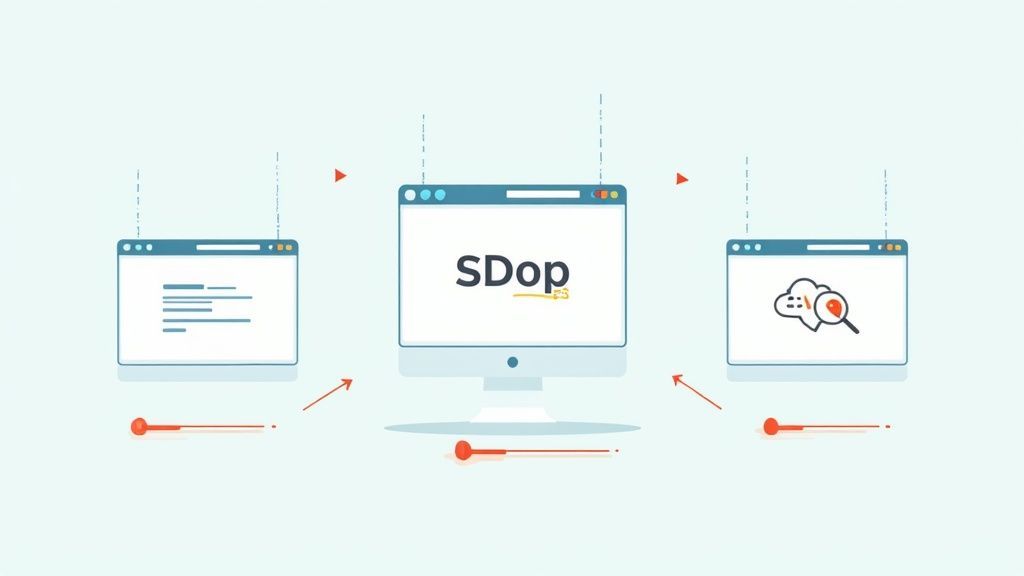
Primeiro de tudo: você precisa colocar seu arquivo de mídia no sistema. A maioria das plataformas gratuitas é construída para velocidade, então você quase sempre verá um botão grande e inconfundível que diz algo como "Upload" ou "Iniciar Transcrição".
Por exemplo, recentemente precisei transcrever um MP3 de 15 minutos de uma sessão de brainstorming de equipe. Apenas arrastei o arquivo do meu desktop e o soltei diretamente na página da web. O upload começou instantaneamente.
Carregando Seu Arquivo de Mídia
O processo geralmente é à prova de falhas, mas algumas dicas rápidas podem evitar dores de cabeça. Certifique-se de ter uma conexão de internet estável, especialmente com arquivos maiores — um vídeo de uma hora pode levar alguns minutos. Paciência é fundamental aqui. Se você interromper o upload, corre o risco de corromper o arquivo e ter que começar tudo de novo.
Qualquer serviço decente lidará com os tipos de arquivo mais comuns sem problemas:
- Áudio: MP3, WAV, M4A
- Vídeo: MP4, MOV, WMV
Após o upload, você será solicitado a selecionar o idioma falado em seu arquivo. Este é um passo crítico para a precisão. Se você está transcrevendo uma entrevista com alguém de Londres, escolher "Inglês do Reino Unido" em vez da opção genérica pode fazer uma grande diferença na transcrição final.
Uma lição que aprendi da maneira mais difícil: Uma vez, esqueci de mudar o idioma de inglês dos EUA para inglês australiano para uma entrevista que fiz. A IA completamente destruiu as gírias e o sotaque. Levar aqueles cinco segundos extras para selecionar o dialeto correto teria me poupado pelo menos 20 minutos de edições dolorosas.
Revisando e Editando Sua Transcrição de IA
Após uma curta espera — geralmente apenas um ou dois minutos para um arquivo de 10 minutos — sua transcrição aparece em um editor online. É aqui que a mágica realmente começa. Você verá o texto exibido ao lado de um player de áudio, com marcações de tempo que ligam cada palavra ao seu local exato na gravação.
Esta reprodução sincronizada é um divisor de águas. Se você notar uma palavra que parece errada, basta clicar nela. O áudio pulará instantaneamente para aquele momento preciso, permitindo que você a ouça. Isso torna a correção de nomes, jargões técnicos ou frases murmuradas muito mais rápida do que tentar encontrar o local percorrendo manualmente o áudio.
Pense neste primeiro rascunho de IA como sua base. Não será perfeito, mas faz todo o trabalho pesado, levando você 85-95% do caminho. A partir daqui, é tudo sobre um pouco de polimento. Se você quiser se aprofundar no processo de edição, nosso guia completo sobre como transcrever áudio para texto gratuitamente tem dicas mais avançadas.
Aprimorando Sua Transcrição Gerada por IA
A primeira passagem da IA te leva a maior parte do caminho, mas o toque humano final é o que separa uma transcrição decente de uma profissional. Quando você converte fala para texto online gratuitamente pela primeira vez, a IA faz o trabalho pesado, mas nunca será perfeita. Seu trabalho é corrigir os erros pequenos — mas cruciais — que os algoritmos frequentemente perdem.
Pense nesta etapa como revisão, não como digitação do zero. Os erros mais comuns que você procurará são nomes mal interpretados, jargões específicos da indústria ou homófonos complicados — palavras que soam iguais, mas significam coisas diferentes, como "mas" versus "mais". Estas são correções simples, mas fazem uma grande diferença na clareza.
Refinando Timestamps e Legibilidade
Além da precisão das palavras, você vai querer dar uma olhada rápida nos timestamps. De vez em quando, a IA pode atribuir um bloco de texto ao falante errado ou desalinhá-lo em um ou dois segundos. Um bom editor online permite que você clique em qualquer palavra e ajuste instantaneamente seu timestamp, o que é absolutamente essencial para criar legendas de vídeo precisas ou sincronizar áudio com texto.
Outra melhoria rápida é quebrar aquele bloco de texto. Uma transcrição bruta pode parecer um único bloco intimidador. Eu sempre faço uma passagem para adicionar quebras de parágrafo sempre que o falante muda de assunto ou até mesmo faz uma pausa significativa. Essa simples alteração de formatação torna o conteúdo muito mais fácil de escanear e entender.
A IA de hoje parece incrivelmente avançada, mas a estrada para alta precisão foi longa. Em 2001, o reconhecimento de fala atingia apenas cerca de 80% de precisão. Foi o surgimento da computação em nuvem e de bancos de dados online massivos que realmente impulsionaram a tecnologia para onde ela está hoje. Você pode ter uma ótima visão geral dessa evolução na página de histórico de reconhecimento de fala do Transcribe.com.
Peculiaridades Comuns da IA a Observar
Com base na minha experiência, aqui estão algumas coisas específicas que sempre verifico novamente durante minha revisão final:
- Nomes Próprios: A IA frequentemente tropeça em nomes. Ela pode ouvir um nome de empresa como "Transcript LOL" e escrever "Transcript Doll", ou pode simplesmente adivinhar a grafia do nome de uma pessoa.
- Palavras de Preenchimento: Esta é uma escolha estilística. Você quer manter todos os "ums", "ahs" e tiques verbais? Removê-los geralmente cria uma transcrição mais limpa e formal, mas às vezes você quer preservar a cadência natural do falante.
- Pontuação: Embora a IA esteja melhorando muito, ela ainda pode colocar vírgulas no lugar errado ou terminar frases abruptamente. Uma varredura rápida para corrigir a pontuação é fundamental para garantir que o texto flua naturalmente e faça sentido.
Exportando e Usando Sua Transcrição Finalizada
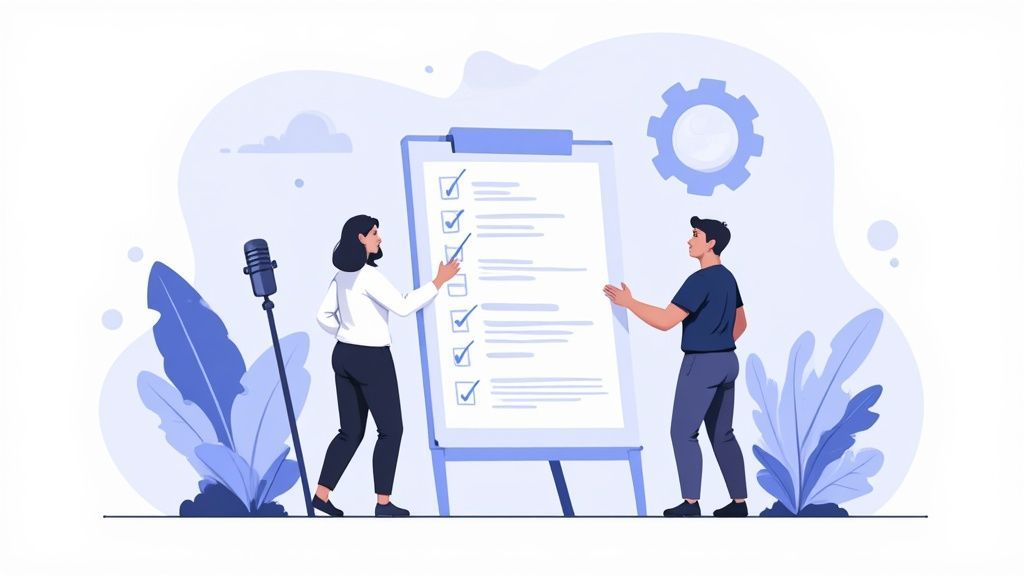
Certo, você se dedicou e aprimorou sua transcrição até que ela esteja perfeita. Agora é hora da etapa final e mais satisfatória: tirar o conteúdo da ferramenta e colocá-lo em um formato que você possa realmente usar.
É aqui que sua transcrição deixa de ser texto bruto e se torna um ativo funcional. A maioria das ferramentas que permitem converter fala em texto online gratuitamente oferecerá algumas opções de exportação principais, e escolher a certa faz toda a diferença. Trata-se de conhecer seu objetivo final desde o início.
Escolhendo o Tipo de Arquivo Correto
O formato que você escolher dependerá inteiramente do que você planeja fazer a seguir. Por exemplo, se você acabou de transcrever uma longa entrevista que vai transformar em um post de blog, exportá-la como um arquivo .docx é uma escolha óbvia. Ele mantém todas as quebras de parágrafo e rótulos de falante intactos, para que você possa abri-lo diretamente no Word ou Google Docs e começar a escrever.
Mas talvez você precise apenas do texto bruto para suas anotações ou para colar em outro aplicativo. Nesse caso, um arquivo .txt simples é seu melhor amigo — é leve, universalmente compatível e livre de qualquer formatação desnecessária.
O verdadeiro especialista do grupo é o arquivo .srt (SubRip Subtitle). Isso não é apenas texto; é texto emparelhado com timestamps precisos. Se você estiver adicionando legendas a um vídeo, este é o formato que você precisa. É essencial para criadores de conteúdo.
Aqui está um resumo rápido para ajudá-lo a decidir na hora:
- TXT (Texto Puro): Perfeito para anotações brutas, compartilhamento fácil ou quando você precisa importar texto para outro programa sem que nenhuma formatação atrapalhe.
- DOCX (Documento do Word): Sua escolha principal para criar artigos, relatórios ou qualquer documento formal onde a formatação e a legibilidade são essenciais.
- SRT (Legendas): O padrão da indústria para adicionar legendas perfeitamente sincronizadas a vídeos de marketing, cursos online ou clipes de mídia social.
Perguntas Frequentes Sobre Ferramentas de Transcrição Online
Ao mergulhar no mundo da transcrição online gratuita, é totalmente normal ter algumas dúvidas. Sempre que você experimenta uma nova ferramenta, quer saber no que está se metendo — especialmente quando se trata de coisas como precisão e privacidade. Vamos abordar algumas das mais importantes.
A primeira pergunta que sempre ouço é: "Qual a precisão?". Com uma ferramenta gratuita, você pode esperar realisticamente 85-95% de precisão quando as condições são perfeitas. Isso significa que você tem um arquivo de áudio limpo com um único locutor e sem ruído de fundo. Mas sejamos honestos — raramente é o caso. Adicione sotaques carregados, pessoas falando umas sobre as outras, ou um café barulhento ao fundo, e esse número diminuirá. Uma pequena limpeza manual é praticamente sempre parte do processo.
Meus Dados Estão Seguros e Privados?
Esta é uma questão importante, e deveria ser. Qualquer serviço de transcrição respeitável usará criptografia e terá uma política de privacidade clara explicando como eles lidam com seus arquivos. Antes de fazer o upload de qualquer coisa — especialmente se contiver informações sensíveis — reserve um minuto para ler os termos. Se você estiver lidando com gravações legais ou médicas confidenciais, eu recomendo fortemente um serviço pago com garantias de segurança mais rigorosas. É simplesmente mais seguro.
Nunca assuma que uma ferramenta online gratuita é 100% privada sem verificar suas políticas. Uma olhada rápida no início pode te poupar uma dor de cabeça enorme depois.
A maioria das plataformas modernas também é muito boa com diferentes idiomas e sotaques. Ao fazer o upload de um arquivo, você geralmente terá a opção de especificar o idioma. Não pule esta etapa. Escolher o idioma correto — por exemplo, inglês do Reino Unido em vez de inglês dos EUA — pode fazer uma diferença surpreendente na qualidade da transcrição final.
Para um mergulho mais profundo, preparamos uma lista abrangente de perguntas frequentes sobre transcrição que aborda esses tópicos e mais, dando a você a confiança para começar.
Pronto para ver por si mesmo? Transcript.LOL oferece uma maneira rápida, segura e altamente precisa de transformar seu áudio e vídeo em texto. Comece a transcrever gratuitamente hoje mesmo!