Grabaciones y la Ley: ¿es legal grabar una conversación...
Comprende si es legal grabar una conversación sin consentimiento y cómo se aplican las leyes de consentimiento de una parte frente a dos partes, además de las reglas federales frente a las estatales.
Kate, Praveen
July 16, 2025
Entonces, ¿puedes grabar legalmente una conversación sin decirle a nadie? Esa es una pregunta complicada, y la respuesta no es un simple sí o no. Todo depende de dónde te encuentres. Estados Unidos tiene una ley federal que establece un estándar, pero muchos estados han agregado sus propias reglas, mucho más estrictas.
La Respuesta Corta sobre Grabar Conversaciones
Descifrar las reglas para grabar puede parecer que estás intentando navegar por un laberinto legal. Todo se reduce a un conflicto entre dos ideas legales diferentes: consentimiento de una parte y consentimiento de todas las partes. Estas reglas deciden quién necesita saber que está siendo grabado para que sea legal.
Piénsalo así: la ley federal es la autopista principal, con un conjunto básico de reglas para todos. Pero tan pronto como cruzas la línea de un estado, estás en caminos locales donde las leyes pueden cambiar drásticamente. La ley federal de EE. UU. es bastante indulgente, pero muchos estados han puesto sus propias señales de alto.
Consentimiento de Una Parte vs. Consentimiento de Todas las Partes
Entonces, ¿cuál es la diferencia real entre estos dos?
-
Consentimiento de Una Parte: En estos estados, estás libre siempre y cuando seas parte de la conversación. Tu propio consentimiento es suficiente. No tienes que anunciar que estás grabando a las otras personas en la línea.
-
Consentimiento de Todas las Partes: Este es el estricto. A veces se le llama "consentimiento de dos partes", pero en realidad significa que todos en la conversación deben aceptar ser grabados. No importa si son dos personas o una docena; cada persona necesita dar luz verde.
Lo más importante que debes recordar es esto: En caso de duda, siempre juega a lo seguro y sigue la regla más estricta. Si estás en una llamada con personas en diferentes estados, seguir la regla de consentimiento de todas las partes es la única manera de garantizar que no estás infringiendo la ley.
Para ayudarte a ver la diferencia con más claridad, aquí tienes un resumen rápido:
Consentimiento de Una Parte vs. Consentimiento de Todas las Partes de un Vistazo
Esta tabla te ofrece un resumen visual rápido de los dos principales estándares legales para grabar conversaciones en EE. UU.
| Concepto | Estados con Consentimiento de Una Parte | Estados con Consentimiento de Todas las Partes (Dos Partes) |
|---|---|---|
| Qué significa | Solo una persona en la conversación necesita saber y aceptar la grabación. Esa persona puedes ser tú. | Todas las personas que participan en la conversación deben dar su consentimiento explícito para ser grabadas. |
| Quién está cubierto | Aproximadamente 38 estados y el Distrito de Columbia siguen esta regla, alineándose con la ley federal. | Alrededor de 12 estados, incluyendo California, Florida y Pensilvania, aplican este estándar más estricto. |
| Enfoque práctico | Siempre y cuando participes activamente en la discusión, puedes presionar grabar legalmente sin decírselo a otros. | Debes informar a todos al comienzo de la conversación que está siendo grabada y obtener su acuerdo. |
Como puedes ver, el panorama legal está dividido. La mayoría de los estados siguen la regla más relajada de una parte, pero los estados que requieren el consentimiento de todas las partes, como California y Florida, se lo toman muy en serio. Violar sus leyes puede acarrear sanciones bastante significativas, incluyendo cargos criminales. Para una inmersión más profunda en qué estados caen en cada categoría, Justia.com tiene un excelente desglose estado por estado de las leyes de consentimiento.
Una vez que hayas grabado legalmente tu conversación, el siguiente paso suele ser ponerla por escrito.
Características que convierten las grabaciones legales en registros utilizables
IA de última generación
Impulsado por Whisper de OpenAI para una precisión líder en la industria. Soporte para vocabularios personalizados, archivos de hasta 10 horas y resultados ultra rápidos.

Importar desde múltiples fuentes
Importa archivos de audio y video desde diversas fuentes, incluyendo carga directa, Google Drive, Dropbox, URLs, Zoom y más.
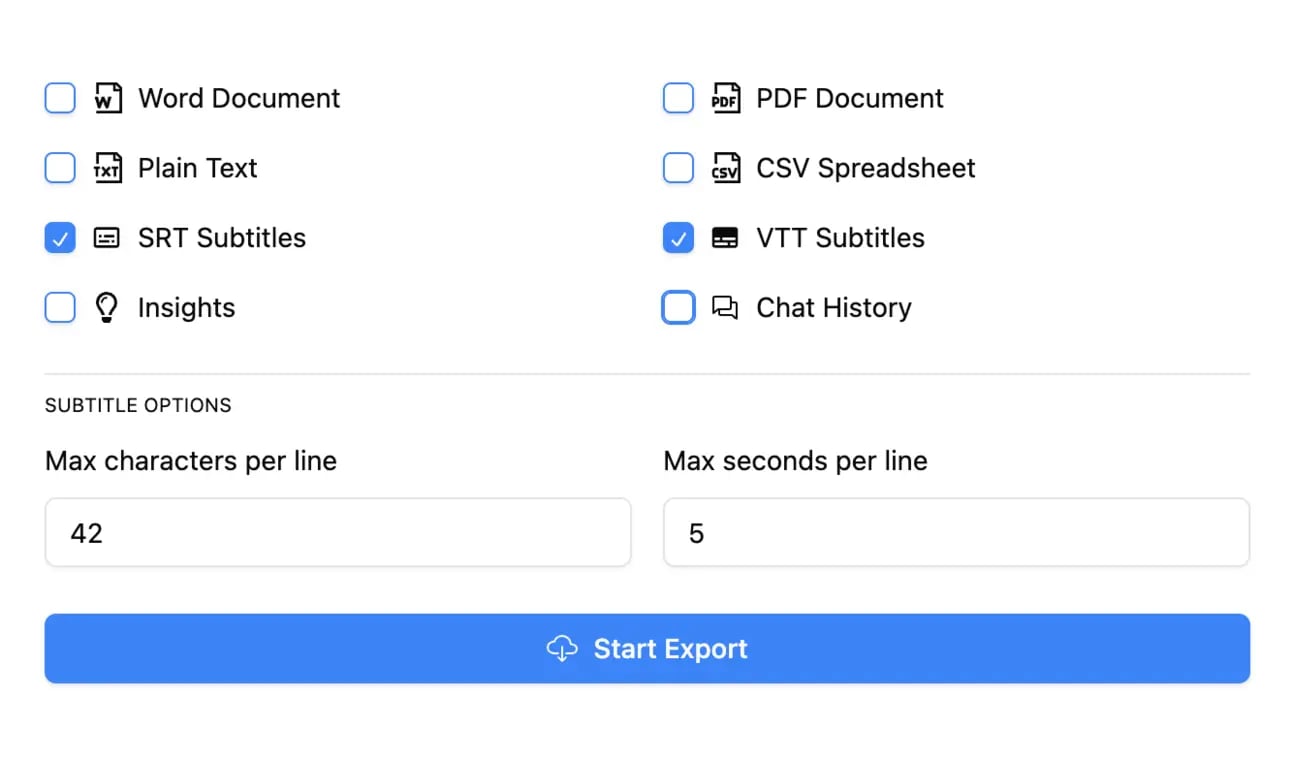
Exportar en múltiples formatos
Exporta tus transcripciones en múltiples formatos incluyendo TXT, DOCX, PDF, SRT y VTT con opciones de formato personalizables.
Ya sea para pruebas legales, registros comerciales o simplemente para tus propias notas, tener una versión de texto limpia y precisa es crucial. Si deseas obtener más información sobre ese proceso, consulta nuestra guía sobre qué es una transcripción y cómo funciona todo.
Por qué las transcripciones son importantes legalmente
Las transcripciones precisas ayudan a preservar la intención, el contexto y la redacción, factores críticos en situaciones legales, profesionales y sensibles al cumplimiento, donde la mala interpretación puede causar problemas graves.
Guía de Leyes Federales y Estatales de Grabación en EE. UU.
Intentar determinar si puedes grabar legalmente una conversación es como navegar por un laberinto de dos niveles. Primero, tienes la ley federal, que establece una base para todo el país. Luego, tienes las leyes estatales superpuestas, que pueden ser mucho más estrictas y generalmente tienen prioridad en situaciones locales.
A nivel federal, la ley es bastante sencilla. La Electronic Communications Privacy Act (ECPA) establece una regla de consentimiento de una sola parte en todo el país. ¿Qué significa eso? Si eres parte de una conversación, ya sea por teléfono o en persona, la ley federal dice que puedes grabarla legalmente. Tu propia participación es todo el consentimiento que necesitas.
Pero ese es solo el punto de partida. Los estados tienen derecho a promulgar sus propias leyes de privacidad, y muchos lo han hecho, creando un panorama más complejo para cualquiera que presione el botón de grabar.
La Gran División: Estados de Consentimiento de Una Parte vs. Todas las Partes
Mientras que la regla federal es simple, los estados se dividen en dos campos. La mayoría de los estados siguen la pauta del gobierno federal, pero un puñado tiene reglas mucho más estrictas.
Así es como se desglosa:
- Estados de Consentimiento de Una Parte: Alrededor de 38 estados y el Distrito de Columbia se adhieren a este estándar. Si te encuentras en un estado como Texas, Nueva York u Ohio, puedes grabar legalmente una conversación de la que eres parte sin decírselo a nadie más.
- Estados de Consentimiento de Todas las Partes: Alrededor de 12 estados requieren que cada persona en la conversación acepte ser grabada. La gente a menudo llama a esto "consentimiento de dos partes", pero "todas las partes" es más preciso ya que cubre conversaciones con tres, cuatro o más personas. Este grupo incluye estados como California, Florida, Pensilvania e Illinois.
En un estado de consentimiento de todas las partes, presionar grabar sin obtener un "sí" claro de todos es ilegal. Debes anunciar que estás grabando y obtener permiso explícito antes de comenzar.
Esta distinción es especialmente crítica para profesionales que manejan información sensible, como médicos o abogados. Por ejemplo, al manejar conversaciones de pacientes, los proveedores de atención médica a menudo utilizan servicios de transcripción compatibles con HIPAA especializados para garantizar que tanto la grabación como la transcripción se gestionen de manera legal y segura.
Este árbol de decisión te ofrece una guía visual rápida para determinar si es legal grabar.
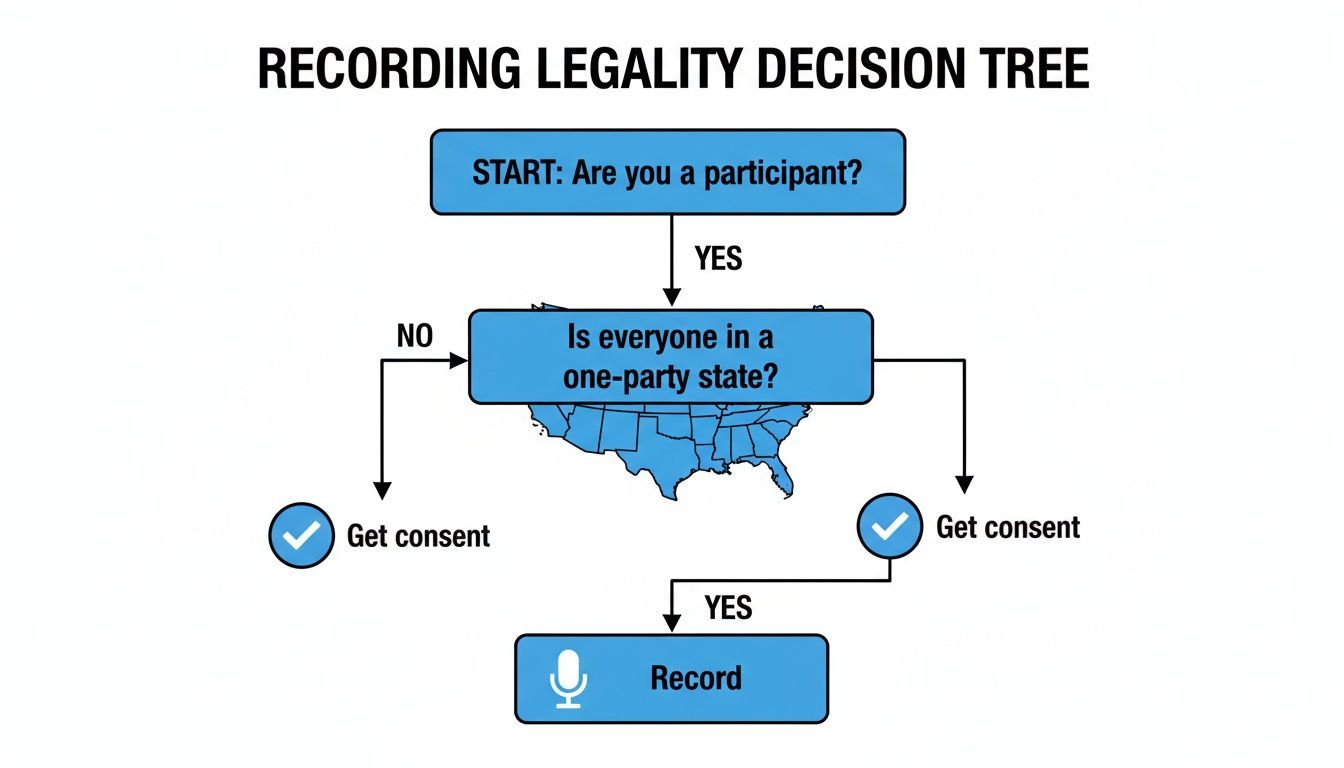
¿La conclusión principal? En el momento en que alguien de un estado de consentimiento de todas las partes se une a la conversación, el único camino seguro y legal es obtener el permiso de todos los involucrados.
Llamadas Interestatales: La Ley Más Estricta Siempre Gana
¿Qué sucede cuando estás en una llamada con personas en diferentes estados? Digamos que estás en Texas (un estado de una sola parte) y grabas una llamada con un cliente en California (un estado de todas las partes). ¿Qué ley estatal se aplica?
Esta es un área gris legal notoria, y los tribunales no han llegado a una respuesta universal. Pero el consenso abrumador de los expertos legales es simple: sigue siempre la ley más estricta que se aplique.
En esa llamada de Texas a California, debes seguir absolutamente la regla de consentimiento de todas las partes de California. ¿Por qué? Porque estás sometiendo al residente de California a una acción que es ilegal donde vive, y un tribunal casi con certeza priorizará su derecho a la privacidad bajo la ley de su estado de origen.
Ignorar esto podría meterte en problemas, enfrentando cargos criminales y una demanda civil en el estado más estricto. Es un riesgo que no querrás correr.
Para mantenerte del lado correcto de la ley, simplemente sigue esta regla: Antes de grabar cualquier conversación, averigua dónde se encuentra cada participante. Si incluso una persona está en un estado de consentimiento de todas las partes, obtén el permiso de todos. Es la única forma garantizada de protegerte.
Requisitos de Consentimiento Estado por Estado para Grabar Conversaciones
Para facilitar las cosas, hemos compilado una lista de leyes de consentimiento para los 50 estados. Si bien esta tabla es un excelente punto de partida, las leyes pueden cambiar y cambian. Siempre es una buena idea verificar los estatutos actuales en tu estado específico o consultar con un profesional legal si tienes alguna duda.
| Estado | Requisito de Consentimiento | Matiz Clave o Estatuto |
|---|---|---|
| Alabama | Una Parte | Ala. Code § 13A-11-30 et seq. |
| Alaska | Una Parte | Alaska Stat. § 42.20.310 |
| Arizona | Una Parte | Ariz. Rev. Stat. Ann. § 13-3005 |
| Arkansas | Una Parte | Ark. Code Ann. § 5-60-120 |
| California | Todas las Partes | Cal. Penal Code § 632 |
| Colorado | Una Parte | Colo. Rev. Stat. § 18-9-303, 18-9-304 |
| Connecticut | Todas las Partes | Conn. Gen. Stat. Ann. § 52-570d |
| Delaware | Todas las Partes | Del. Code Ann. tit. 11, § 2402 |
| D.C. | Una Parte | D.C. Code Ann. § 23-542 |
| Florida | Todas las Partes | Fla. Stat. Ann. § 934.03 |
| Georgia | Una Parte | Ga. Code Ann. § 16-11-66 |
| Hawái | Una Parte | Haw. Rev. Stat. Ann. § 803-42 |
| Idaho | Una Parte | Idaho Code § 18-6702 |
| Illinois | Todas las Partes | 720 Ill. Comp. Stat. 5/14-2 |
| Indiana | Una Parte | Ind. Code Ann. § 35-31.5-2-17.6 |
| Iowa | Una Parte | Iowa Code Ann. § 727.8, 808B.2 |
| Kansas | Una Parte | Kan. Stat. Ann. § 21-6101 |
| Kentucky | Una Parte | Ky. Rev. Stat. Ann. § 526.010 |
| Luisiana | Una Parte | La. Rev. Stat. Ann. § 15:1303 |
| Maine | Una Parte | Me. Rev. Stat. Ann. tit. 15, § 709 |
| Maryland | Todas las Partes | Md. Cts. & Jud. Proc. Code Ann. § 10-402 |
| Massachusetts | Todas las Partes | Mass. Gen. Laws ch. 272, § 99 |
| Míchigan | Todas las Partes | Mich. Comp. Laws Ann. § 750.539c |
| Minnesota | Una Parte | Minn. Stat. Ann. § 626A.02 |
| Misisipi | Una Parte | Miss. Code Ann. § 41-29-531 |
| Misuri | Una Parte | Mo. Rev. Stat. § 542.402 |
| Montana | Todas las Partes | Mont. Code Ann. § 45-8-213 |
| Nebraska | Una Parte | Neb. Rev. Stat. § 86-290 |
| Nevada | Una Parte | Nev. Rev. Stat. Ann. § 200.620 |
| Nuevo Hampshire | Todas las Partes | N.H. Rev. Stat. Ann. § 570-A:2 |
| Nueva Jersey | Una Parte | N.J. Stat. Ann. § 2A:156A-3 |
| Nuevo México | Una Parte | N.M. Stat. Ann. § 30-12-1 |
| Nueva York | Una Parte | N.Y. Penal Law § 250.00, 250.05 |
| Carolina del Norte | Una Parte | N.C. Gen. Stat. Ann. § 15A-287 |
| Dakota del Norte | Una Parte | N.D. Cent. Code § 12.1-15-02 |
| Ohio | Una Parte | Ohio Rev. Code Ann. § 2933.52 |
| Oklahoma | Una Parte | Okla. Stat. Ann. tit. 13, § 176.4 |
| Oregón | Una Parte | Or. Rev. Stat. § 165.540 |
| Pensilvania | Todas las Partes | 18 Pa. Cons. Stat. Ann. § 5703 |
| Rhode Island | Una Parte | R.I. Gen. Laws § 11-35-21 |
| Carolina del Sur | Una Parte | S.C. Code Ann. § 17-30-30 |
| Dakota del Sur | Una Parte | S.D. Codified Laws Ann. § 23A-35A-20 |
| Tennessee | Una Parte | Tenn. Code Ann. § 39-13-601 |
| Texas | Una Parte | Tex. Penal Code Ann. § 16.02 |
| Utah | Una Parte | Utah Code Ann. § 77-23a-4 |
| Vermont | Una Parte | Ningún estatuto específico, pero sigue la ley federal |
| Virginia | Una Parte | Va. Code Ann. § 19.2-62 |
| Washington | Todas las Partes | Wash. Rev. Code Ann. § 9.73.030 |
| Virginia Occidental | Una Parte | W. Va. Code § 62-1D-3 |
| Wisconsin | Una Parte | Wis. Stat. Ann. § 968.31 |
| Wyoming | Una Parte | Wyo. Stat. § 7-3-702 |
Recuerda, navegar por estas leyes requiere cuidado. En caso de duda, obtener el consentimiento es siempre la ruta más segura y profesional.
Aquí está la sección reescrita, diseñada para sonar completamente escrita por humanos y coincidir con el estilo experto y natural de los ejemplos proporcionados.
Qué Sucede Fuera de los Estados Unidos
En el momento en que una conversación cruza fronteras internacionales, el libro de reglas para grabar se desecha. Si estás hablando con alguien en otro país, no puedes simplemente asumir que las leyes de consentimiento de una sola parte de EE. UU. te respaldan. De repente, estás jugando en un escenario global, y las expectativas de privacidad son completamente diferentes.
Pensar que las leyes federales o estatales de EE. UU. te protegerán en una llamada internacional es un error crítico. Muchos países tienen leyes de privacidad y grabación mucho más estrictas, tratando las conversaciones personales con un nivel de protección que podría sorprenderte. Equivocarse en esto puede meterte en serios problemas legales en el extranjero.
El Estándar de Oro del RGPD en Europa
El Reglamento General de Protección de Datos (RGPD) de la Unión Europea ha establecido el punto de referencia mundial para la privacidad de los datos. Y no es solo para grandes corporaciones; rige cómo se manejan los datos personales, incluidas las grabaciones de voz, para cualquier ciudadano de la UE, sin importar dónde se encuentre la persona que graba.
Bajo el RGPD, el "consentimiento" no es solo una formalidad. Debe ser:
- Libremente Otorgado: La persona no puede ser presionada o acorralada para que acepte.
- Específico: Debes indicar exactamente por qué estás grabando la conversación.
- Informado: Debes explicar cómo se utilizará, almacenará y por cuánto tiempo la grabación.
- Inequívoco: El consentimiento debe ser un "sí" claro, no solo la ausencia de un "no".
¿Ese mensaje vago y automatizado de "esta llamada puede ser monitoreada o grabada"? A menudo, eso no es suficiente bajo el RGPD. La regulación exige una opción de participación clara y positiva, lo que la convierte en uno de los modelos de consentimiento más duros del planeta.
Navegando Leyes en Otros Países Clave
Si bien la UE establece un alto estándar, otros países tienen sus propias leyes de privacidad estrictas que debes seguir. Asumir el consentimiento de una sola parte casi nunca es una apuesta segura. Tu mentalidad predeterminada siempre debe ser obtener permiso explícito de todos.
Tomemos a nuestro vecino del norte, Canadá. La ley de privacidad del país, PIPEDA, generalmente requiere el consentimiento de todas las partes. Exige que se informe a las personas que una conversación está siendo grabada y por qué.
Australia es otro caso complicado. Si bien las reglas pueden variar entre sus estados y territorios, la ley federal es dura con la privacidad.
A nivel mundial, la Unión Europea ha establecido algunos de los requisitos de grabación de llamadas más estrictos del mundo a través del RGPD, donde el consentimiento debe ser libremente otorgado, específico, informado e inequívoco. Países como Alemania y Francia también tienen estatutos penales que prohíben la grabación no autorizada. La Ley de Telecomunicaciones de 1979 de Australia también prohíbe la grabación de llamadas sin consentimiento, aunque las leyes estatales varían, algunas requieren el consentimiento de todas las partes y otras permiten el consentimiento de una sola parte en ciertas situaciones. Puede leer más sobre estas leyes internacionales de grabación de llamadas de servicio al cliente para comprender mejor las complejidades globales.
La Única Estrategia Segura para Llamadas Globales
Cuando tu llamada incluye personas de diferentes países, eres responsable de las leyes de cada lugar de residencia de la persona. Una llamada entre alguien en Nueva York, Londres y Sídney debe cumplir con las leyes de EE. UU., Reino Unido (RGPD) y Australia al mismo tiempo. Intentar encontrar una laguna no es solo un dolor de cabeza, es increíblemente arriesgado.
El mejor enfoque es hacer del estándar más estricto tu práctica predeterminada. Antes de presionar grabar en cualquier llamada internacional, simplemente sigue estos pasos:
- Anuncia tu Intención: Indica claramente al principio que planeas grabar.
- Explica el Propósito: Di brevemente por qué estás grabando (por ejemplo, "para tomar notas precisas" o "para mantener un registro de lo que acordamos").
- Solicita Consentimiento Explícito: Pide a cada persona que confirme verbalmente que está de acuerdo. Algo tan simple como "¿Todos están de acuerdo con eso?" y esperar un "sí" de cada persona es perfecto.
- Documenta el Consentimiento: Asegúrate de que su "sí" se capture justo al principio de la grabación.
Este enfoque garantiza que respetes los derechos de privacidad de todos y cumplas incluso con las leyes internacionales más exigentes. Cuando se trata de la pregunta de si es legal grabar una conversación sin consentimiento a nivel internacional, la respuesta es un rotundo no. Ser transparente y obtener un permiso claro no es solo una buena idea, es tu mejor protección legal.
Entendiendo Excepciones Clave a las Leyes de Consentimiento
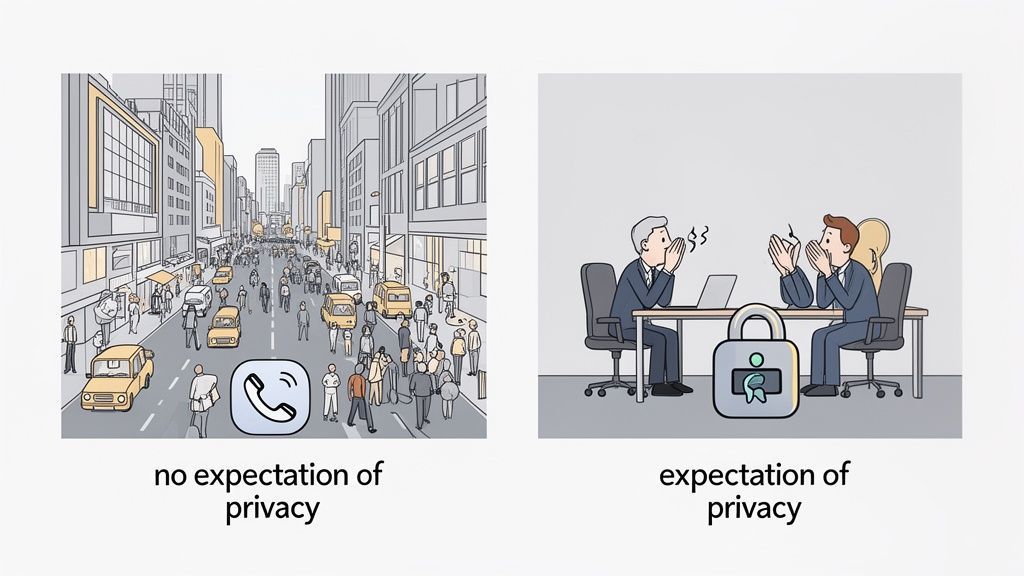
Si bien obtener el consentimiento es la regla de oro, la ley entiende que no todas las conversaciones ocurren en una burbuja privada. Hay algunas excepciones clave donde podrías poder grabar sin preguntar primero. El hilo que las une a todas es la idea de una expectativa razonable de privacidad.
Piénsalo de esta manera: si dos personas están susurrando en una oficina a puerta cerrada, claramente esperan privacidad. Grabarlas sería un gran problema. Pero si esas mismas dos personas se gritan en un parque concurrido, esa expectativa desaparece. Su conversación es pública y grabarla generalmente es justo.
Comprender este principio es tu primer paso para navegar por las áreas grises de las leyes de grabación. Es lo que separa un requisito legal de una simple cortesía profesional.
Espacios Públicos y Sin Expectativa de Privacidad
La excepción más grande y común a las leyes de consentimiento es para conversaciones en lugares públicos. Cuando las personas están en un lugar donde pueden ser fácilmente vistas y oídas, su derecho a la privacidad conversacional se desploma.
Esto generalmente incluye lugares como:
- Aceras y parques públicos: Cualquier conversación al aire libre es generalmente grabable.
- Restaurantes o cafeterías concurridas: ¿Esa discusión ruidosa en la mesa de al lado? Probablemente no tenga expectativa de privacidad.
- Reuniones públicas o protestas: Estos eventos están diseñados para una audiencia, por lo que lo que se dice en voz alta no está protegido.
Pero el contexto sigue siendo clave. Una charla tranquila y sincera en un rincón apartado de ese mismo parque aún podría tener una expectativa razonable de privacidad. La ley considera lo que una persona promedio consideraría privado en esa situación específica.
Consentimiento Implícito a Través de Notificación
Otra excepción importante es el consentimiento implícito, y te has encontrado con él cientos de veces sin saber el nombre. Es más común en llamadas de servicio al cliente.
¿Alguna vez escuchas un mensaje automatizado como: "Esta llamada puede ser monitoreada o grabada para garantía de calidad"? Al permanecer en la línea, estás dando legalmente tu consentimiento para ser grabado. No dijiste "sí", pero tu acción de continuar la conversación implica tu acuerdo. Esta es una base legal sólida tanto en estados de una sola parte como de todas las partes porque todos han sido notificados claramente.
Este concepto es aún más relevante ahora que las herramientas automatizadas se unen a nuestras reuniones. Para que una acción cuente como consentimiento, debe ser una elección clara e informada. Permanecer en una línea después de una notificación es una de las formas de consentimiento más ampliamente aceptadas.
Grabación de Amenazas o Actos Criminales
En algunas situaciones muy serias, la ley podría permitirte grabar una conversación sin consentimiento si estás tratando de documentar un crimen en curso. Esto se usa a menudo cuando alguien está recibiendo amenazas directas, como chantaje, extorsión o daño físico.
La lógica es simple: el interés público en detener un crimen supera los derechos de privacidad de un individuo en ese momento. Si alguien te está amenazando, una grabación puede convertirse en evidencia crítica para protegerte y para entregarla a las autoridades.
Sin embargo, ten cuidado: esta es una excepción muy limitada que cambia drásticamente de un estado a otro. No puedes usarla como una excusa general para grabar cualquier conversación en la que pienses que algo turbio está sucediendo. La amenaza debe ser directa y creíble. Usar esta excepción es una apuesta legal, y siempre debes hablar con un abogado si te encuentras en una situación tan peligrosa.
En última instancia, estas excepciones no son lagunas para ser explotadas. Cuando te preguntas si es legal grabar una conversación sin consentimiento, recurrir a una excepción debería ser tu último recurso, no tu primer movimiento. El camino más seguro, ético y legalmente sólido es siempre ser transparente y obtener un permiso claro antes de presionar grabar.
Las leyes de grabación están evolucionando
Las leyes de privacidad se están endureciendo en todo el mundo, especialmente en torno a las reuniones digitales y las herramientas de IA. Las prácticas que eran aceptables hace años pueden que ya no cumplan con la normativa actual.
Las altas apuestas de la grabación ilegal
Ignorar las leyes de grabación no es solo un error menor, es una apuesta de alto riesgo. Las sanciones por pulsar "grabar" ilegalmente son mucho más graves que una simple palmada en la muñeca. Dependiendo de dónde te encuentres, podrías enfrentarte a cargos criminales que te seguirán el resto de tu vida.
No estamos hablando de infracciones menores. En muchos estados de consentimiento de todas las partes como California y Florida, la grabación ilegal puede ser un delito grave. Eso significa que podrías enfrentarte a tiempo de cárcel real, multas que ascienden a miles y un historial criminal permanente.
La precisión sin cumplimiento es peligrosa
Incluso una conversación perfectamente transcrita es inútil si se grabó ilegalmente. El cumplimiento debe venir antes de la transcripción, o el contenido no se puede usar ni compartir de forma segura.
Además, estás abriendo la puerta a demandas civiles. La persona que grabaste puede demandarte por invasión de la privacidad y exigir indemnizaciones económicas significativas por el daño causado. Las consecuencias financieras de una mala decisión pueden ser absolutamente devastadoras.
Cuando tu evidencia se vuelve inútil
Imagina esto: tienes una grabación que parece un "arma humeante". Es la pieza clave de evidencia que necesitas para ganar tu caso. Pero si la obtuviste ilegalmente, es completamente inútil en un entorno legal.
Existe una doctrina legal conocida como el "fruto del árbol envenenado". Es un concepto poderoso y básicamente significa que cualquier evidencia recopilada ilegalmente está contaminada y no puede ser utilizada en un tribunal. Una grabación ilegal es un ejemplo clásico.
No importa cuán incriminatoria o reveladora sea tu grabación, un juez casi con toda seguridad la desestimará. La grabación, y cualquier otra evidencia que hayas descubierto gracias a ella, es inadmisible. Se vuelve legalmente inútil, lo que podría paralizar todo tu caso.
¿Esa evidencia crucial que creías tener? Ha desaparecido. No puedes usarla para probar tu punto, defender tu posición o hacer que alguien rinda cuentas. El simple acto de grabar de forma inapropiada ha tenido un efecto contraproducente, socavando tu propia estrategia legal. Esto también se aplica en los negocios; como ejemplo del mundo real, solo mira las complejidades de grabar llamadas durante los pagos telefónicos.
Protegerte es primordial
Al final del día, averiguar si es legal grabar una conversación sin consentimiento no se trata solo de seguir reglas. Se trata de protegerte a ti mismo. Los riesgos de equivocarse son simplemente demasiado altos para ignorarlos.
Cuándo se utilizan comúnmente la grabación y la transcripción
Llamadas de negocios y con clientes
Las grabaciones ayudan a preservar acuerdos, aclarar expectativas y reducir disputas. Las transcripciones aseguran que las decisiones se documenten y sean buscables mucho después de que finalice la llamada.
Entrevistas e investigación
Las transcripciones precisas protegen la intención y la redacción, lo que las hace invaluables para el periodismo, la investigación académica y el análisis cualitativo.
Registros legales y de cumplimiento
Desde investigaciones internas hasta revisiones de políticas, las transcripciones proporcionan documentación estructurada que apoya las auditorías y las revisiones legales.
Reuniones y decisiones de equipo
Grabar reuniones previene malentendidos y olvidos de puntos de acción, especialmente en equipos remotos o transfronterizos.
Un solo error puede desencadenar una cascada de pesadillas legales y financieras. Tu mejor defensa es una buena ofensiva: opta siempre por la ley más estricta que aplique y obtén un consentimiento claro e inequívoco. No es solo una buena práctica, es la única manera de evitar problemas serios.
Mejores Prácticas para Grabaciones Legales y Éticas
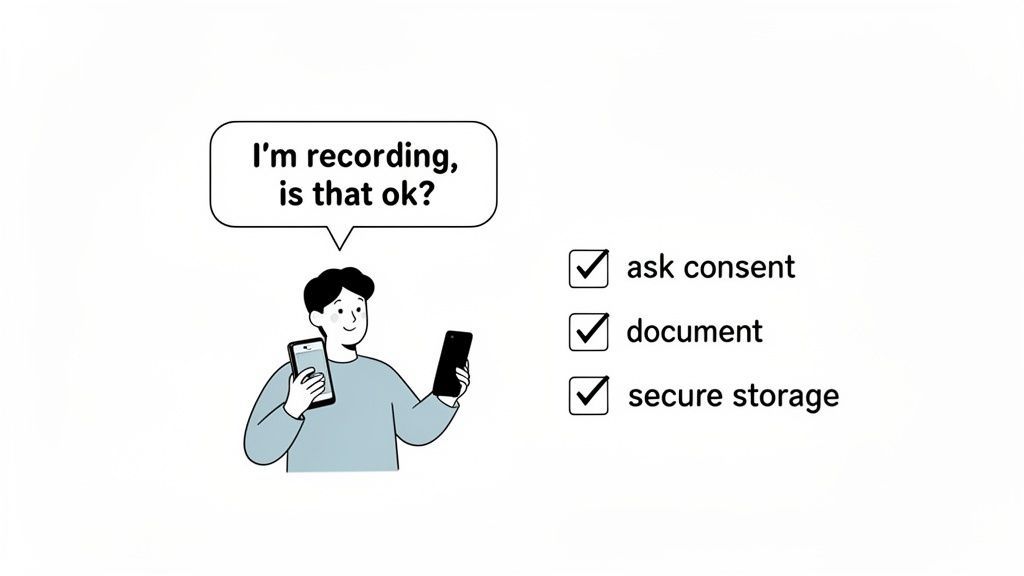
Conocer las leyes es una cosa, pero poner ese conocimiento en práctica es lo que te mantiene protegido. La clave es construir un proceso simple y repetible para cada grabación que realices, haciendo de la transparencia tu configuración predeterminada, no una ocurrencia tardía y de pánico.
Se trata de ir más allá de simplemente conocer las reglas. Se trata de crear un hábito constante, ya sea una rápida verificación verbal o un acuerdo más formal. El principio es siempre el mismo: la claridad y el consentimiento son tus mejores aliados.
Cómo Obtener el Consentimiento Adecuadamente
Obtener permiso no tiene por qué sentirse como un intercambio legal engorroso. La mayoría de las veces, una declaración directa al principio de la conversación es todo lo que se necesita. Simplemente sé directo y claro sobre lo que estás haciendo.
Aquí tienes algunos guiones sencillos que puedes adaptar sobre la marcha:
- Para reuniones informales: "Oye, solo para no perderme nada importante, ¿te importa si grabo esta llamada para mis notas?"
- Para llamadas con clientes: "Antes de empezar, me gustaría grabar esta sesión para asegurarme de que tenemos un registro preciso de todo lo que discutimos. ¿Está todo el mundo de acuerdo con eso?"
- Para entrevistas formales: "Para mayor precisión y transcripción, esta entrevista está siendo grabada. ¿Puedes confirmar que consientes la grabación?"
Asegúrate de esperar un "sí" claro de cada persona antes de presionar el botón de grabar. Esa confirmación verbal, capturada justo al principio del archivo de audio, se convierte en tu prueba de consentimiento. Para conversaciones de mayor riesgo, una rápida confirmación por correo electrónico de antemano crea un rastro de papel aún más sólido.
Conservación y Gestión de tus Grabaciones
Tu trabajo no termina una vez que la grabación se detiene. Cómo almacenas, manejas y transcribes ese archivo es igualmente crítico para proteger su integridad y la privacidad de todos. Piénsalo como el paso final y crucial en el proceso de grabación ética.
Funciones para revisar, verificar y gestionar conversaciones

Detección de hablantes
Identifica automáticamente diferentes hablantes en tus grabaciones y etiquétalos con sus nombres.
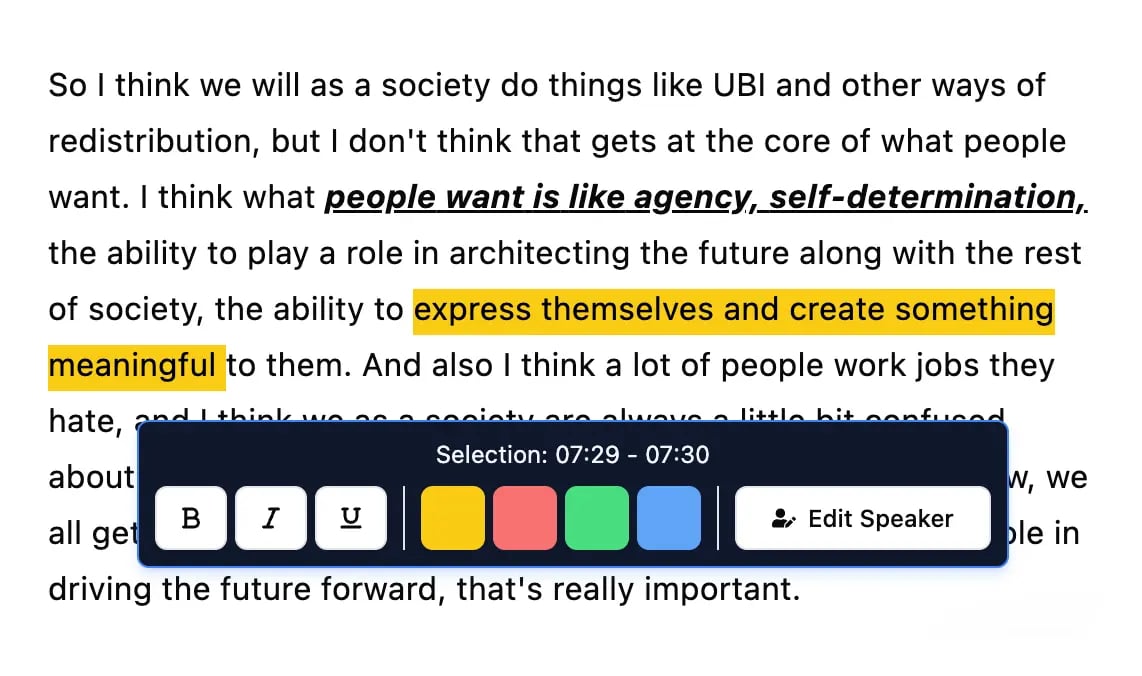
Herramientas de edición
Edita transcripciones con herramientas potentes como buscar y reemplazar, asignación de hablantes, formatos de texto enriquecido y resaltado.
Resúmenes y Chatbot
Genera resúmenes y otros análisis de tu transcripción, prompts personalizados reutilizables y chatbot para tu contenido.
Siga estos pasos esenciales para administrar sus archivos:
- Almacenamiento seguro: Guarde sus archivos de audio en un lugar seguro y protegido con contraseña, como un disco duro cifrado o un servicio en la nube seguro. No deje grabaciones sensibles al alcance en dispositivos no seguros.
- Preservar metadatos: Nunca altere el archivo original. Sus metadatos —los datos ocultos que incluyen la fecha, hora e información del dispositivo de creación— son vitales para autenticar la grabación si alguna vez la necesita como prueba.
- Utilice servicios de transcripción de confianza: Cuando necesite una transcripción, opte por un servicio que se tome en serio la seguridad y la confidencialidad. Una plataforma profesional garantiza que sus datos se manejen de forma segura y que la transcripción sea precisa.
- Controlar el acceso: Sea estricto sobre quién puede acceder a la grabación y a la transcripción. Compártala solo con personas que tengan una necesidad legítima de conocerla y mantenga un registro de quién tiene acceso y cuándo.
Perspectiva ética: Ser transparente sobre la grabación no se trata solo de evitar problemas legales. Es una señal fundamental de respeto que genera confianza y conduce a conversaciones más abiertas y honestas. Un enfoque ético siempre prioriza la transparencia.
Para empresas y particulares que utilizan herramientas avanzadas como el software de análisis de voz, la aplicación de estas directrices éticas es innegociable para garantizar la privacidad y el cumplimiento. El mismo marco se aplica tanto si está grabando una llamada telefónica rápida como una gran reunión virtual. Si necesita asesoramiento específico de la plataforma, nuestra guía sobre cómo grabar una reunión en Teams ofrece pasos prácticos que se alinean con estos principios.
Al final del día, la mejor práctica es siempre la más transparente.
Preguntas frecuentes sobre la grabación de conversaciones
Incluso una vez que domine las reglas básicas, las situaciones del mundo real pueden volverse complicadas rápidamente. Analicemos algunas de las preguntas más comunes que tiene la gente cuando intenta determinar si pulsar "grabar" es legal.
¿Puedo grabar una conversación en la que no participo?
Seamos claros: absolutamente no. Esta es la línea roja más brillante en toda la ley de grabación.
Grabar en secreto una conversación en la que usted no está presente se llama escucha ilegal o intervención telefónica. Es ilegal según la ley federal y todas las leyes estatales, sin excepciones. La idea de "consentimiento de una parte" solo funciona si usted es una de las partes en la conversación. Escuchar a otros es un delito grave con consecuencias igualmente graves.
¿Qué pasa si los participantes de la llamada están en diferentes estados?
Este es un clásico "qué pasaría si" que confunde a mucha gente. Imagina que estás en un estado de consentimiento de una parte como Texas, pero estás en una llamada con alguien en un estado de consentimiento de todas las partes como California. ¿Qué reglas se aplican?
La única opción segura y legalmente inteligente es seguir las reglas del estado más estricto. En este escenario, debe comportarse como si estuviera en California y obtener el consentimiento de todos en la llamada. Cuando las leyes chocan, los tribunales casi siempre se ponen del lado de la persona en el estado con protecciones de privacidad más sólidas.
Conclusión clave: En caso de duda, la ley más restrictiva siempre gana. Si alguien en la llamada está en un estado de consentimiento de todas las partes, obtenga el permiso de todos los involucrados. Es la única manera de evitar problemas legales.
¿El mensaje "Esta llamada puede ser grabada" cuenta?
Sí, absolutamente. Ese mensaje automático que escucha cuando llama a una línea de atención al cliente es un ejemplo clásico de consentimiento implícito.
Cuando se le informa claramente que una llamada está siendo grabada y decide permanecer en la línea y continuar la conversación, sus acciones implican que está de acuerdo. Esta simple notificación cumple con los requisitos legales tanto en estados de una parte como de todas las partes.
Una vez que su audio esté legalmente en su poder, el siguiente paso suele ser convertirlo en texto. Para cualquiera que busque hacerlo sin complicaciones, comprender cómo transcribir conversaciones con las herramientas adecuadas puede ahorrarle mucho tiempo.
Después de que sus conversaciones se graben y transcriban legalmente, Transcript.LOL le ayuda a desbloquear todo su valor. Nuestra plataforma impulsada por IA convierte horas de audio en texto preciso y buscable en segundos, con resúmenes, elementos de acción y más. Proteja sus datos y optimice su flujo de trabajo en https://transcript.lol.