
Wie man einen Podcast bewirbt: Geheimnisse für das Wachstum eines Podcasts
Entdecken Sie, wie Sie Ihren Podcast mit praktischen SEO-, Social-Media- und Kollaborationstaktiken bewerben, um von Null an eine loyale Zielgruppe aufzubauen.
Praveen
May 14, 2025
Einen Podcast zu bewerben ist keine einmalige Aufgabe. Es ist eine ständige, vielschichtige Anstrengung, die mit einer Killer-Grundlage beginnt und sich zu einem stetigen Marketing-Summen entwickelt. Die eigentliche Strategie besteht darin, herauszufinden, mit wem Sie sprechen, Inhalte zu erstellen, die sie nicht ignorieren können, und diese Inhalte dann überall zu verbreiten – soziale Medien, E-Mail, Partnerschaften, was auch immer.
Erfolg liegt nicht in einem viralen Trick; es geht darum, eine nachhaltige Wachstumsmaschine aufzubauen.
Modernste KI
Angetrieben von OpenAIs Whisper für branchenführende Genauigkeit. Unterstützung für benutzerdefinierte Vokabulare, bis zu 10 Stunden lange Dateien und ultraschnelle Ergebnisse.

Aus mehreren Quellen importieren
Importiere Audio- und Videodateien aus verschiedenen Quellen, einschließlich direktem Upload, Google Drive, Dropbox, URLs, Zoom und mehr.
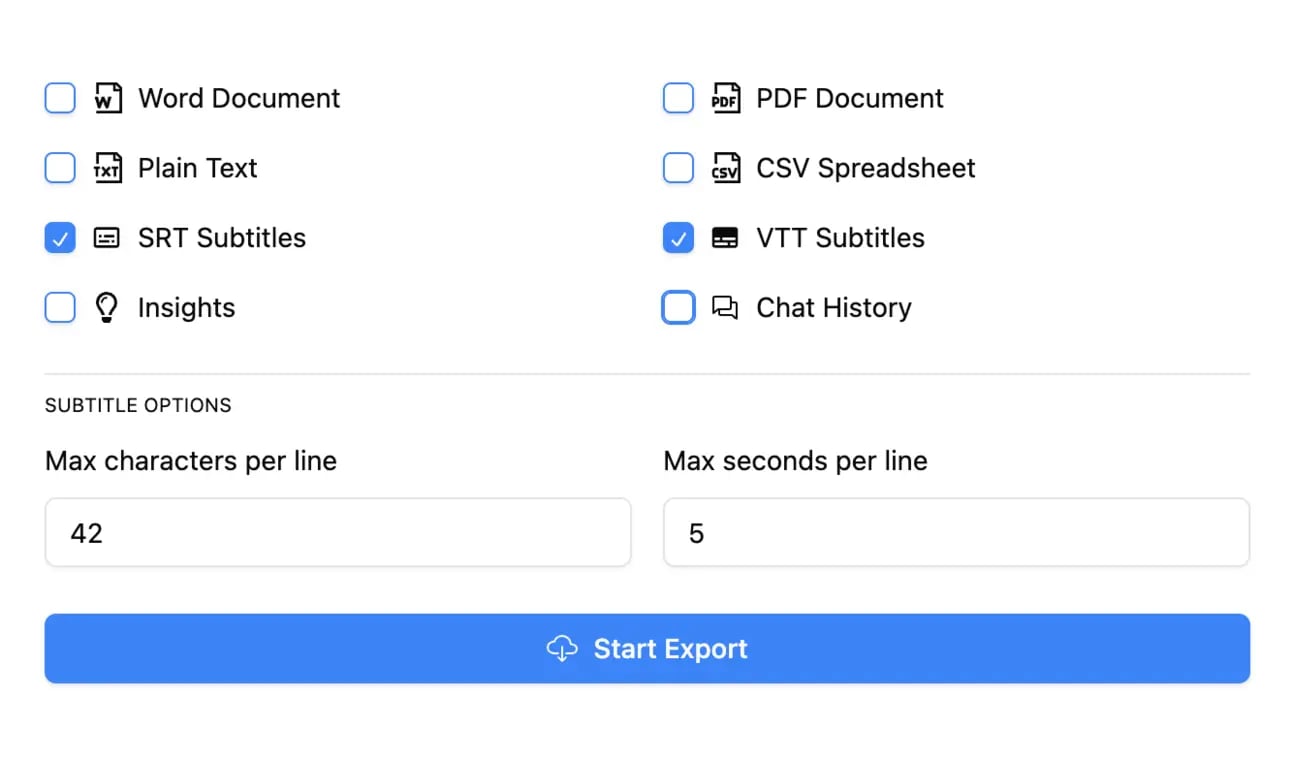
In mehreren Formaten exportieren
Exportiere deine Transkripte in mehreren Formaten, einschließlich TXT, DOCX, PDF, SRT und VTT mit anpassbaren Formatierungsoptionen.
Aufbau Ihrer Grundlage für Podcast-Wachstum
Bevor Sie einen Cent für Anzeigen ausgeben oder eine Stunde für Outreach aufwenden, müssen Sie die Grundlagen richtig machen. So viele Ersteller stürzen sich direkt in die Promotion, aber wenn die Grundlage schwach ist, wird selbst das beste Marketing ins Leere laufen. Ihre erste Aufgabe ist es, Ihre Show für Ihren idealen Hörer unwiderstehlich zu machen, sobald er Sie findet.
Warum Erstkontakte über Wachstum entscheiden?
Hörer entscheiden innerhalb von Sekunden, ob sie bleiben. Klare Positionierung, starke visuelle Elemente und fokussierte Botschaften stellen sicher, dass die richtige Zielgruppe sofort den Wert Ihres Podcasts versteht.
Alles beginnt damit, dass Sie sich kristallklar darüber werden, wen Sie erreichen möchten. Und ich meine wirklich klar, nicht nur oberflächliche demografische Daten. Was sind ihre größten Sorgen? Was bringt sie zum Lachen? Welche anderen Shows sind bereits in ihrer Bibliothek? Wenn Sie diese Fragen beantworten, können Sie Inhalte erstellen, die sich anfühlen, als wären sie nur für sie gemacht worden.
Eine magnetische erste Eindruck kreieren
Betrachten Sie das Coverbild und die Beschreibung Ihres Podcasts als sein digitales Schaufenster. Sie haben Sekunden Zeit, um die Aufmerksamkeit von jemandem zu erregen und ihn davon zu überzeugen, dass Sie seine Zeit wert sind. Ihr Coverbild muss auffallen, selbst als winziges Miniaturbild auf einem Handy. Das bedeutet kräftige Schriftarten und klare Bilder, die zur Stimmung Ihrer Show passen. Es ist eine winzige Werbetafel – machen Sie das Beste daraus.
Ihre Showbeschreibung hat zwei Aufgaben: den Menschen, der sie liest, zu fesseln und die Algorithmen der Plattform zu füttern. Der erste oder die ersten beiden Sätze müssen ein starker Aufhänger sein, der erklärt, worum es in der Show geht und für wen sie ist. Von dort aus können Sie beginnen, Schlüsselwörter und Phrasen einzuflechten, die Ihre Zielgruppe tatsächlich in eine Suchleiste eingeben würde.
Denken Sie daran, Ihre Podcast-Beschreibung ist nicht nur eine Zusammenfassung; sie ist ein Verkaufsgespräch. Sie muss die unausgesprochene Frage des Hörers beantworten: "Was habe ich davon?"
Die Macht eines starken Starts
Nur eine Episode am Starttag zu veröffentlichen, ist ein klassischer Anfängerfehler. Streben Sie stattdessen danach, mit einem Stapel von drei bis fünf Episoden zu starten, die vom ersten Tag an bereit sind. Das ist eine riesige Sache, weil es das Binge-Listening fördert. Wenn ein neuer Hörer auf Ihre Show stößt und die erste Episode liebt, sorgt die Tatsache, dass mehr Inhalte bereitstehen, dafür, dass er angefixt wird und viel wahrscheinlicher auf "Abonnieren" klickt.
Diese anfängliche Bibliothek zeigt, dass Sie es ernst meinen und gibt den Hörern ein viel besseres Gefühl dafür, worum es bei Ihnen geht.
Schlüsselsäulen eines Podcasts mit hohem Wachstum
Klarer Zielgruppenfokus
Erfolgreiche Podcasts sprechen einen bestimmten Hörer an, nicht jeden. Wenn Sie die Probleme, die Sprache und die Interessen Ihrer Zielgruppe kennen, können Sie Episoden erstellen, die sich persönlich relevant anfühlen.
Konsistente Veröffentlichung
Konsistenz schafft Vertrauen bei Hörern und Plattformen gleichermaßen. Ein zuverlässiger Veröffentlichungsplan trainiert Ihre Zielgruppe, wiederzukommen, und signalisiert Podcast-Algorithmen Qualität.
Starke Episodenstruktur
Gut strukturierte Episoden halten die Hörer länger bei der Stange. Klare Intros, fokussierte Diskussionen und starke Schlussfolgerungen verbessern die Wiedergabezeit und das Binge-Listening.
Entdeckungsoptimierung
Optimierte Titel, Beschreibungen und Transkripte helfen neuen Hörern, Ihre Show lange nach der Veröffentlichung einer Episode organisch zu finden.
Es baut eine Dynamik auf, die unglaublich schwer zu erzeugen ist, wenn man von Anfang an nur eine Episode nach der anderen veröffentlicht. Für einen umfassenderen Überblick über Content-Promotion im Allgemeinen lohnt es sich, diese 10 bewährten Methoden zur Bewerbung Ihrer Online-Inhalte zu prüfen.
Die Podcast-Welt boomt – die globale Hörerbasis wird im Jahr 2025 voraussichtlich 584,1 Millionen Menschen erreichen, ein Sprung von 15 % gegenüber 2023. Das ist ein riesiges Publikum, das auf großartige Inhalte wartet. Die Optimierung Ihrer Show für die Entdeckung auf großen Plattformen wie Spotify und Apple Podcasts ist nicht verhandelbar. All diese grundlegende Arbeit, von der Audioqualität bis hin zu einem klaren Zweck, stellt sicher, dass die Leute bei Ihnen bleiben, wenn sie Sie finden. In diesem Zusammenhang kann die frühzeitige Investition in den besten Diktiergerät mit Transkription Ihren Workflow und die Qualität Ihrer Inhalte von Anfang an erheblich verbessern.
Optimierung für die Entdeckung mit Podcast-SEO
Wenn Hörer Sie nicht finden können, können sie Sie nicht hören. So einfach ist das.
Effektive Podcast-Werbung beginnt nicht mit Social-Media-Posts oder bezahlten Anzeigen. Sie beginnt lange vorher, indem Sie Ihre Show von Anfang an auffindbar machen. Bei Podcast-SEO geht es darum, Plattformen wie Apple Podcasts, Spotify und sogar Google zu signalisieren, dass Ihre Show die perfekte Antwort ist, wenn ein Hörer danach sucht.
Dabei geht es nicht darum, das System auszutricksen. Es geht darum, Ihren Wert klar zu kommunizieren – sowohl an die Algorithmen als auch an Ihre zukünftigen Fans. Wenn jemand nach "Tipps für Kryptowährungen für Anfänger" oder "Comedy-Podcasts über Elternschaft" sucht, möchten Sie, dass Ihre Show ganz oben erscheint. So ziehen Sie Leute an, die bereits genau das suchen, was Sie erstellen.
Die richtigen Keywords für Ihre Nische finden
Die Keyword-Recherche für einen Podcast ist etwas anders als für einen Blog. Sie müssen sich in den Kopf eines Menschen versetzen, der in seine Podcast-App tippt. Ihre Suchen sind oft kurze, direkte Phrasen, die sich auf ein Thema, ein bestimmtes Problem oder sogar einen Gast konzentrieren, von dem sie hören möchten.
Ein guter Ausgangspunkt sind die Podcast-Apps selbst. Öffnen Sie Apple Podcasts oder Spotify und beginnen Sie einfach, ein breites Thema, das mit Ihrer Show zusammenhängt, in die Suchleiste einzugeben. Achten Sie genau auf die Autovervollständigungsvorschläge. Das sind echte Suchanfragen von echten Menschen.
Wenn Sie zum Beispiel "Startup-Finanzierung" eingeben, werden möglicherweise Vorschläge wie diese angezeigt:
- Startup-Finanzierung für Anfänger
- Wie man Risikokapital bekommt
- Interviews mit Angel-Investoren
Diese Phrasen sind pures Gold. Sie zeigen Ihnen die genaue Sprache, die Ihre Zielgruppe verwendet, und die Sie dann in den Titel, die Beschreibung und die einzelnen Episodentitel Ihrer Show einweben können.
Titel und Show Notes für maximale Wirkung gestalten
Sobald Sie eine solide Liste von Keywords haben, ist es an der Zeit, sie einzusetzen. Ihre Episodentitel sind Ihre wertvollste SEO-Fläche. Ein Titel wie "Episode 47 mit Jane Doe" sagt niemandem etwas.
Aber ein Titel wie "Jane Doe über die Sicherung Ihrer ersten Runde der Startup-Finanzierung"? Das ist beschreibend, vollgepackt mit relevanten Keywords und signalisiert sofort den darin enthaltenen Wert.
Das Gleiche gilt für Ihre Show Notes. Obwohl nicht jede Podcast-App ihnen viel Gewicht bei den Suchrankings gibt, sind sie absolut entscheidend dafür, einen zufälligen Surfer in einen engagierten Hörer zu verwandeln. Gute Show Notes sollten immer enthalten:
- Eine kurze, ansprechende Zusammenfassung der wichtigsten Punkte der Episode.
- Zeitstempel für die wichtigsten besprochenen Themen.
- Links zu allen erwähnten Ressourcen, Gästen oder Produkten.
- Ein natürliches Streuen Ihrer Ziel-Keywords und verwandter Phrasen.
Betrachten Sie Ihre Show Notes als einen Mini-Blogbeitrag für jede Episode. Sie geben den Hörern Kontext und den Suchalgorithmen mehr Informationen, um Ihre Inhalte richtig zu kategorisieren und zu ranken.
Wichtigster Punkt: Das Ziel ist es, Titel und Beschreibungen zu erstellen, die für Menschen ansprechend und für Suchalgorithmen kristallklar sind. Stopfen Sie nicht einfach Keywords hinein; nutzen Sie sie, um hervorzuheben, was Ihre Episode zu einem Muss macht.
Die Podcast-Welt wird immer größer, was bedeutet, dass immer mehr Menschen nach neuen Shows suchen.
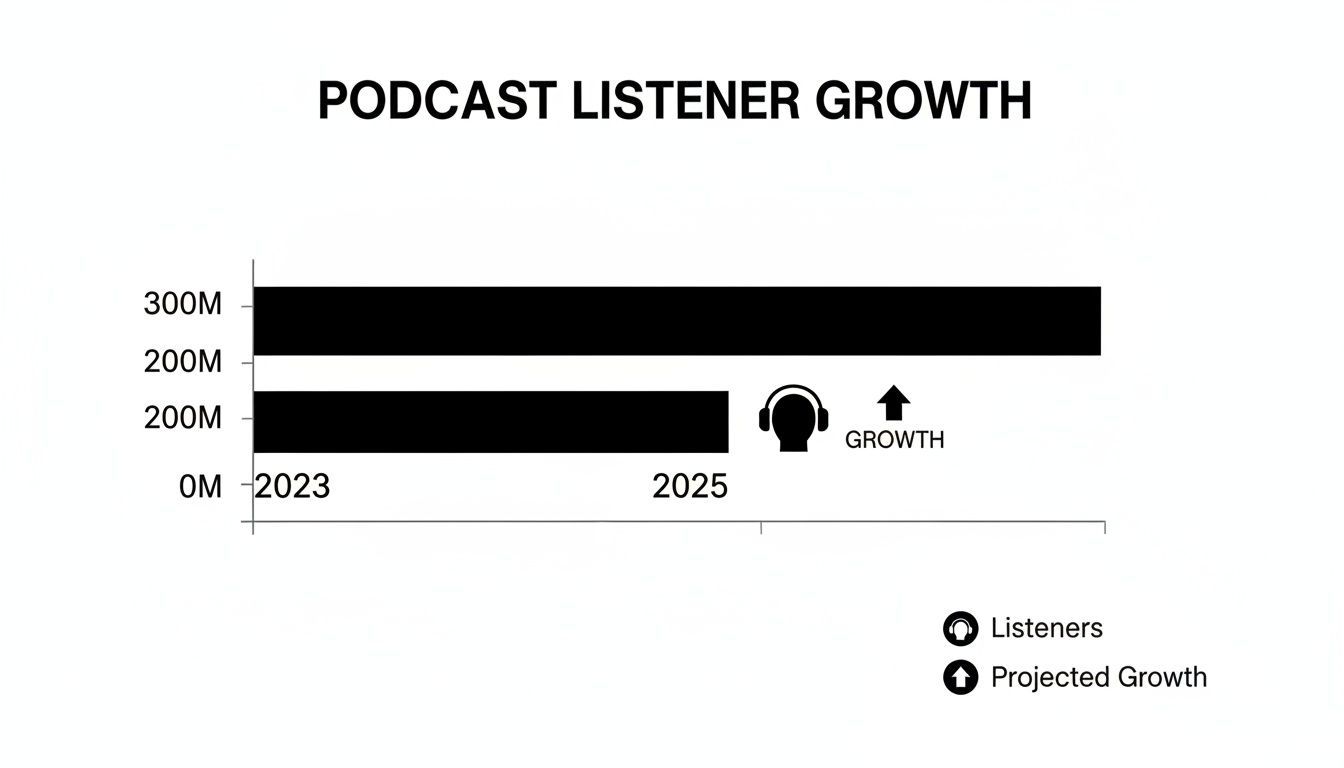
Diese Grafik zeigt, wie stark das Publikum wächst – von 200 Millionen im Jahr 2023 auf voraussichtlich 300 Millionen bis 2025. Das ist ein riesiger Pool potenzieller Hörer, und eine solide SEO ist Ihr Schlüssel, um sie zu erreichen.
Um Ihnen bei der Priorisierung Ihrer Bemühungen zu helfen, hier ein kurzer Überblick darüber, wie verschiedene Werbekanäle abschneiden.
Effektivität von Podcast-Werbekanälen
| Kanal | Potenzielle Reichweite | Aufwand | Schlüsselstrategie |
|---|---|---|---|
| Podcast-SEO | Hoch (Langfristig) | Mittel | Ziel-Keywords in Titeln, Beschreibungen und Show Notes anvisieren. |
| Soziale Medien | Mittel-Hoch | Hoch (Konstant) | Ansprechende Audiogramme, Clips und Behind-the-Scenes-Inhalte erstellen. |
| Gastauftritte | Hoch | Mittel | In anderen Podcasts Ihrer Nische auftreten, um deren Publikum zu erschließen. |
| Bezahlte Anzeigen | Hoch (Gezielt) | Mittel-Hoch | Plattformspezifische Anzeigen (z. B. Spotify Ads) nutzen, um ideale Hörer zu erreichen. |
| E-Mail-Marketing | Mittel | Niedrig-Mittel | Eine Liste aufbauen und Abonnenten über neue Episoden und exklusive Inhalte informieren. |
| Cross-Promotion | Mittel-Hoch | Niedrig | Mit anderen Podcastern für Promo-Swaps und Shout-outs zusammenarbeiten. |
Jeder Kanal hat seinen Platz, aber SEO ist das Fundament, das all Ihre anderen Bemühungen im Laufe der Zeit effektiver macht.
Die Macht von Transkriptionen nutzen
Hier ist eine der am meisten übersehenen SEO-Taktiken im Podcast-Bereich: vollständige Episodentranskriptionen.
Audio ist für Suchmaschinen wie Google unsichtbar. Aber ein textbasiertes Transkript? Das kann Google crawlen, indizieren und ranken. Indem Sie Ihre gesprochenen Worte in einen durchsuchbaren Blogbeitrag umwandeln, eröffnen Sie einen riesigen neuen Kanal für langfristige, organische Entdeckungen.
Funktionen, die Podcasts verbessern
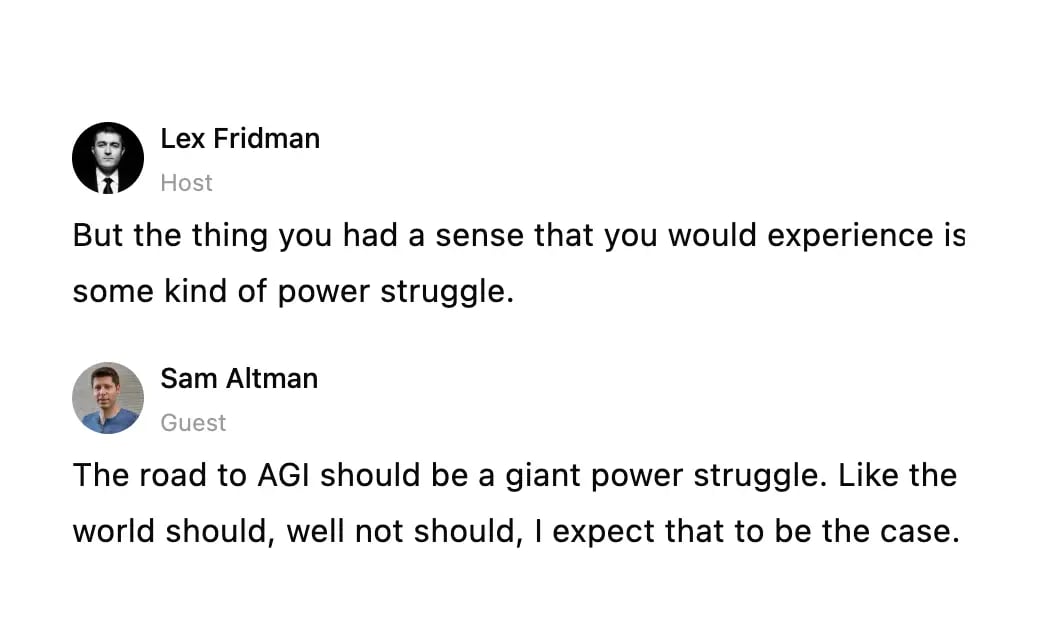
Sprechererkennung
Identifiziere automatisch verschiedene Sprecher in deinen Aufnahmen und beschrifte sie mit ihren Namen.
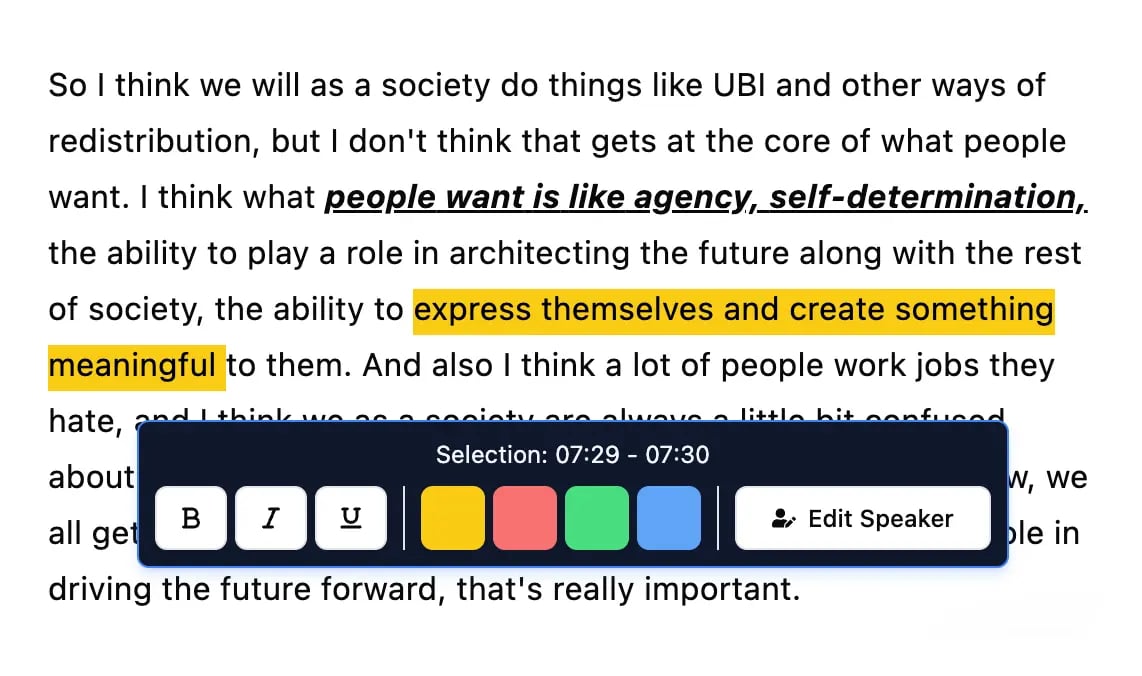
Bearbeitungswerkzeuge
Bearbeite Transkripte mit leistungsstarken Werkzeugen wie Suchen und Ersetzen, Sprecherzuordnung, Rich-Text-Formate und Hervorhebungen.
Zusammenfassungen und Chatbot
Erstelle Zusammenfassungen und andere Erkenntnisse aus deinem Transkript, wiederverwendbare benutzerdefinierte Prompts und Chatbot für deine Inhalte.
Jeder Transkript wird zu einem Keyword-reichen Asset, das für unzählige spezifische Phrasen ranken kann. Stellen Sie sich vor, jemand sucht nach einem ganz bestimmten Zitat oder Thema, das Sie beiläufig in einer Episode erwähnt haben. Diese Person könnte direkt auf Ihrer Website landen und dabei Ihren gesamten Podcast entdecken. Dies verwandelt Ihren Backkatalog in eine leistungsstarke, immergrüne Marketingmaschine, die rund um die Uhr für Sie arbeitet.
Dies von Hand zu tun wäre ein Albtraum, aber KI-gestützte Tools haben es unglaublich schnell und erschwinglich gemacht. Für eine vollständige Anleitung lesen Sie diese Aufschlüsselung unter wie man einen Podcast transkribiert und erfahren Sie, wie Sie dies in Ihren Workflow integrieren können. Es ist ein einfacher Schritt, der Ihre Reichweite vervielfacht und Ihre Show noch jahrelang auffindbar macht.
Inhalte auf Social Media neu aufbereiten
Ihre Podcast-Episode ist nicht nur eine einmalige Sache; sie ist eine Goldgrube für Inhalte. Ich sehe es immer wieder – Podcaster stecken viel Arbeit hinein, um eine großartige Episode aufzunehmen, nur um dann einen einzigen Link in den sozialen Medien zu posten und auf das Beste zu hoffen. Das ist mit Abstand der größte Fehler, den Sie machen können.
Ein-Link-Promotion tötet die Dynamik
Das Posten eines einzelnen Episodenlinks treibt selten das Wachstum voran. Ohne wiederverwendete Clips und plattformnative Inhalte verschwinden selbst großartige Episoden schnell in überfüllten Feeds.
Um wirklich Fuß zu fassen, musst du jede Social-Media-Plattform wie ein eigenes, einzigartiges Ökosystem behandeln. Das bedeutet, Inhalte zu erstellen, die sich dort nativ und natürlich anfühlen. Ein einstündiges Interview kann problemlos den Stoff für eine ganze Woche voller ansprechender Beiträge liefern und potenziellen Hörern einen echten Vorgeschmack auf den Wert deiner Show geben, bevor sie überhaupt daran denken, auf "Play" zu klicken.
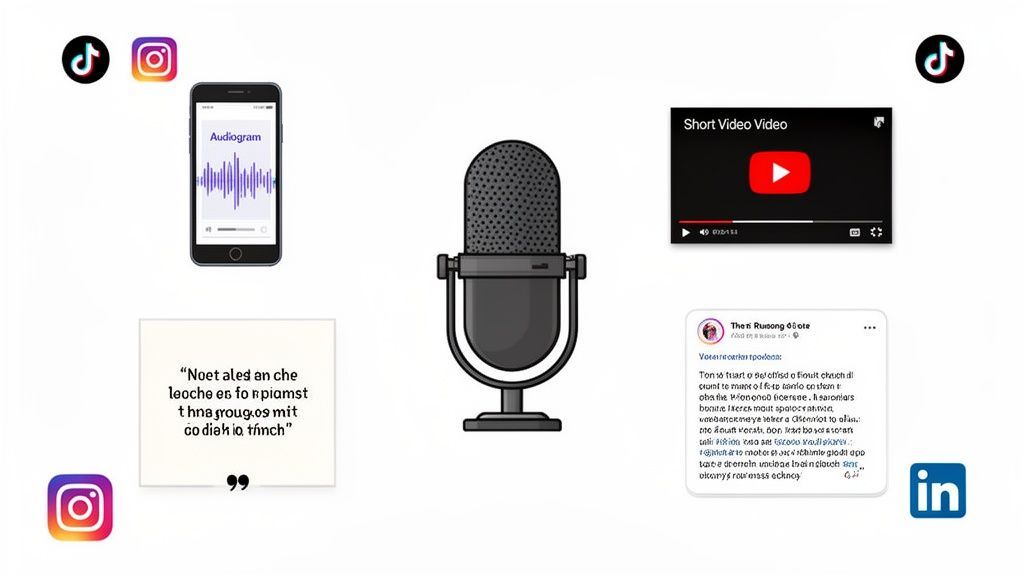
Von Audio zu visuellem Gold
Das Geheimnis liegt darin, visuell zu denken. Dein primäres Medium ist Audio, aber Social Media ist eine überwiegend visuelle Welt. Deine Aufgabe ist es, deine besten Audio-Momente in Assets zu übersetzen, die wirklich das Scrollen stoppen.
Gehe deine Episode durch und identifiziere die wirkungsvollsten Ausschnitte. Wonach suchst du? Eine überraschende Statistik, eine urkomische Geschichte, eine tiefgründige Erkenntnis eines Gastes oder sogar eine kontroverse Aussage, die eine gute Debatte auslösen könnte. Diese Momente sind dein Rohmaterial.
Deine besten Social-Media-Inhalte sind bereits in deinen Episoden verborgen. Deine Mission ist es, diese Momente zu finden, sie zu extrahieren und ihnen ein eigenes visuelles Leben zu geben.
Sobald du diese Juwelen gefunden hast, kannst du damit beginnen, sie in eine Vielzahl von Formaten zu verwandeln, die auf maximale Wirkung ausgelegt sind.
Erstellung von teilbaren Social-Media-Assets
Jetzt, da du deine Schlüsselmomente hast, ist es an der Zeit, kreativ zu werden. Bleibe nicht bei einem einzigen Format. Eine gesunde Mischung an Inhalten hält deinen Feed frisch und spricht verschiedene Menschen an. Ein solider Social-Media-Promotionsplan erfordert einen vielschichtigen visuellen Angriff.
Hier sind die unverzichtbaren Assets, die du aus einer einzigen Episode erstellen solltest:
- Videoclips: Das sind die unangefochtenen Könige des Engagements. Nutze ein Tool, um kurze, mit Untertiteln versehene Videoclips (15-60 Sekunden) deiner besten Soundbites zu erstellen. Sie eignen sich perfekt für Instagram Reels, TikTok und YouTube Shorts. Das Hinzufügen von dynamischen Untertiteln ist nicht verhandelbar, da viele Leute Videos ohne Ton ansehen.
- Audiogramme: Der beste Freund eines Podcasters. Ein Audiogramm kombiniert ein statisches Bild (wie dein Cover-Artwork) mit deinem Audio und einer sich bewegenden Wellenform. Sie sind fantastisch, um überzeugendes Audio auf Plattformen wie Instagram und LinkedIn zu teilen, wo du keine Audiodateien hochladen kannst.
- Zitat-Grafiken: Extrahiere die wirkungsvollsten, tweet-großen Zitate und verwandle sie mit einem Tool wie Canva in einfache, gebrandete Grafiken. Diese sind sehr gut teilbar und eignen sich hervorragend, um die wichtigsten Erkenntnisse deiner Show zu verstärken.
- Karussell-Posts: Um etwas tiefer zu gehen, erstelle einen Karussell-Post für Instagram oder LinkedIn. Deine erste Folie kann ein Aufhänger sein (z. B. "3 Mythen über [Dein Thema] entlarvt"), und die folgenden Folien können jeden Punkt aufschlüsseln, den du in der Episode gemacht hast.
Dieser Ansatz verwandelt ein langes Audioformat in eine ganze Bibliothek vielfältiger Inhalte. Für eine tiefere Betrachtung dieser Thematik, sieh dir diese wirkungsvollen Content-Repurposing-Strategien an, die dir helfen, intelligenter und nicht härter zu arbeiten.
Eine Community aufbauen, nicht nur ein Publikum
Promotion ist nicht nur Senden; es geht darum, eine echte Community aufzubauen. Deine Social-Media-Kanäle sind der Ort, an dem sich Zuhörer mit dir – und untereinander – verbinden können, lange nachdem die Episode beendet ist. Dieses Zugehörigkeitsgefühl verwandelt Gelegenheitszuhörer in treue Fans, die deinen Podcast für dich bewerben werden.
Um diese Community aufzubauen, musst du Gespräche anregen. Poste nicht einfach und verschwinde.
- Offene Fragen stellen: Stelle in deinen Bildunterschriften Fragen, die sich auf die Episode beziehen. Wenn du einen Finanzexperten interviewt hast, frage dein Publikum: "Was ist der beste Finanzrat, den du je erhalten hast?"
- Umfragen und Quizze durchführen: Nutze Instagram Stories, um Umfragen zu deiner Episode durchzuführen. Das ist eine einfache Möglichkeit, Leute einzubinden und zu sehen, welche Themen am besten ankamen.
- Hinter die Kulissen blicken: Teile Fotos von deinem Aufnahme-Setup, Outtakes oder ein kurzes Vorgespräch mit einem Gast. Das vermenschlicht deine Show und gibt deinem Publikum das Gefühl, Teil eines inneren Kreises zu sein.
Die Umstellung deiner Denkweise von "meinen Podcast bewerben" zu "eine Community rund um meinen Podcast aufbauen" ist absolut entscheidend. Wenn Menschen eine persönliche Verbindung zu deiner Show haben, werden sie zu deinem wirkungsvollsten Marketingkanal. Sie werden deine Inhalte teilen, ihren Freunden davon erzählen und zum Mundpropaganda-Motor werden, der echtes, nachhaltiges Wachstum antreibt.
Community treibt nachhaltiges Wachstum
Engagierte Hörer teilen Episoden, empfehlen Ihre Show und kommen regelmäßig wieder. Community-getriebenes Wachstum kumuliert sich im Laufe der Zeit und übertrifft kurzfristige Promotion-Taktiken.
Strategische Partnerschaften schmieden, um Ihre Reichweite zu vergrößern
Der Versuch, ein Podcast-Publikum ganz allein aufzubauen, ist ein einsamer Kampf bergauf. Einer der schnellsten Wege zum Wachstum ist die Erschließung bestehender Communities – und strategische Kooperationen sind Ihr Ticket dorthin. Die Partnerschaft mit anderen Kreativen verschafft Ihnen eine warme Einführung in ein engagiertes Publikum, das der Person, die die Empfehlung ausspricht, bereits vertraut.
Dabei geht es nicht darum, hundert Kaltakquise-E-Mails zu versenden und zu hoffen, dass eine davon ankommt. Es geht darum, echte Beziehungen zu Menschen aufzubauen, deren Publikum das, was Sie tun, wirklich lieben würde. Dieser Ansatz liefert sofortigen sozialen Beweis und erzeugt einen Welleneffekt, der engagierte Zuhörer weitaus effektiver anzieht, als wenn Sie allein in die Leere schreien.
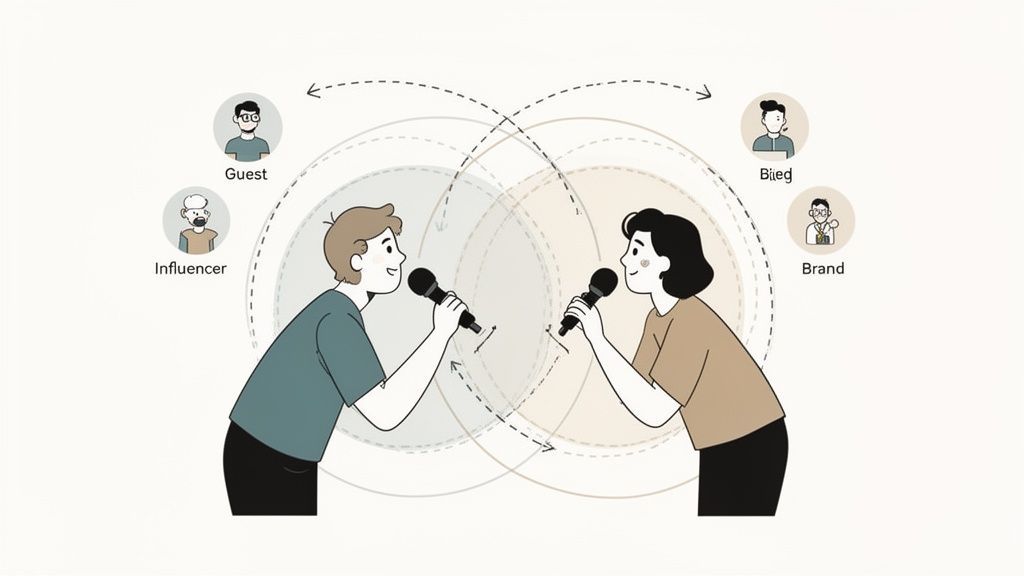
Andere Podcaster finden und ansprechen
Ihre ersten und offensichtlichsten Kooperationspartner sind andere Podcaster in Ihrem Bereich. Gastauftritte und Episoden-Swaps sind aus gutem Grund klassische Taktiken zur Podcast-Werbung – sie funktionieren einfach. Der Trick besteht darin, Shows zu finden, die thematisch ähnlich sind, aber keine direkten Konkurrenten darstellen.
Beginnen Sie damit, Podcast-Verzeichnisse nach Shows zu durchsuchen, die angrenzende Themen behandeln. Wenn Sie einen Podcast über die Gründung eines Kleinunternehmens betreiben, suchen Sie nach Shows über persönliche Finanzen, Produktivität oder sogar Nischenmarketing. Diese Zielgruppen passen natürlich gut zu Ihren Inhalten.
Sobald Sie eine Liste haben, muss Ihre Kontaktaufnahme persönlich sein. Eine generische Copy-Paste-E-Mail ist der schnellste Weg in den Papierkorb. Ihr Pitch muss beweisen, dass Sie ihre Show tatsächlich gehört haben und eine konkrete Idee haben, wie Sie ihrem Publikum helfen können.
Eine einfache, aber effektive Struktur für die Kontaktaufnahme sieht so aus:
- Eine persönliche Einleitung: Erwähnen Sie eine bestimmte Episode, die Ihnen gefallen hat, und was Ihnen daran gefallen hat. Das zeigt sofort, dass Sie Ihre Hausaufgaben gemacht haben.
- Ihr Wertversprechen: Erklären Sie klar, worüber Sie sprechen möchten und warum ihr Publikum sich dafür interessieren würde. Rahmen Sie es um die Lösung eines Problems oder das Anbieten einer einzigartigen Perspektive, die sie noch nicht gehört haben.
- Glaubwürdigkeit aufbauen: Erwähnen Sie kurz Ihren Hintergrund oder den Fokus Ihres Podcasts, um zu zeigen, dass Sie Ihr Fach beherrschen. Halten Sie es kurz und bündig.
- Machen Sie es ihnen leicht: Beenden Sie mit einer einfachen, unverbindlichen Frage wie: "Klingt das nach etwas, das Ihr Publikum wertvoll finden würde?"
Profi-Tipp: Schlagen Sie beim Pitchen zwei oder drei spezifische, überzeugende Episodentitel vor. Sie erledigen die kreative Arbeit für den Gastgeber und machen es ihm so viel einfacher, sich die Zusammenarbeit vorzustellen und "Ja" zu sagen.
Den Podcast-Kosmos erweitern
Obwohl andere Podcaster ein großartiger Ausgangspunkt sind, sollten Sie dort nicht aufhören. Ihre idealen Zuhörer konsumieren alle Arten von Inhalten, nicht nur Podcasts. Die Erweiterung Ihrer Kollaborationsstrategie auf andere Arten von Kreativen kann riesige neue Zielgruppen erschließen.
Denken Sie an das gesamte Ökosystem, in dem Ihr Podcast existiert. Wer erstellt noch Inhalte für Ihren Zielhörer? Ihre besten Partner können überall sein.
- Blogger & Newsletter-Autoren: Finden Sie einflussreiche Autoren in Ihrer Nische und bieten Sie ein exklusives Zitat, einen kurzen Gastbeitrag oder sogar ein gemeinsam veranstaltetes Webinar an. Im Gegenzug kann eine einzige Erwähnung in ihrer E-Mail-Liste eine Welle neuer Zuhörer zu Ihnen bringen.
- Influencer auf Instagram oder TikTok: Identifizieren Sie Influencer, deren Follower Ihrem idealen Hörerprofil entsprechen. Sie könnten sie als Gast in Ihrer Show haben oder an etwas wie einem gemeinsamen Instagram Live zusammenarbeiten, bei dem Sie beide ein brisantes Thema diskutieren.
- Marken & Unternehmen: Die Partnerschaft mit einer Marke kann Ihre Glaubwürdigkeit sofort steigern. Wenn Sie einen Tech-Podcast veranstalten, könnten Sie mit einem Softwareunternehmen an einer Sonderserie zusammenarbeiten, in der Sie deren neues Tool rezensieren oder Branchentrends diskutieren.
Das Geheimnis jeder guten Partnerschaft ist der gegenseitige Nutzen. Gehen Sie einen potenziellen Kooperationspartner immer mit dem Gedanken an, was für ihn dabei herausspringt. Wenn Sie mit Mehrwert beginnen und echtes Interesse daran zeigen, das Publikum zu bedienen, bitten Sie nicht nur um einen Gefallen – Sie bauen eine echte Beziehung auf, die sich jahrelang auszahlen kann.
Bezahlte Anzeigen und fortgeschrittene Wachstumsstrategien nutzen
Wenn Ihr organisches Wachstum an seine Grenzen stößt, ist es vielleicht an der Zeit, bezahlte Werbung und fortgeschrittenere Taktiken einzusetzen. Dabei geht es nicht darum, blind Geld für Anzeigen auszugeben, sondern um kluge, gezielte Investitionen, um genau die Leute zu erreichen, die Ihre Show lieben werden.
Richtig eingesetzt, ist bezahlte Werbung ein mächtiger Beschleuniger. Sie stellt Ihren Podcast Tausenden potenziellen Fans vor, die Sie sonst nie gefunden hätten. Betrachten Sie es weniger als magische Kugel, sondern mehr als eine Möglichkeit, das zu verstärken, was bereits funktioniert.
Gezielte Werbekampagnen schalten
Plattformen wie Spotify, Instagram und sogar Twitter verfügen über unglaublich leistungsstarke Werbetools, mit denen Sie Ihre Zielgruppen sehr genau definieren können. Sie können weit über breite Kategorien hinausgehen und sich auf die Nischeninteressen konzentrieren, die Ihren idealen Hörer ausmachen.
Nehmen wir an, Sie veranstalten einen Podcast über nachhaltige Mode. Sie könnten eine Instagram-Werbekampagne schalten, die Nutzer anspricht, die:
- Großen ethischen Modemarken und Influencern folgen.
- Interesse an Themen wie "Slow Fashion" oder "Secondhand-Mode" gezeigt haben.
- In Städten leben, die für ihre umweltbewussten Gemeinschaften bekannt sind.
Diese Art von Präzision bedeutet, dass Ihr Werbebudget dafür verwendet wird, Leute zu erreichen, die bereits darauf vorbereitet sind, sich für Ihre Inhalte zu interessieren. Für eine Plattform wie Twitter kann das Wissen, wie man einen Tweet bewirbt, eine überraschend kostengünstige Möglichkeit sein, Ihre besten Episoden einem viel größeren Publikum zugänglich zu machen. Die Idee ist, einen kurzen, überzeugenden Audiogramm oder Videoclip zu erstellen und ihn direkt Ihrem perfekten Hörer auszuspielen.
Eine erfolgreiche Werbekampagne ist nicht nur Reichweite, sondern Resonanz. Eine hyper-zielgerichtete Anzeige, die 1.000 perfekt passenden Hörern gezeigt wird, ist weitaus wertvoller als eine generische Anzeige, die 100.000 gleichgültigen Hörern gezeigt wird.
Jenseits von Anzeigen: Kreative Wachstumsstrategien
Während Anzeigen ein direkter Weg zu neuen Hörern sind, können einige andere Strategien erhebliche Wachstumsschübe erzeugen und langfristige Dynamik aufbauen. Bei diesen Taktiken geht es darum, für Aufsehen zu sorgen und Traffic von anderen Plattformen zurück zu Ihrer Show zu lenken.
Eine der effektivsten Methoden, die ich gesehen habe, ist die Durchführung eines strategischen Gewinnspiels. Das Ziel ist nicht nur, etwas kostenlos zu verschenken – es geht darum, spezifische Aktionen zu incentivieren, die Ihre Sichtbarkeit erhöhen. Sie könnten einen tollen Preis anbieten (wie ein hochwertiges Mikrofon oder einen Geschenkgutschein) und die Teilnahmebedingungen so gestalten, dass sie Ihnen tatsächlich beim Wachstum helfen.
Hier sind einige gängige Gewinnspiel-Teilnahmeaktionen, die Wunder wirken:
- Eine Bewertung und Rezension hinterlassen: Das ist der heilige Gral. Mehr positive Bewertungen geben Ihrem Podcast sozialen Beweis und können seine Platzierung in Diensten wie Apple Podcasts verbessern.
- Den Podcast abonnieren: Dies vergrößert direkt Ihre Hörerbasis und stellt sicher, dass die Leute über neue Episoden benachrichtigt werden. Einfach, aber effektiv.
- Auf Social Media teilen: Bitten Sie die Leute, eine bestimmte Episode oder einen Beitrag auf ihren Social-Media-Kanälen zu teilen und Ihre Show zu taggen. Dies nutzt ihre persönlichen Netzwerke für authentisches Mundpropaganda-Marketing.
In Newslettern und Medien vorgestellt werden
Ein weiterer großer Wachstumshebel ist es, Ihren Podcast in etablierten Branchen-Newslettern oder Medien erwähnt zu bekommen. Eine einzige Erwähnung in einem beliebten Newsletter kann an einem einzigen Tag Hunderte – oder sogar Tausende – neuer, hochrelevanter Zuhörer zu Ihnen bringen.
Beginnen Sie damit, eine Liste der wichtigsten Newsletter, Blogs und Online-Publikationen zu erstellen, die Ihre Zielgruppe tatsächlich liest. Suchen Sie nicht nur nach Podcast-Medien, sondern denken Sie über die breiteren Interessen Ihrer Zuhörer nach. Wenn Ihre Show vom Klettern handelt, könnte eine Erwähnung in einem großen Outdoor-Ausrüstungs-Newsletter riesig sein.
Wenn Sie diese Publikationen ansprechen, halten Sie Ihre Nachricht kurz und konzentrieren Sie sich auf den Wert, den Sie ihrem Publikum bieten. Erklären Sie, wer Sie sind, worum es in Ihrer Show geht und – am wichtigsten – warum eine Ihrer Episoden für sie besonders interessant wäre.
Es ist sehr hilfreich, Journalisten die Arbeit zu erleichtern. Die Bereitstellung eines professionellen Transkripts erleichtert das Zitieren Ihrer Inhalte. Die Verwendung eines SRT-Datei-Erstellers hilft Ihnen auch dabei, Videoclips Ihrer Episoden schnell mit genauen Untertiteln wiederzuverwenden, wodurch Ihre Inhalte zugänglicher und teilbarer werden. Die Sicherung dieser Mediennennungen ist eine fantastische Möglichkeit, Glaubwürdigkeit aufzubauen und die Art von hochwertigem Traffic zu generieren, der sich in loyale Abonnenten verwandelt.
Häufig gestellte Fragen zur Podcast-Werbung
Sich in die Welt der Podcast-Werbung zu stürzen, kann sich anfühlen, als würde man ein Puzzle lösen, dessen Teile sich ständig ändern. Gerade wenn man etwas verstanden hat, taucht eine neue Frage auf. Viele Kreative stoßen auf dieselben Hürden und fragen sich nach Budgets oder wie sie wissen können, ob ihre Bemühungen überhaupt Früchte tragen.
Lassen Sie uns Klarheit schaffen. Dieser Abschnitt befasst sich mit den häufigsten Fragen, die ich von Podcastern höre. Das Ziel ist es, Ihnen klare, praktische Antworten zu geben, damit Sie eine Promotionsstrategie aufbauen können, die tatsächlich funktioniert, ohne sich überfordert zu fühlen.
Wie viel sollte ich für Werbung budgetieren?
Ehrlich gesagt, gibt es hier keine magische Zahl. Ihr Budget hängt vollständig von Ihren Zielen und Ihrem aktuellen Stand auf Ihrer Podcast-Reise ab. Wenn Sie gerade erst anfangen, kann Ihr Budget 0 € betragen, und das ist völlig in Ordnung. Die Konzentration auf organische Taktiken wie Gastauftritte in anderen Shows oder die Erstellung von teilbaren Social-Media-Clips ist eine fantastische Möglichkeit, anfängliche Dynamik aufzubauen.
Sobald Sie etwas Schwung haben, möchten Sie vielleicht mit bezahlten Anzeigen experimentieren. Ein guter Ausgangspunkt sind etwa 100-200 € pro Monat. Das reicht aus, um eine kleine, gezielte Kampagne auf einer Plattform wie Spotify oder Instagram durchzuführen und zu sehen, was passiert. Betrachten Sie es als Lernaufwand, nicht als garantierte Eintrittskarte in die Top-Charts.
Das beste Budget ist eines, das Sie bequem aufrechterhalten können. Beginnen Sie klein, verfolgen Sie Ihre Ergebnisse akribisch und skalieren Sie nur, wenn Sie einen Kanal finden, der konstant neue Zuhörer bringt.
Wie lange dauert es, bis man Wachstum sieht?
Geduld ist wahrscheinlich das am meisten unterschätzte Werkzeug im Werkzeugkasten eines Podcasters. Während ein viraler Clip Ihnen einen schönen, plötzlichen Anstieg bescheren kann, ist echtes, nachhaltiges Wachstum fast immer ein langsamer und stetiger Aufstieg.
Wenn Sie die besprochenen Strategien konsequent anwenden – wie die Wiederverwendung von Inhalten für soziale Medien und die Optimierung Ihrer Episoden für die Suche –, sollten Sie innerhalb der ersten drei bis sechs Monate kleine, inkrementelle Gewinne sehen.
Aber bedeutsames, vorhersehbares Wachstum? Das dauert oft eher ein Jahr. Das liegt daran, dass Dinge wie SEO und Beziehungsaufbau für Cross-Promotion einen kumulativen Effekt haben. Sie beginnen langsam, bauen aber im Laufe der Zeit aufeinander auf. Lassen Sie sich von einem langsamen Start nicht entmutigen; konzentrieren Sie sich auf konsequente Anstrengung und feiern Sie diese kleinen wöchentlichen Erfolge.
Welche Metriken sollte ich tatsächlich verfolgen?
Es ist viel zu einfach, sich in einem Datenmeer zu verlieren. Um nicht überfordert zu werden, konzentrieren Sie sich einfach auf einige wichtige Leistungsindikatoren (KPIs), die Ihnen sagen, was wirklich wichtig ist.
Hier sind die, die ich immer im Auge behalte:
- Eindeutige Downloads pro Episode: Überprüfen Sie diese Zahl für die ersten 30 Tage nach Veröffentlichung einer Episode. Sie ist das sauberste Maß für die Größe Ihres Kernpublikums.
- Publikumsbindung: Ihr Podcast-Host sollte eine Grafik haben, die zeigt, wo die Zuhörer abspringen. Steigen sie in der ersten Minute aus? Sie haben vielleicht ein Intro-Problem.
- Abonnentenwachstum: Das ist das Wichtigste. Es sagt Ihnen, wie viele Leute Ihre Show gut genug fanden, um sich dafür zu entscheiden. Es ist ein Vitalzeichen für die langfristige Gesundheit Ihres Podcasts.
- Website-Traffic aus den Show Notes: Klicken die Leute tatsächlich auf die Links, die Sie erwähnen? Das ist eine großartige Möglichkeit, das Engagement zu messen, das über das reine Zuhören hinausgeht.
Indem Sie sich auf diese Metriken konzentrieren, erhalten Sie ein klares Bild davon, was bei Ihrem Publikum ankommt und wo Sie Anpassungen vornehmen müssen. So verwandeln Sie Gelegenheitszuhörer in eine loyale Community.
FAQ – Schnelle Antworten
Haben Sie noch einige offene Fragen? Diese Tabelle gibt Ihnen schnelle, direkte Antworten auf einige der häufigsten Fragen, die wir von Podcastern hören, die ihre Shows wachsen lassen wollen.
| Frage | Direkte Antwort |
|---|---|
| Was ist der beste erste Schritt für die Promotion? | Gastauftritte in anderen Podcasts in Ihrer Nische. Es ist kostenlos und bringt Sie direkt vor ein engagiertes, relevantes Publikum. |
| Brauche ich eine große Social-Media-Fangemeinde? | Nein. Konzentrieren Sie sich auf ein oder zwei Plattformen, auf denen sich Ihre idealen Zuhörer aufhalten, und erstellen Sie dort wertvolle, native Inhalte. |
| Ist Podcast-SEO die Mühe wert? | Absolut. Die Optimierung Ihrer Titel und Show Notes hilft neuen Zuhörern, Sie über Monate oder Jahre hinweg über Suchmaschinen zu entdecken. |
| Wie oft sollte ich meine Show bewerben? | Konsequent. Bewerben Sie jede neue Episode, aber teilen Sie auch zeitlose Clips und Highlights aus Ihrem Archiv während der Woche. |
Hoffentlich geben diese Antworten einige Klarheit und helfen Ihnen, mit einem selbstbewussteren und effektiveren Promotionsplan voranzukommen.
Bereit, Ihre Audios in durchsuchbare, teilbare Inhalte zu verwandeln? Transcript.LOL nutzt KI, um schnelle, genaue Transkripte Ihrer Podcast-Episoden zu erstellen, komplett mit Sprechererkennung und Exportoptionen für Ihren Blog, Ihre Show Notes und Ihre Social-Media-Kanäle. Entfesseln Sie das volle Potenzial Ihrer Inhalte auf transcript.lol.