
How to Grow Podcast Audience: how to grow podcast audienc...
Learn how to grow podcast audience with practical SEO, content repurposing, and community building to expand your reach.
Kate, Praveen
March 19, 2025
Before you even think about promotion, SEO, or those slick social media clips, you need a show that’s actually worth promoting. I’ve seen so many podcasters stall out because they skip the essential groundwork, creating content that’s too broad or inconsistent to ever find a dedicated audience.
Real, sustainable growth starts with a clear, strategic foundation. It’s about moving beyond just wanting to talk about a topic you love and digging into who you’re creating this content for.
A podcast that tries to appeal to everyone will ultimately resonate with no one. Let’s get the fundamentals right.
Features That Help You Build a Strong Podcast Foundation
IA de última generación
Impulsado por Whisper de OpenAI para una precisión líder en la industria. Soporte para vocabularios personalizados, archivos de hasta 10 horas y resultados ultra rápidos.

Importar desde múltiples fuentes
Importa archivos de audio y video desde diversas fuentes, incluyendo carga directa, Google Drive, Dropbox, URLs, Zoom y más.
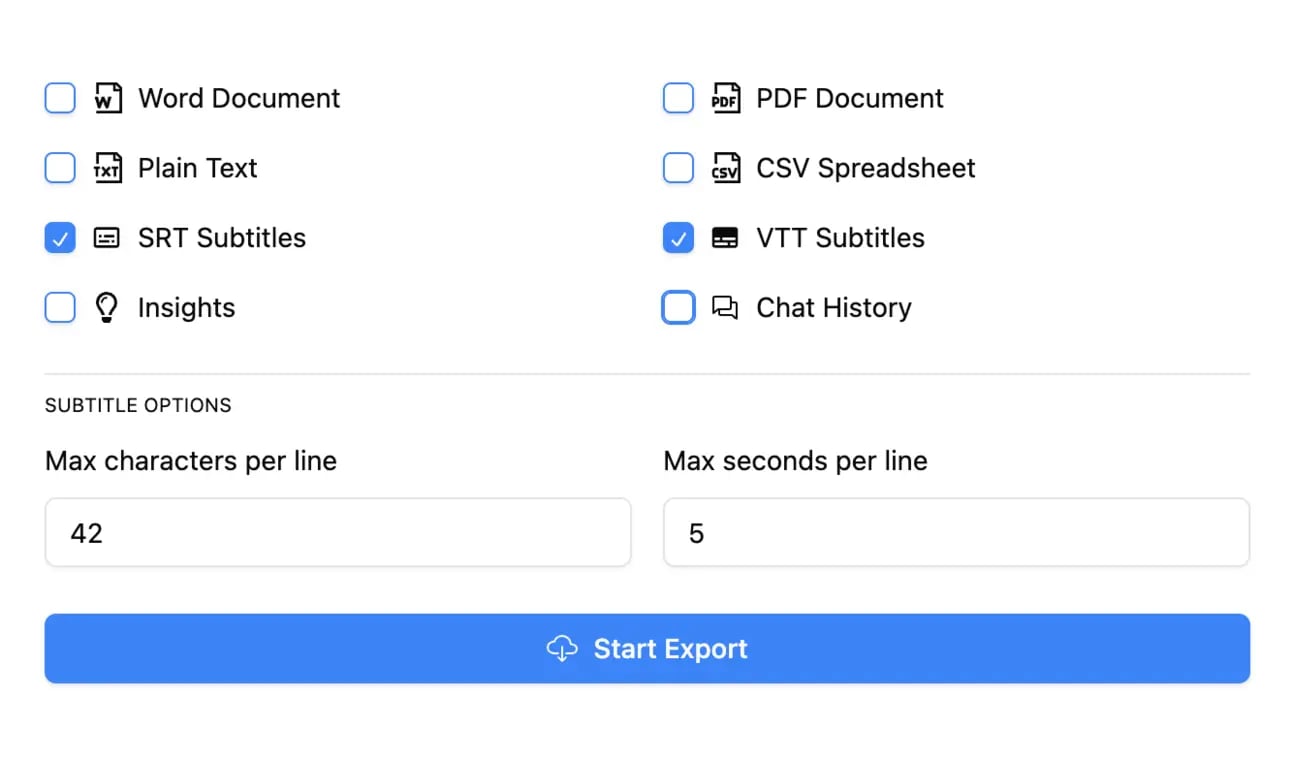
Exportar en múltiples formatos
Exporta tus transcripciones en múltiples formatos incluyendo TXT, DOCX, PDF, SRT y VTT con opciones de formato personalizables.
Antes de siquiera pensar en la promoción, el SEO o esos elegantes clips de redes sociales, necesitas un programa que realmente valga la pena promocionar. He visto a tantos podcasters estancarse porque se saltan el trabajo fundamental esencial, creando contenido demasiado amplio o inconsistente como para encontrar alguna vez una audiencia dedicada.
El crecimiento real y sostenible comienza con una base clara y estratégica. Se trata de ir más allá de simplemente querer hablar de un tema que te encanta y profundizar en para quién estás creando este contenido.
Un podcast que intenta atraer a todo el mundo, en última instancia, no resonará con nadie. Vamos a hacer bien los fundamentos.
Construyendo una Base para el Crecimiento Real de Podcasts
Define un Nicho que Puedas Dominar
El mundo del podcasting está abarrotado. Eso es un hecho. Pero un nicho súper específico te permite convertirte en un pez grande en un estanque pequeño. En lugar de lanzar otro "podcast de negocios" genérico, sé granular.
Piensa en un programa para "fundadores de SaaS en etapa inicial que navegan por su primera ronda semilla" o "propietarios de tiendas físicas que intentan implementar el comercio electrónico".
Este tipo de especificidad hace dos cosas de inmediato:
- Hace que tu programa sea instantáneamente descubrible para la persona exacta que necesita escucharlo.
- Te posiciona como una autoridad en un tema en particular, lo que genera confianza mucho más rápido.
Cuando tienes un enfoque agudo, la creación de contenido se vuelve más simple. Siempre sabes a quién le estás hablando y qué problemas les estás ayudando a resolver.
Core Pillars of a Scalable Podcast
Niche Ownership
Choosing a focused topic reduces competition and increases relevance. It helps your podcast stand out and positions you as a trusted voice in a specific area.
Listener Understanding
Knowing your audience’s goals and struggles allows you to create episodes that feel personal and valuable rather than generic.
Brand Consistency
Consistent visuals, tone, and audio quality build trust. Listeners know what to expect and feel confident returning each week.
Content Direction
A strong foundation removes guesswork. You always know what topics to cover and how to frame them for maximum impact.
Crea tu Oyente Ideal
Una vez que tu nicho esté definido, es hora de dar vida a tu oyente ideal. Esto va mucho más allá de la demografía básica. Estamos hablando de psicografía: sus objetivos, lo que les quita el sueño y lo que les apasiona.
Crear un perfil de oyente detallado es la diferencia entre emitir al vacío y tener una conversación con un amigo. Cada decisión de contenido, desde los temas de los episodios hasta tu tono de voz, se vuelve más clara cuando sabes exactamente quién está al otro lado de los auriculares.
¿Estás hablando con "Megan Marketing", una gerente de 32 años completamente abrumada por las nuevas herramientas de IA? ¿O con "Steve Emprendedor", un desarrollador de 28 años que lucha por primera vez con el liderazgo? Cuando creas para una persona específica, tu contenido se vuelve relatable, esencial e indispensable.
Establece una Experiencia de Marca Consistente
Tu marca es mucho más que un logotipo. Es toda la experiencia que alguien tiene con tu programa, desde el momento en que ve tu arte de portada hasta el sonido de tu música de cierre. La consistencia es lo que genera reconocimiento y profesionalismo.
- Visuales: Tu arte de portada debe ser claro, profesional y decirle instantáneamente a la gente de qué trata tu programa.
- Audio: Usa la misma música de introducción y cierre. Asegúrate de que la calidad de tu audio sea limpia y fácil de escuchar. Si grabas entrevistas por separado, vale la pena aprender cómo fusionar archivos de audio para obtener un producto final sin fisuras.
- Tono: Decide la personalidad de tu programa. ¿Eres educativo y autoritario? ¿Casual y divertido? Sea lo que sea, mantente fiel a ello.
Este empaque consistente les dice a los nuevos oyentes exactamente qué esperar y les asegura que han encontrado una fuente de contenido confiable y de alta calidad.
Este trabajo de base puede parecer básico, pero es la parte más importante para construir un programa que perdure. La siguiente tabla desglosa estos componentes centrales y por qué son tan vitales para atraer y retener una audiencia.
Elementos Clave de una Base Sólida para Podcasts
| Elemento | Qué Es | Por Qué Es Crítico para el Crecimiento de la Audiencia |
|---|---|---|
| Nicho Bien Definido | Un tema o área de experiencia específica y enfocada para tu podcast. | Hace que tu programa sea altamente descubrible para las personas adecuadas y establece tu autoridad en un espacio menos saturado. |
| Perfil de Oyente Ideal | Un perfil detallado de tu oyente objetivo, incluyendo sus metas, desafíos e intereses. | Te ayuda a crear contenido que resuena profundamente, convirtiendo a los oyentes casuales en fanáticos dedicados que se sienten comprendidos. |
| Marca Consistente | El aspecto, sonido y sensación unificados de tu programa en todos los puntos de contacto (arte, música, tono). | Construye profesionalismo, reconocimiento y confianza, haciendo que tu podcast sea memorable y fácil de identificar. |
Dominar estos tres elementos te da una plataforma de lanzamiento poderosa. Asegura que cuando comiences a promocionar tu programa, estés atrayendo a las personas correctas, aquellas que escucharán, se suscribirán y se lo contarán a sus amigos.
Convierte tu Audio en una Mina de Oro de SEO
Seamos honestos, tu podcast es un tesoro de contenido increíble. Pero para un motor de búsqueda como Google, todo ese brillante audio es completamente invisible. Cada entrevista genial, cada momento de "¡ajá!" y cada consejo experto que compartes está encerrado dentro de un archivo de audio que no puede ser rastreado ni indexado.
Si te preguntas cómo hacer crecer la audiencia de tu podcast, este es un punto ciego masivo. Básicamente, estás ignorando la herramienta de descubrimiento más poderosa del planeta.
La solución es mucho más simple de lo que podrías pensar, y no necesitas convertirte en un gurú de SEO de la noche a la mañana. Todo se reduce a una cosa: transcripciones. Al convertir tus palabras habladas en texto, haces que cada palabra sea instantáneamente descubrible. Tus episodios se transforman de eventos de audio únicos en activos a largo plazo que atraen a nuevos oyentes a través de la búsqueda orgánica, mes tras mes.
Features That Turn Audio into Searchable Content
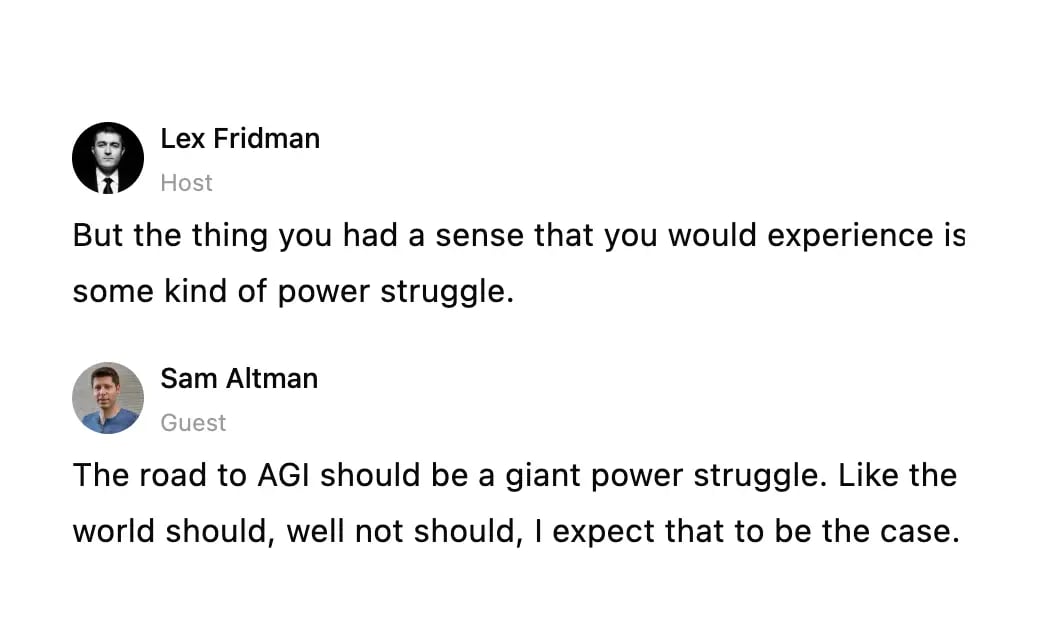
Detección de hablantes
Identifica automáticamente diferentes hablantes en tus grabaciones y etiquétalos con sus nombres.
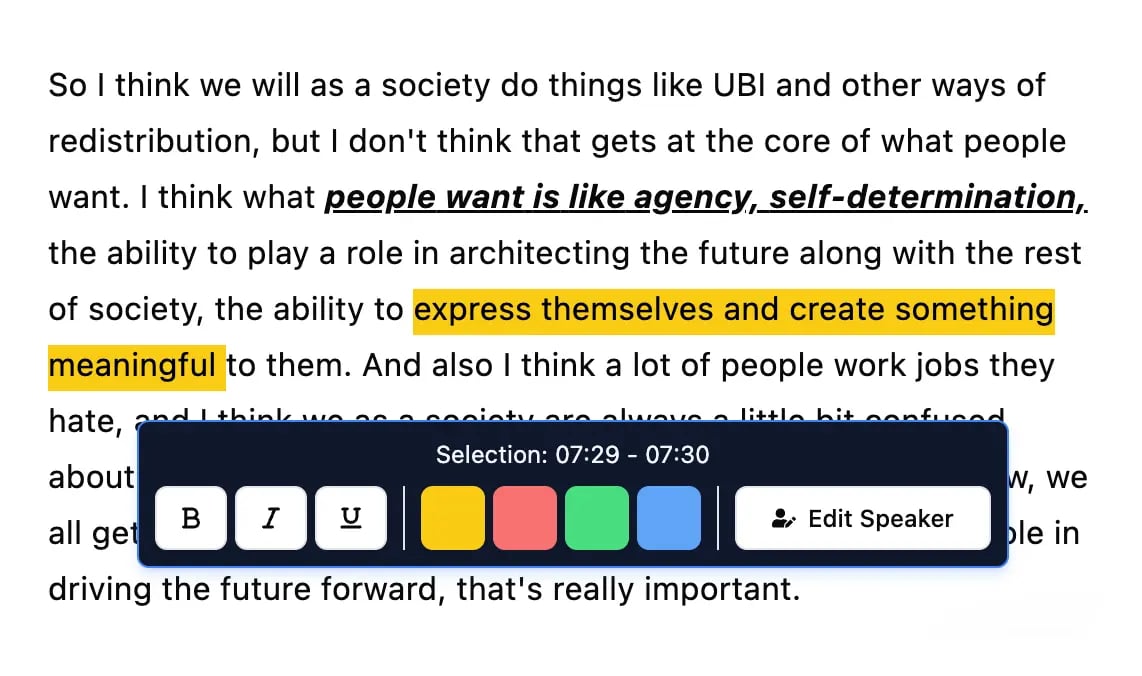
Herramientas de edición
Edita transcripciones con herramientas potentes como buscar y reemplazar, asignación de hablantes, formatos de texto enriquecido y resaltado.
Resúmenes y Chatbot
Genera resúmenes y otros análisis de tu transcripción, prompts personalizados reutilizables y chatbot para tu contenido.
Desbloqueando la Descubribilidad con Transcripciones
En esencia, el SEO para podcasts consiste en facilitar que los motores de búsqueda entiendan de qué trata tu programa. Cuando alguien escribe "estrategias para fundadores de SaaS en etapa inicial" en Google, no puede escuchar tus episodios para ver si los has cubierto. Lo que sí puede hacer es escanear una transcripción en una fracción de segundo, encontrar esas palabras clave exactas y mostrar la página de tu episodio como un resultado principal.
Todo comienza con obtener una transcripción precisa para cada episodio que publicas. Claro, podrías hacerlo manualmente, pero es un proceso increíblemente lento y doloroso. Hoy en día, las herramientas impulsadas por IA pueden generar una transcripción altamente precisa y etiquetada por hablante en solo unos minutos, ahorrándote horas de trabajo tedioso. Esta eficiencia es lo que hace posible un flujo de trabajo de SEO constante.
¿Quieres ver cómo se hace? Desglosamos todo el proceso en nuestra guía sobre cómo transcribir un podcast.
La transcripción en sí misma es solo la materia prima. A partir de ahí, puedes crear notas del programa optimizadas para SEO, publicaciones de blog detalladas y todo tipo de contenido textual que los motores de búsqueda adoran.
Esta captura de pantalla muestra lo sencillo que es subir un archivo de audio en una herramienta como Transcript.LOL.
La gran conclusión aquí es lo accesible y rápida que se ha vuelto la transcripción moderna. Los antiguos obstáculos técnicos que hicieron que esta estrategia fuera un dolor de cabeza para los podcasters independientes han desaparecido en su mayoría.
De Texto Crudo a una Potencia de SEO
Bien, ya tienes tu transcripción. Ahora comienza la verdadera diversión de atraer a una nueva audiencia de podcast. No te limites a copiar y pegar el texto crudo en una página y darlo por terminado. El objetivo aquí es reutilizar estratégicamente ese texto en contenido que sea genuinamente útil para los lectores y esté perfectamente optimizado para la búsqueda.
Aquí tienes tres formas poderosas de poner tu transcripción a trabajar para el crecimiento:
- Crea Notas del Programa Completas: Ve más allá de un simple resumen de dos oraciones. Usa tu transcripción para extraer los temas clave, las citas memorables y cualquier recurso que hayas mencionado. Estructura todo con encabezados claros y viñetas, lo que naturalmente te ayuda a incluir las palabras clave y frases que tu oyente ideal está buscando.
- Publica Publicaciones de Blog de Episodios Completos: Esta es la estrategia de peso pesado. Para cada episodio, crea una publicación de blog dedicada que incluya la transcripción completa y pulida. Envuélvela con una introducción atractiva, un resumen de los puntos clave y cualquier imagen o gráfico relevante. Esto crea una pieza de contenido rica y de formato largo que puede clasificarse para docenas de palabras clave de cola larga diferentes.
- Desarrolla Contenido de Clúster de Temas: Comienza a notar los temas recurrentes en tus episodios. Puedes extraer las mejores secciones de varias transcripciones diferentes para crear una "página pilar" masiva sobre un tema central. Por ejemplo, si has hecho cinco episodios que abordan el marketing por correo electrónico, puedes combinar las mejores ideas en una guía definitiva y luego enlazar a cada una de las publicaciones de episodios individuales.
Al transformar tu audio en texto, no solo lo haces accesible; estás construyendo un archivo de tu experiencia que se puede buscar. Cada nuevo episodio que publicas agrega otra página a tu biblioteca digital, lo que aumenta tu autoridad SEO y crea más puntos de entrada para que te encuentren nuevos oyentes.
Este enfoque construye un motor de contenido que trabaja para ti las 24 horas del día, los 7 días de la semana. Un episodio que publicaste hace un año todavía puede atraer nuevos oyentes hoy simplemente porque su publicación de blog basada en transcripciones se clasifica en Google. Así es como pasas de perseguir picos de descargas temporales a construir una estrategia sostenible a largo plazo para el crecimiento de la audiencia. Es un movimiento fundamental de ser solo un podcaster a convertirse en un verdadero creador de contenido.
Creando Contenido que Amplifica tu Alcance
Terminar un gran episodio de podcast se siente increíble, pero si tu trabajo se detiene en el momento en que presionas "publicar", estás dejando la mayor parte de su potencial de crecimiento en el tintero. Una sola grabación no es solo una pieza de contenido; es la materia prima para una docena de activos de marketing. La reutilización inteligente es la forma en que te mantienes visible y atraes a nuevos oyentes sin agotarte.
Publishing Alone Doesn’t Drive Growth
Relying only on episode releases limits reach. Without repurposing and distribution, even high-quality podcasts struggle to grow consistently.
En lugar de perseguir constantemente la próxima gran idea, cambia tu mentalidad para amplificar lo que ya has creado. Al desglosar tu episodio en piezas más pequeñas y nativas de cada plataforma, te encuentras con oyentes potenciales donde ya están. Este enfoque respeta su tiempo y sus hábitos de consumo, haciendo que sea mucho más probable que prueben tu programa completo.
Tu Transcripción es el Punto de Partida
La transcripción de tu episodio es la clave que desbloquea toda esta estrategia. Es una versión en texto de tu audio, lo que hace que sea increíblemente fácil buscar citas impactantes, ideas clave e historias convincentes. Intentar encontrar ese clip perfecto de 30 segundos revisando una hora de audio es una pesadilla. Encontrarlo en una transcripción lleva segundos.
Se trata de trabajar de forma más inteligente, no más duro. Con una transcripción en mano, puedes identificar rápidamente los momentos más compartibles y convertirlos en contenido perfectamente adaptado para diferentes plataformas.
Este simple flujo de trabajo muestra cómo tu audio se transforma en un activo descubrible y buscable que impulsa tu crecimiento.
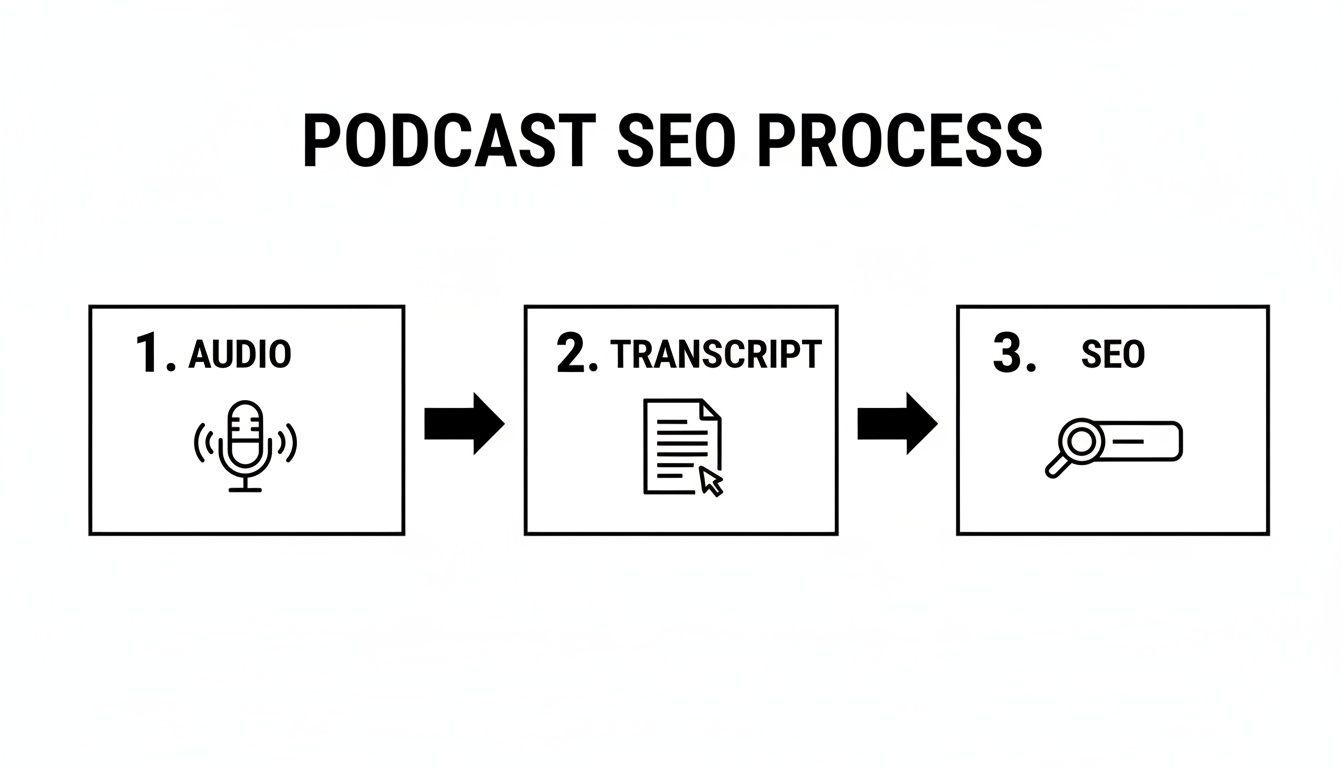
La verdadera conclusión aquí es una verdad fundamental para los podcasters: tu audio se convierte en un motor de SEO en el momento en que se convierte a texto.
Un Flujo de Trabajo Práctico de Reutilización
Seamos prácticos. Imagina que acabas de terminar una entrevista de 45 minutos con un invitado experto. Aquí tienes un plan realista para convertir ese único episodio en una semana completa de contenido promocional, todo a partir de la transcripción.
-
Encuentra 3-5 "Pepitas de Oro": Primero, escanea la transcripción en busca de las ideas más impactantes. Busca estadísticas sorprendentes, consejos prácticos o historias emocionales poderosas. Estas son tus piezas centrales.
-
Crea Audiogramas y Clips de Video: Para cada pepita de oro, crea un video corto (30-60 segundos). Añade subtítulos animados, una barra de progreso y la marca de tu podcast. Estos son oro puro para Instagram Reels, TikTok y YouTube Shorts.
-
Diseña Gráficos de Citas: Extrae la oración más poderosa de cada pepita. Usa una herramienta como Canva para convertirlas en gráficos visualmente atractivos. Funcionan excepcionalmente bien en Instagram, Facebook e incluso LinkedIn.
La reutilización no se trata de enviar spam con el mismo enlace a todas partes. Se trata de ofrecer valor genuino en un formato que se sienta nativo para cada plataforma, dando a la gente una muestra de tu contenido que les haga querer la comida completa.
Al construir un sistema como este, creas una presencia constante en múltiples canales sin tener que reinventar la rueda para cada publicación. Cubrimos aún más ángulos en nuestro análisis en profundidad de estrategias de reutilización de contenido.
Emparejar Contenido con la Plataforma Correcta
No todo el contenido reutilizado es igual. El secreto es emparejar el formato con la audiencia de la plataforma y su algoritmo. Una publicación con mucho texto morirá en TikTok, y un meme podría no funcionar en LinkedIn. Para amplificar realmente el alcance de tu podcast, comprender y utilizar diferentes canales de distribución de marketing de contenidos es innegociable.
La siguiente tabla desglosa cómo puedes tomar un solo episodio de podcast y dividirlo en diferentes formatos adaptados para las plataformas donde se encuentran tus oyentes ideales.
Matriz de Reutilización de Contenido de Podcast
| Contenido Original | Formato Reutilizado | Plataforma de Destino | Objetivo Clave |
|---|---|---|---|
| Episodio de 45 min | Clip de Video de 30-60 seg | Instagram Reels, TikTok | Impulsar el descubrimiento con contenido de video corto y atractivo. |
| Cita/Idea Clave | Gráfico de Cita Estática | Feed de Instagram, Facebook | Crear contenido visualmente atractivo y compartible. |
| Anécdota del Invitado | Publicación de Texto con Gancho | LinkedIn, X (Twitter) | Fomentar la discusión profesional y la participación. |
| Resumen del Episodio | Boletín por Correo Electrónico | Tu Lista de Correo Electrónico | Nutrir a tu audiencia principal e impulsar descargas directas. |
| Transcripción Completa | Publicación de Blog/Notas del Programa | Tu Sitio Web | Mejorar el SEO y proporcionar un recurso detallado. |
Esta matriz no es exhaustiva, pero muestra el principio fundamental: una pieza de audio puede alimentar tu calendario de contenido durante una semana o más, llegando a diferentes audiencias con contenido hecho solo para ellas.
Aquí tienes un rápido desglose de cómo adaptar tus activos:
-
LinkedIn: Toma una cita sólida y úsala como gancho para una publicación de texto. Comparte tu reflexión personal sobre esa parte de la conversación y termina con una pregunta para que otros profesionales hablen.
-
Instagram: Publica tus clips de audiograma en Reels para un máximo alcance. Comparte los gráficos de citas estáticas en tu feed principal y utiliza la función "compartir en historia" con una pegatina de enlace que apunte directamente al episodio completo.
-
Boletín por Correo Electrónico: Incrusta uno de los clips de video directamente en tu boletín. Añade un resumen rápido de las conclusiones clave del episodio y una llamada a la acción clara para "Escuchar el Episodio Completo". Es sorprendente, pero solo el 20% de los especialistas en marketing informan usar esta táctica, lo que te da una victoria fácil.
-
X (anteriormente Twitter): Inicia un hilo. Comienza con la cita más convincente, luego usa los siguientes tuits para desglosar los puntos clave de ese segmento. Termina el hilo con un enlace al programa completo.
Este enfoque multiplataforma crea muchísimos puntos de entrada para que nuevos oyentes descubran tu programa. Alguien podría ver una cita en LinkedIn, otro podría ver un clip en Instagram, pero ambos caminos pueden llevarlos de regreso a convertirse en suscriptores. Así es como se hace crecer una audiencia de podcast hoy en día.
Growth Is Now Multi-Channel
Modern podcast growth depends on visibility across platforms. Repurposed content increases discovery while reinforcing your message everywhere listeners spend time.
Fomentar una Comunidad de Oyentes Comprometidos
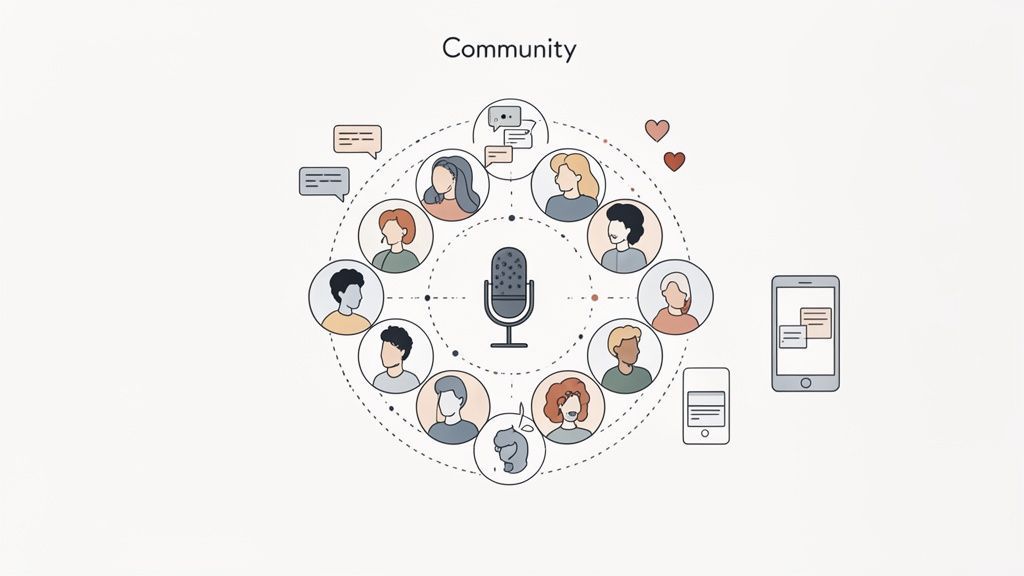
Las descargas y el número de oyentes son métricas vanidosas. Seamos honestos, solo cuentan una fracción de la historia. El verdadero motor para el crecimiento sostenible a largo plazo de un podcast es convertir a los oyentes pasivos en una comunidad activa y entusiasta. Una audiencia de 1.000 verdaderos fans que esperan cada una de tus palabras es infinitamente más valiosa que 10.000 descargas silenciosas.
Cuando cambias tu enfoque de la mera escucha a la conexión genuina, elevas tu podcast de "bueno" a inolvidable. Una comunidad real se une a tu programa, te brinda comentarios increíbles y se convierte en tu mejor equipo de marketing a través del boca a boca auténtico.
Pasar de la Transmisión a la Conversación
Lo primero que debes hacer es cambiar tu mentalidad. Deja de transmitir a tu audiencia y comienza una conversación con ella. Esto significa construir intencionalmente momentos en tus episodios donde los oyentes puedan participar activamente. No te despidas con un genérico "gracias por escuchar".
En su lugar, haz preguntas específicas y convincentes que realmente inviten a una respuesta. Por ejemplo, en lugar de un vago "Hazme saber lo que piensas", prueba algo más directo: "Después de escuchar estos trucos de productividad, ¿cuál vas a implementar esta semana? Deja tu respuesta en los comentarios de la página de nuestro episodio".
Ese simple ajuste transforma tu llamada a la acción de una línea desechable a una invitación activa, haciendo que tus oyentes se sientan parte del diálogo.
Crear un Centro Comunitario Dedicado
Las redes sociales son geniales para difundir la palabra, pero darle a tus fans más dedicados un lugar central para reunirse es un cambio total de juego. Un espacio dedicado permite conversaciones mucho más profundas que simplemente se pierden en un feed abarrotado de redes sociales.
Piensa en crear una base para tu comunidad:
- Servidor de Discord o Slack: Esto es perfecto si tu audiencia es un poco más experta en tecnología. Puedes configurar canales específicos para discusiones de episodios, preguntas y respuestas, e incluso chats fuera de tema.
- Grupo Privado de Facebook o LinkedIn: Una excelente opción si tus oyentes ya pasan tiempo en estas plataformas. Reduce la barrera de entrada y les facilita unirse a la conversación.
- Comunidad de Patreon o Memberful: Si ofreces contenido premium, integrar un foro comunitario en tu plataforma de membresía agrega mucho valor y es un gran incentivo para que las personas se registren.
La clave es elegir una plataforma donde tus oyentes ya estén y, lo que es más importante, estar activo allí tú mismo. Preséntate, responde preguntas e inicia discusiones. Le demuestra a tu comunidad que estás tan invertido en ellos como ellos en ti.
Una comunidad próspera se construye sobre la reciprocidad. Cuando los oyentes se sienten escuchados y valorados, pasan de ser parte de tu audiencia a convertirse en defensores de tu marca. Su compromiso se convierte en una poderosa forma de prueba social que atrae a nuevos oyentes.
Co-crear Contenido con tus Oyentes
Una de las formas más poderosas de generar compromiso es involucrar directamente a tu audiencia en tu proceso de creación de contenido. Les da un verdadero sentido de propiedad y los hace sentir como si fueran parte de un círculo íntimo.
Podrías dedicar un episodio completo a responder preguntas enviadas por los oyentes, un formato que casi siempre funciona bien. O, da un paso más allá e invita a un oyente al programa para compartir su experiencia o una historia de éxito relacionada con tu nicho. Estos episodios no solo son súper atractivos, sino que también son increíblemente fáciles de compartir para la persona que presentas.
El compromiso profundo es la salsa secreta. Los datos muestran que el 41% de los oyentes en todo el mundo dedican al menos una hora a la semana a los podcasts, y en EE. UU., un increíble 83% pasan más de nueve horas. Necesitas aprovechar ese compromiso. Esto es especialmente cierto con los podcasts de video, que el 51% de los estadounidenses ahora ven. Intenta crear elementos interactivos como cuestionarios o elementos de acción de tus episodios para involucrar aún más a tus oyentes. Puedes encontrar más información sobre estas estadísticas de podcasts y utilizarlas para dar forma a tu estrategia de crecimiento.
Usar la Colaboración para Acceder a Nuevas Audiencias
Intentar hacer crecer tu podcast por tu cuenta es una tarea lenta y dolorosa. Una de las formas más rápidas de llegar a una audiencia nueva y altamente relevante es simplemente aprovechar una que alguien más ha pasado años construyendo. La colaboración estratégica no es solo una táctica; es un acelerador de crecimiento.
Piénsalo. Cada otro podcaster en tu nicho, o incluso en uno relacionado, tiene una comunidad de oyentes incorporada que confía en sus recomendaciones. Cuando te asocias con ellos, obtienes una cálida introducción a toda esa comunidad, lo cual es infinitamente más poderoso que cualquier anuncio pagado que puedas hacer. El truco es tratarlo como una asociación genuina, no solo como una transacción.
Sé un Invitado que Recuerden
Aparecer como invitado en otros podcasts es una estrategia clásica por una muy buena razón: funciona. Pero simplemente aparecer y responder preguntas no moverá la aguja. Tu objetivo es ser tan perspicaz y atractivo que los oyentes del anfitrión sientan un impulso inmediato para visitar tu programa.
Antes de siquiera pensar en proponer un programa, haz tu tarea. Escucha al menos algunos de sus episodios recientes para tener una idea de su formato, su audiencia y el tipo de valor que brindan. Tu propuesta debe centrarse en cómo puedes ayudar a su audiencia, no en una propuesta de venta para tu propio programa. Una gran parte de esto es comprender el poder de las asociaciones y la colaboración con influencers antes de redactar ese primer correo electrónico.
Cuando te pongas al micrófono:
- Comparte lo mejor de ti. No te guardes tu material de primera categoría. Ofrece consejos prácticos y perspectivas únicas que hagan que la gente preste atención.
- Cuenta historias. Los hechos y los datos son olvidables, pero las historias perduran. Teje tus mejores consejos en anécdotas cortas y memorables que conecten con los oyentes a nivel humano.
- Menciona tu podcast de forma natural. No lo fuerces. Cuando tenga sentido en el flujo de la conversación, puedes decir algo como: "Ese es un gran punto. De hecho, profundicé en ese tema exacto en un episodio sobre..."
Ser un invitado memorable significa ofrecer tanto valor que el anfitrión parezca un genio por haberte invitado, y su audiencia no pueda esperar a escuchar más de ti. No estás allí para vender; estás allí para servir.
Identifica y Propón los Invitados Adecuados para tu Programa
Invertir el guion e invitar a invitados a tu podcast es otra forma fantástica de polinizar cruzadamente audiencias. El invitado perfecto no es solo un experto en su campo; es alguien con una audiencia comprometida propia que refleja perfectamente tu perfil de oyente ideal.
Cuando un invitado comparte su aparición en tu programa con sus seguidores, es una poderosa señal de prueba social. Su audiencia piensa: "Confío en esta persona, y estuvo en este podcast, así que debe valer mi tiempo". Así es como generas tráfico de alta calidad y dirigido a tu programa. Por supuesto, esto es solo una pieza del rompecabezas; para una visión más amplia, explora nuestra guía completa sobre cómo promocionar un podcast para más estrategias.
Más Allá del Intercambio de Invitados
Si bien las apariciones de invitados son una piedra angular de la colaboración de podcasts, están lejos de ser la única opción. Hay muchas otras tácticas de asociación que pueden ayudarte a acceder a nuevas audiencias de oyentes.
Considera estas poderosas alternativas:
- Intercambios de Feeds: Aquí es donde tú y otro podcaster acuerdan publicar uno de los mejores episodios del otro en sus propios feeds. Es una forma directa y de alto impacto de darle a una audiencia completamente nueva una muestra completa de lo que trata tu programa.
- Intercambios de Promociones: Una opción de menor impacto donde acuerdan reproducir un breve tráiler promocional (de 30-60 segundos) de otro podcast en sus episodios, y ellos hacen lo mismo por ti.
- Promociones Conjuntas: ¿Por qué no unirse a otro creador para un sorteo, un seminario web conjunto o incluso un evento especial en vivo? Unir sus recursos y audiencias puede crear un impacto mucho mayor del que cualquiera de ustedes podría lograr solo.
Cada colaboración es una oportunidad para construir relaciones reales en tu industria. Estas asociaciones a menudo florecen en oportunidades futuras, crean una red de apoyo y hacen que el viaje de hacer crecer tu programa se sienta mucho menos solitario. Comienza poco a poco identificando solo uno o dos socios potenciales y comunícate con una propuesta genuina y centrada en el valor.
Preguntas Comunes sobre el Crecimiento de una Audiencia de Podcast
Intentar hacer crecer un podcast puede hacerte sentir que estás haciendo todo bien pero aún no ves que los números suban. Estás publicando contenido excelente, eres consistente, pero el camino hacia una audiencia más grande es confuso.
Vamos a aclarar algo de esa confusión. Te guiaré a través de algunas de las preguntas más comunes que escucho de los podcasters, con respuestas directas para ayudarte a afinar tu estrategia.
¿Cuánto Tiempo Realmente Lleva Hacer Crecer una Audiencia de Podcast?
No hay un número mágico aquí, pero esto es lo que he visto una y otra vez: la mayoría de los podcasters comienzan a ver una tracción real y significativa dentro de 6 a 12 meses. Eso asumiendo que publican y promocionan consistentemente, al menos una vez por semana.
El crecimiento es casi siempre lento al principio. Estás construyendo una comunidad central desde cero y sentando las bases del contenido. Es un maratón, no un sprint. La aceleración real ocurre cuando tu catálogo anterior crece lo suficiente como para ser un recurso digno de maratón y tus esfuerzos iniciales de SEO, como esas publicaciones de blog basadas en transcripciones, finalmente comienzan a funcionar y atraen tráfico de Google.
Un flujo de trabajo optimizado es tu arma secreta aquí. Cuanto más rápido y eficientemente puedas producir y promocionar episodios de alta calidad, más rápido alcanzarás ese punto de inflexión donde el crecimiento comienza a alimentarse a sí mismo.
¿Debo Enfocarme en la Calidad o la Cantidad del Episodio?
Calidad. Siempre. Ni siquiera es un debate.
Un solo episodio mal producido puede hacer más daño a tu marca de lo que crees. Los oyentes tienen un millón de otros podcasts para elegir, y no dudarán en abandonar un programa con audio deficiente o contenido divagante y poco enfocado.
Tu objetivo debe ser crear el mejor contenido posible, en un horario que puedas cumplir. Para la mayoría de las personas, un episodio semanal o quincenal impactante es mucho más efectivo que intentar producir cinco mediocres. Los oyentes valoran la confiabilidad y la recompensarán con lealtad.
Piénsalo: un episodio increíble y compartible es infinitamente más valioso para el crecimiento que un puñado de episodios olvidables de los que nadie habla.
¿Necesito Estar en Todas las Plataformas de Redes Sociales?
No. Por favor, no te hagas eso a ti mismo. Es el camino más rápido al agotamiento y garantiza que tus esfuerzos se dispersarán demasiado. Cuando intentas estar en todas partes a la vez, terminas teniendo un impacto real en ninguna parte.
La jugada más inteligente es averiguar dónde pasan el rato tus oyentes objetivo realmente en línea. Elige una o dos de esas plataformas y dedícate por completo.
- ¿Tienes un podcast de negocios? Probablemente deberías vivir en LinkedIn, iniciando conversaciones y conectando con profesionales.
- ¿Presentas un programa de comedia o cultura pop? Clips cortos y contundentes en TikTok o Instagram Reels son tu patio de recreo.
- ¿Estás en el nicho de la tecnología o los videojuegos? Un servidor de Discord dedicado es el lugar perfecto para construir una comunidad unida.
Siempre es mejor dominar un canal y construir una comunidad real y comprometida que tener una presencia débil y fantasma en cinco plataformas diferentes.
¿Cómo Puedo Usar Transcripciones para SEO sin un Blog?
No necesitas un blog elegante para que las transcripciones funcionen para tu SEO. Mucha gente se atasca en esto, pero la idea central es simple: pon ese texto en una página web que Google pueda ver y rastrear.
Como mínimo, puedes crear una página web simple para cada episodio que solo contenga la transcripción completa y limpia. Esa página se convierte instantáneamente en un activo amigable para la búsqueda, lista para capturar tráfico orgánico de personas que buscan los temas exactos, nombres o citas que mencionaste en el episodio.
Aún mejor, muchos hosts de podcasts modernos te permiten pegar la transcripción completa directamente en las notas de tu programa. Esto es una gran victoria porque las aplicaciones de podcasts como Apple Podcasts ahora tienen directorios buscables. Al incluir una transcripción, haces que tu contenido sea descubrible no solo en Google, sino directamente dentro de las aplicaciones donde las personas buscan activamente nuevos programas. Ese simple copiar y pegar convierte cada episodio en una máquina de descubrimiento a largo plazo.
Turn Your Podcast into a Growth Engine
Choose the one that helps podcasters convert episodes into transcripts, summaries, and reusable content that boosts SEO and reach—without extra manual work.
Ready to turn your audio into a powerful growth engine? Transcript.LOL provides lightning-fast, accurate transcripts that you can use to create SEO-friendly show notes, blog posts, and social media content in minutes. Start for free and see how easy it is to make your podcast discoverable at https://transcript.lol.