
servicios de transcripción que cumplen con hipaa: seguros, confiables
Una guía práctica de servicios de transcripción que cumplen con HIPAA: proteja los datos del paciente, cumpla con los estándares de seguridad y elija el socio adecuado.
Kate, Praveen
August 14, 2024
Cuando se trata de información del paciente, elegir un servicio de transcripción no se trata solo de velocidad o precisión, se trata de mantenerse del lado correcto de la ley. Los servicios de transcripción que cumplen con HIPAA están diseñados específicamente para convertir audio o video que contiene Información de Salud Protegida (PHI) en texto, todo mientras cumplen con estrictas reglas federales de seguridad.
Esto no es solo un "extra agradable". Es un requisito legal indispensable para proteger la confianza del paciente y evitar multas masivas.
Descifrando la Transcripción que Cumple con HIPAA
Piense en un servicio de transcripción estándar como enviar una postal. Cualquiera que la reciba puede leer lo que está escrito. Los servicios de transcripción que cumplen con HIPAA, por otro lado, son como un camión blindado sellado. Cada palabra está bloqueada desde el momento en que se graba hasta que se entrega, manteniendo los datos sensibles del paciente completamente confidenciales.
Esa única diferencia lo es todo para cualquier organización que maneje PHI.
Funciones Potentes Que Facilitan la Transcripción Segura
IA de última generación
Impulsado por Whisper de OpenAI para una precisión líder en la industria. Soporte para vocabularios personalizados, archivos de hasta 10 horas y resultados ultra rápidos.

Importar desde múltiples fuentes
Importa archivos de audio y video desde diversas fuentes, incluyendo carga directa, Google Drive, Dropbox, URLs, Zoom y más.
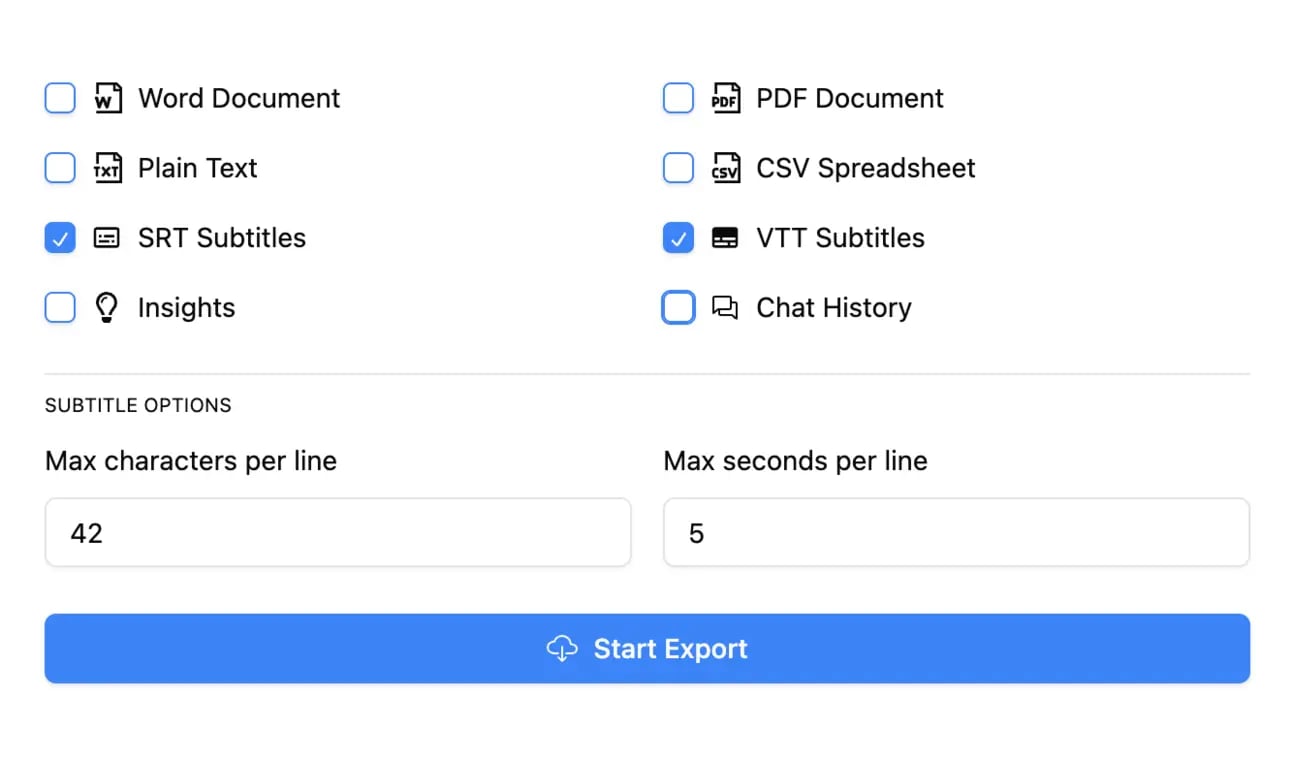
Exportar en múltiples formatos
Exporta tus transcripciones en múltiples formatos incluyendo TXT, DOCX, PDF, SRT y VTT con opciones de formato personalizables.
El Propósito Central y la Creciente Necesidad
El objetivo principal es crear registros médicos precisos, desde notas clínicas dictadas y consultas de pacientes hasta llamadas de telesalud, sin infringir las estrictas normas de privacidad establecidas por la Ley de Portabilidad y Responsabilidad del Seguro Médico (HIPAA). Si un servicio "toca" información de salud protegida (PHI), incluso solo para convertirla en texto, debe seguir absolutamente estos protocolos de seguridad.
Y la demanda de estos servicios está explotando. El mercado global de transcripción médica alcanzó los 82.100 millones de dólares estadounidenses en 2024 y se espera que se dispare hasta los 145.900 millones de dólares estadounidenses para 2035. Este aumento está impulsado por la transición a registros médicos electrónicos (EHR) y por reguladores cada vez más estrictos, especialmente en América del Norte. El informe de investigación completo desglosa estas tendencias aún más.
Distinciones Clave con los Servicios Estándar
Entonces, ¿qué separa realmente un servicio compatible de uno genérico? La brecha no está solo en las características; es una mentalidad legal y operativa completamente diferente.
Para que esto quede muy claro, aquí hay un resumen rápido de lo que los distingue.
Transcripción Compatible vs. Estándar de un Vistazo
Esta comparación rápida destaca las diferencias esenciales en seguridad, obligaciones legales y manejo de datos entre los servicios de transcripción estándar y los compatibles con HIPAA.
| Característica | Servicio de Transcripción Estándar | Servicio de Transcripción Compatible con HIPAA |
|---|---|---|
| Responsabilidad Legal | Sin responsabilidad legal por violaciones de PHI. | Firma un Acuerdo de Asociado Comercial (BAA), lo que lo hace legalmente responsable de proteger la PHI. |
| Seguridad de Datos | Seguridad básica, si la hay. Los datos pueden no estar cifrados. | Implementa salvaguardias administrativas, físicas y técnicas obligatorias, incluido el cifrado de extremo a extremo. |
| Controles de Acceso | A menudo carece de permisos de usuario granulares. | Aplica estrictos controles de acceso basados en roles para garantizar que solo el personal autorizado pueda ver los datos. |
| Pistas de Auditoría | Típicamente sin registro detallado. | Mantiene meticulosas pistas de auditoría que registran cada acción tomada sobre los datos para una responsabilidad total. |
| Manejo de Datos | Puede procesar datos en el extranjero o en servidores no seguros. | Sigue protocolos estrictos para el almacenamiento, transmisión y destrucción de datos para evitar el acceso no autorizado. |
En última instancia, la elección se reduce a una cosa: el riesgo. Un servicio estándar podría transcribir las palabras correctamente, pero uno compatible con HIPAA proporciona seguridad legalmente defendible.
Una herramienta de transcripción estándar podría ofrecer velocidad, pero un servicio compatible con HIPAA proporciona seguridad legalmente defendible. Elegir el incorrecto no es un simple error; es un fallo de cumplimiento que puede acarrear graves sanciones.
Dominar estos fundamentos es el primer paso. Para los proveedores de atención médica, el uso de transcripción médica y de atención médica segura es innegociable para mantener el funcionamiento sin problemas y la confianza del paciente. Esta guía le mostrará exactamente cómo hacerlo.
Los Tres Pilares de la Seguridad HIPAA en la Transcripción
El cumplimiento de HIPAA no es solo una casilla que marcas en una lista. Piénsalo más como construir una fortaleza segura para proteger los datos sensibles de los pacientes. No construirías solo una muralla fuerte y te darías por satisfecho, ¿verdad? También necesitarías guardias, reglas sobre quién entra y un sistema para monitorearlo todo.
Este enfoque de tres puntas es lo que hace que un servicio de transcripción compatible con HIPAA sea verdaderamente seguro. Asegura que la Información de Salud Protegida (PHI) esté protegida desde todos los ángulos posibles. Comprender estos pilares es la clave para determinar si realmente puedes confiarle a un proveedor los datos de tus pacientes.
La infografía a continuación muestra la clara división entre la transcripción estándar y los servicios construidos desde cero para HIPAA.
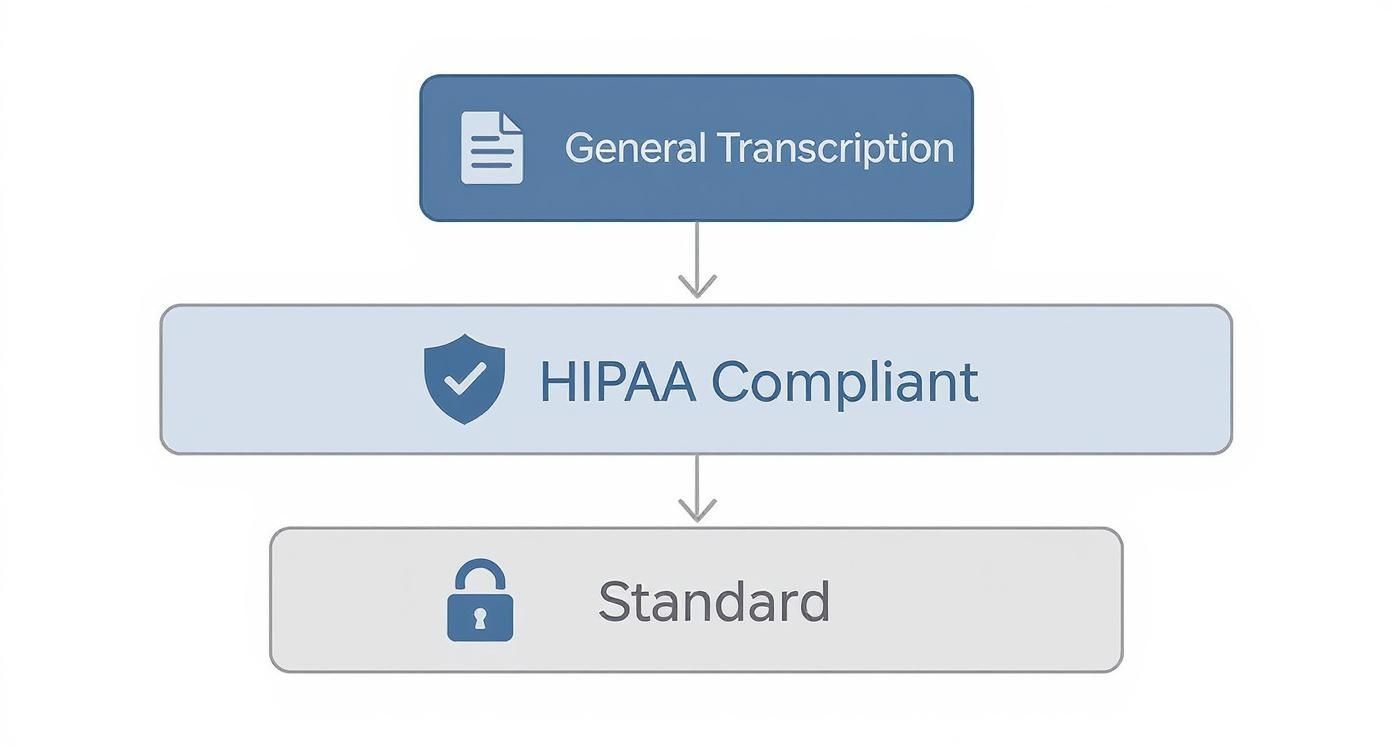
Como puedes ver, el cumplimiento de HIPAA es una especialidad. La seguridad no es solo un complemento; es toda la base.
¿Por Qué las Herramientas Estándar Fallan Inmediatamente en HIPAA?
La mayoría de los servicios de transcripción no pueden cumplir con los estrictos requisitos de HIPAA, incluso si afirman ser seguros. La falta de salvaguardas como cifrado, control de acceso o registros de auditoría puede poner en riesgo la PHI al instante. El uso de herramientas no conformes puede generar violaciones legales importantes y exposición de datos del paciente.
Salvaguardas Administrativas: El Reglamento
Primero, tenemos las Salvaguardas Administrativas. Estas son todas las políticas y procedimientos que dictan cómo una organización maneja la seguridad. Este es el "quién, qué, cuándo, dónde y por qué" de la protección de datos, menos sobre tecnología y más sobre procesos humanos documentados.
Estas salvaguardas definen quién puede acceder a la PHI y bajo qué condiciones específicas. Los componentes clave incluyen:
- Proceso de Gestión de Seguridad: Esto comienza con un análisis de riesgos exhaustivo para detectar posibles puntos débiles y luego implementar medidas para solucionarlos.
- Responsabilidad de Seguridad Asignada: Una persona, típicamente un Oficial de Seguridad, debe ser oficialmente responsable de crear y hacer cumplir todas las políticas de seguridad.
- Seguridad de la Fuerza Laboral: Deben existir procedimientos claros para autorizar, supervisar y dar de baja el acceso de los empleados a la PHI.
- Gestión del Acceso a la Información: Deben existir políticas estrictas para garantizar que los empleados solo accedan a la cantidad mínima absoluta de PHI necesaria para realizar su trabajo.
- Concienciación y Capacitación en Seguridad: Cada persona que entra en contacto con la PHI necesita capacitación regular y continua sobre los protocolos de seguridad.
Para mantenerse al día con estas reglas, especialmente el análisis de riesgos, muchas organizaciones utilizan herramientas efectivas de evaluación de riesgos HIPAA. En última instancia, estas salvaguardas aseguran que cada miembro del equipo sepa su papel en el mantenimiento de la seguridad de los datos del paciente.
Salvaguardas Físicas: La Bóveda Segura
A continuación, tenemos las Salvaguardas Físicas. Este pilar se trata de proteger el hardware y el equipo real donde reside la PHI electrónica (ePHI). Si las salvaguardas administrativas son las reglas, las salvaguardas físicas son las puertas cerradas, las cámaras de seguridad y los racks de servidores seguros.
Estas medidas están diseñadas para evitar que personas no autorizadas pongan sus manos en datos sensibles. Un servicio de transcripción debe demostrar absolutamente que tiene control sobre su entorno físico.
La seguridad de los datos de un proveedor es tan fuerte como su eslabón físico más débil. Un sistema de cifrado de última generación no significa nada si el servidor en el que se ejecuta está en una sala sin llave y sin supervisión.
Los ejemplos de salvaguardas físicas críticas incluyen:
- Controles de Acceso a las Instalaciones: Implementación de procedimientos para limitar quién puede ingresar físicamente a las áreas donde se almacena la ePHI, al tiempo que se garantiza que el personal autorizado pueda acceder cuando lo necesite.
- Uso de Estaciones de Trabajo: Políticas que dictan cómo se pueden usar las estaciones de trabajo que acceden a la ePHI, como asegurarse de que no se dejen desatendidas en áreas públicas.
- Seguridad de Estaciones de Trabajo: Colocación de cerraduras físicas y otras protecciones en todas las estaciones de trabajo que manejan ePHI para restringir el acceso.
- Controles de Dispositivos y Medios: Procedimientos documentados sobre cómo se mueven, reutilizan o destruyen de forma segura el hardware y los medios electrónicos.
Estos controles garantizan que las computadoras portátiles, los servidores y otros dispositivos estén físicamente seguros contra robos o manipulaciones. Por lo general, puede averiguar cómo una empresa maneja esto consultando su documentación oficial. Por ejemplo, puede leer sobre nuestro compromiso en nuestra política de privacidad.
Cuatro Pilares de la Protección HIPAA en el Mundo Real
Control de Acceso Seguro
Solo los roles autorizados obtienen acceso a los sistemas que contienen PHI. Esto previene la exposición accidental por parte del personal que no necesita datos a nivel clínico. Impone una estricta higiene de acceso dentro de los entornos de atención médica.
Seguridad de Dispositivos Físicos
Los servidores, portátiles y dispositivos de almacenamiento deben protegerse físicamente. Cerraduras, salas restringidas y entornos monitoreados garantizan que ninguna persona no autorizada pueda tocar el hardware de PHI.
Transferencia Segura de Datos
Cualquier PHI que se mueva entre dispositivos o sistemas debe seguir rutas cifradas y monitoreadas. Los métodos de transferencia segura eliminan las amenazas de interceptación durante las cargas y descargas.
Registros de Auditoría Verificados
Cada acción, inicio de sesión e interacción de datos se registra automáticamente. Estos registros demuestran el cumplimiento, respaldan las investigaciones y mantienen un registro transparente para la rendición de cuentas.
Salvaguardas Técnicas: Las Cerraduras Digitales
Finalmente, están las Salvaguardas Técnicas. Esta es la tecnología —el software y las políticas— utilizada para proteger la ePHI y controlar quién puede acceder a ella. Estas son las cerraduras digitales, alarmas y sistemas de vigilancia que operan sobre los datos mismos.
Esto es lo que la mayoría de la gente piensa inmediatamente cuando escucha "seguridad de datos", e incluye algunas de las características más importantes de cualquier plataforma compatible.
Funciones Inteligentes Que Mejoran la Precisión y la Eficiencia Clínica

Detección de hablantes
Identifica automáticamente diferentes hablantes en tus grabaciones y etiquétalos con sus nombres.
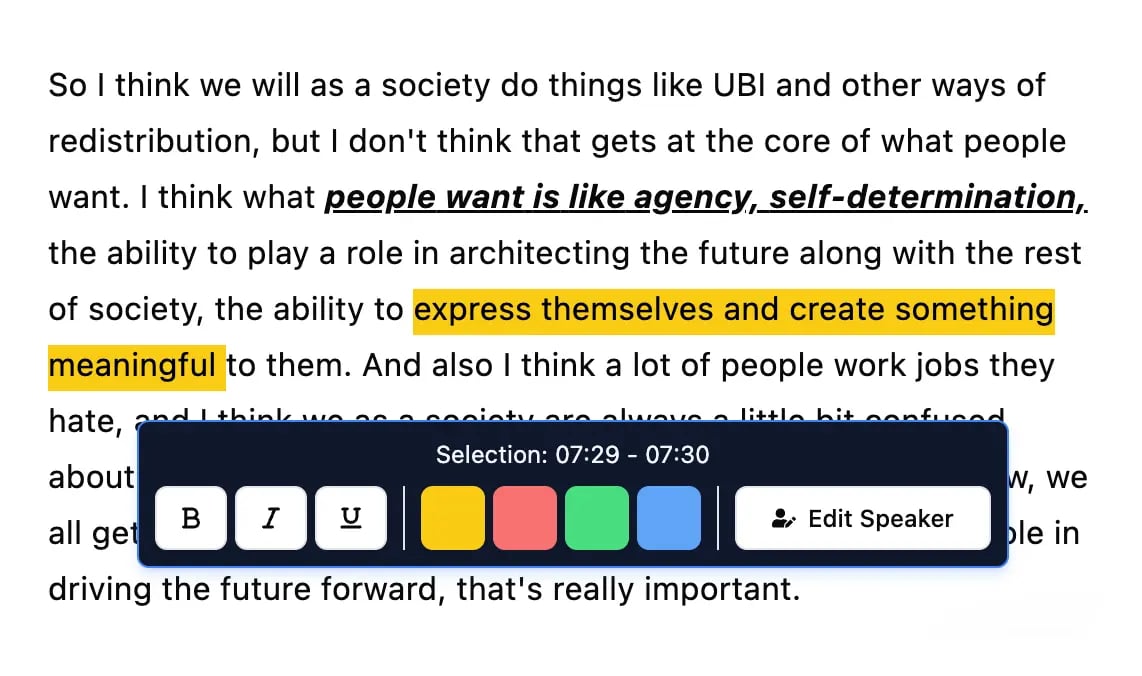
Herramientas de edición
Edita transcripciones con herramientas potentes como buscar y reemplazar, asignación de hablantes, formatos de texto enriquecido y resaltado.
Resúmenes y Chatbot
Genera resúmenes y otros análisis de tu transcripción, prompts personalizados reutilizables y chatbot para tu contenido.
Medidas Técnicas Clave:
- Control de Acceso: Esto significa usar tecnología para asegurar que solo personas autorizadas puedan acceder a la ePHI. Implica cosas como identificadores de usuario únicos, temporizadores de cierre de sesión automático y cifrado.
- Controles de Auditoría: Se deben implementar hardware y software para registrar y examinar toda la actividad en los sistemas que contienen o utilizan ePHI. Necesitas un registro de quién hizo qué y cuándo.
- Controles de Integridad: Las políticas deben evitar que la ePHI se modifique o elimine de manera inapropiada. Esto a menudo se maneja con herramientas como firmas digitales que verifican que los datos no han sido manipulados.
- Seguridad de la Transmisión: Esta medida exige medidas técnicas para proteger la ePHI mientras se envía a través de una red. El cifrado de extremo a extremo es el estándar indiscutible aquí.
Juntos, estos tres pilares forman un sistema de defensa completo y de múltiples capas. Un servicio de transcripción verdaderamente compatible con HIPAA tendrá medidas sólidas y documentadas que cubren los tres, brindándole la tranquilidad de que los datos de sus pacientes están protegidos de todas las amenazas imaginables.
Por qué un Acuerdo de Asociado Comercial es Innegociable
Antes de siquiera pensar en enviar un solo archivo de audio con Información de Salud Protegida (PHI) a un proveedor, existe un documento que actúa como el guardián del cumplimiento: el Acuerdo de Asociado Comercial (BAA).
Esto no es solo otro trámite para marcar en una lista. Es un contrato legalmente vinculante que es absolutamente esencial cuando se trabaja con cualquier servicio de terceros, especialmente un proveedor de transcripción.
Piénselo como el contrato prematrimonial definitivo para sus datos. Un BAA describe claramente los roles, las responsabilidades y, lo que es más importante, las responsabilidades tanto de su organización (la "Entidad Cubierta") como del servicio de transcripción (el "Asociado Comercial"). Sin él, simplemente está entregando datos de pacientes increíblemente sensibles sin un marco legal para protegerlos o responsabilizar al proveedor si algo sale mal.
Este acuerdo eleva una simple relación con un proveedor a una verdadera asociación en seguridad. Obliga legalmente al servicio de transcripción a cumplir las mismas reglas estrictas de HIPAA que usted.
Lo que un BAA Realmente Hace
Un BAA es mucho más que una simple promesa de "mantener los datos seguros". Es un contrato detallado que especifica obligaciones específicas, asegurando que el proveedor sea un participante activo en su estrategia de cumplimiento, no uno pasivo. Cualquier servicio de transcripción compatible con HIPAA legítimo tendrá un BAA listo y lo firmará sin pensarlo dos veces.
Un BAA sólido debe cerrar varios puntos clave:
- Usos Permitidos de la PHI: Establece explícitamente cómo el asociado comercial puede usar y divulgar la PHI, limitándola estrictamente a los servicios de transcripción que usted ha acordado. Ni más, ni menos.
- Implementación de Salvaguardias: El acuerdo exige que el proveedor implemente todas las salvaguardias administrativas, físicas y técnicas necesarias para proteger la integridad de la PHI.
- Protocolo de Notificación de Brechas: Establece un proceso claro e inmediato para que el proveedor le informe sobre cualquier brecha de datos o incidente de seguridad. Sin demoras, sin excusas.
- Cumplimiento de Subcontratistas: Asegura que cualquier subcontratista que utilice el proveedor también esté obligado por las mismas reglas de HIPAA, extendiendo la cadena de confianza y responsabilidad.
Un proveedor que se niega a firmar un BAA es la mayor señal de alerta que jamás verá. Es una clara indicación de que no están dispuestos o no pueden cumplir con los requisitos legales básicos para el manejo de la PHI, y eso pone a toda su organización en riesgo.
Nunca Trabaje Con un Proveedor Que No Firme un BAA
Una relación HIPAA válida no puede existir sin un BAA firmado. Este contrato define responsabilidades, salvaguardas y rendición de cuentas. Si un proveedor duda o se niega, significa que no está equipado para proteger la PHI, y su organización asume todo el riesgo legal.
Las Consecuencias Legales y Financieras
Operar sin un BAA no es solo una negligencia, es una violación directa de HIPAA. Si ocurre una violación de datos en el extremo de su proveedor de transcripción, la ausencia de un BAA firmado significa que todas las consecuencias legales y financieras podrían recaer directamente sobre sus hombros.
Un Acuerdo de Asociado Comercial (BAA) traslada la responsabilidad. Obliga legalmente a su proveedor a proteger los datos del paciente, convirtiéndolo en un codemandado en caso de una violación. Sin él, usted solo puede ser considerado responsable de sus fallos de seguridad.
Las consecuencias pueden ser brutales, desde multas masivas del Departamento de Salud y Servicios Humanos (HHS) hasta daños permanentes a la reputación de su organización. Los pacientes confían en usted con su información más privada; esa confianza se hace añicos cuando un socio la maneja descuidadamente.
Para una inmersión más profunda en lo que implican los compromisos de un proveedor seguro, puede explorar los detalles de una sólida postura de seguridad, que es la base de cualquier BAA digno de confianza.
En última instancia, el BAA es su primera y más crítica línea de defensa. Garantiza que cualquier servicio de transcripción que cumpla con HIPAA que utilice no sea solo otra herramienta, sino un socio totalmente responsable en la protección de la privacidad del paciente.
Características Esenciales de un Servicio de Transcripción Seguro
Un BAA firmado es solo el boleto de entrada. La seguridad real de un servicio de transcripción que cumpla con HIPAA reside en su tecnología. Estas características no son solo deseables, son los pilares fundamentales que mantienen la Información de Salud Protegida (PHI) segura desde el momento en que presiona "cargar" hasta el momento en que recibe su transcripción.
Piense en ello como evaluar una caja fuerte de banco. No solo confiaría en el letrero de la puerta, querría saber el grosor de las paredes, el tipo de cerradura y el sistema de vigilancia. Una plataforma verdaderamente compatible tiene capas de defensa diseñadas para proteger los datos contra cualquier amenaza.
Cifrado de Extremo a Extremo como Estándar
El punto de partida absoluto e innegociable es el cifrado de extremo a extremo. Imagínelo como un camión blindado digital. Desde el momento en que su archivo de audio sale de su computadora hasta que descarga la transcripción finalizada, se codifica en un código ilegible.
Esta protección es crucial en dos estados:
- Datos en Tránsito: Esto protege sus archivos mientras viajan por Internet a los servidores del servicio, evitando que alguien "escuche" en el camino.
- Datos en Reposo: Esto asegura sus archivos mientras están almacenados en el servidor. Incluso si alguien entrara y robara físicamente el disco duro, los datos cifrados serían completamente inútiles sin las claves de descifrado.
Cualquier servicio que solo cifre datos en un estado deja la puerta abierta de par en par. El verdadero cumplimiento de HIPAA significa que la PHI está protegida las 24 horas del día, sin excepciones.
Controles de Acceso Granulares y Autenticación de Usuarios
No todos en su consultorio necesitan ver todos los registros de pacientes. Para eso están los controles de acceso granulares. Esto permite a un administrador decidir exactamente quién puede ver y hacer qué, asegurando que las personas solo tengan acceso a la información requerida para su trabajo.
Todo se trata del "principio de menor privilegio". Un especialista en facturación podría necesitar ver transcripciones relacionadas con una reclamación de seguro, pero no debería tener acceso a notas de psicología clínica no relacionadas.
Un sistema seguro no solo mantiene fuera a las personas no autorizadas, sino que gestiona cuidadosamente lo que las personas autorizadas pueden hacer dentro. Esta es la diferencia entre una simple cerradura y un equipo de seguridad completo.
Además de eso, una autenticación de usuario sólida, como requerir contraseñas complejas y autenticación multifactor (MFA), agrega otra capa crítica. Demuestra que la persona que inicia sesión es quien dice ser, deteniendo a los malos actores que podrían haber robado una contraseña.
Registros de Auditoría Completos para la Responsabilidad
Si algo sale mal, ¿cómo rastrearía los pasos? Los registros de auditoría completos son la respuesta. Estos son registros detallados e inmutables de cada acción tomada dentro del sistema.
Un rastro de auditoría adecuado rastrea todo lo que importa:
- Quién accedió a los datos (la cuenta de usuario específica).
- Qué datos accedieron (qué transcripción o archivo).
- Cuándo accedieron a él (una marca de tiempo precisa).
- Qué hicieron (vieron, editaron, eliminaron o descargaron).
Estos registros son indispensables para la rendición de cuentas y para investigar cualquier posible violación. Crean un registro transparente que demuestra que un servicio se toma en serio el monitoreo y la gestión del acceso a los datos. Muchos servicios de transcripción que cumplen con HIPAA utilizan software avanzado de transcripción médica con estas capacidades de registro integradas.
Políticas Seguras de Gestión y Eliminación de Datos
Finalmente, un servicio compatible necesita un plan claro para los datos, desde la creación hasta la destrucción. Esto incluye definir cuánto tiempo se almacenan los datos y tener un proceso a prueba de balas para eliminarlos permanentemente cuando ya no sean necesarios. Una política de "cero almacenamiento", donde las grabaciones se eliminan automáticamente después de la transcripción, es una excelente señal de un enfoque centrado en la seguridad.
Estas tecnologías avanzadas se están convirtiendo rápidamente en la norma de la industria. Para 2025, se espera que más del 60% de los proveedores de atención médica utilicen plataformas de transcripción basadas en la nube que cumplan con HIPAA y GDPR. Estas plataformas dependen de un cifrado sólido y MFA para bloquear la información del paciente y minimizar los riesgos de violación.
Juntas, estas características crean la columna vertebral tecnológica de un servicio en el que puede confiar. Al sopesar sus opciones, es útil ver cómo funcionan las herramientas modernas, especialmente al considerar software de transcripción impulsado por IA que puede ofrecer velocidad y seguridad cuando se construye de la manera correcta.
Elegir el Socio de Transcripción Compatible Adecuado
Elegir un servicio de transcripción no es solo otra decisión de proveedor. Es una decisión crítica que impacta directamente la seguridad y la posición legal de su organización. El socio adecuado es más que una herramienta; es una extensión de su compromiso con la privacidad del paciente, armado con la tecnología y las políticas para demostrarlo.
Es por eso que lo primero que hacemos en Transcript.LOL es ofrecer firmar un Acuerdo de Asociado Comercial (BAA) con cualquier entidad cubierta. Esto no está en discusión, es nuestra promesa fundamental. Al firmar un BAA, nos obligamos legalmente a los mismos estrictos estándares de HIPAA que usted sigue. Somos un socio responsable en la protección de la PHI, punto.
La Tecnología Detrás de la Confianza
Un BAA proporciona el marco legal, pero es la tecnología la que realmente protege. Un socio de confianza necesita una infraestructura moderna construida para defenderse de las amenazas actuales. Nuestra plataforma utiliza cifrado de extremo a extremo, lo que significa que sus datos están seguros tanto mientras se cargan (en tránsito) como mientras se almacenan en nuestros servidores (en reposo).
Piénselo así: sus datos se cargan en un camión blindado digital en el momento en que salen de su sistema y permanecen encerrados en una bóveda segura hasta que los necesite nuevamente. Este enfoque en capas garantiza que incluso si alguien violara físicamente nuestros servidores, un evento muy poco probable, la información sería ilegible y totalmente inútil. Ese es el nivel de seguridad que define un servicio de transcripción moderno que cumple con HIPAA.
La Importancia Crítica de una Política de No Entrenamiento
En la era de la transcripción con IA, hay una pregunta que supera a todas las demás: ¿qué sucede con sus datos después de que se completa la transcripción? Muchos servicios de IA utilizan datos de clientes para entrenar sus modelos. Cuando se trata de PHI, eso es completamente inaceptable. Aquí es donde una estricta política de no entrenamiento marca la diferencia.
En Transcript.LOL, garantizamos que sus archivos de audio y video confidenciales nunca, bajo ninguna circunstancia, se utilizan para entrenar nuestros modelos de IA. Sus datos se procesan por una sola razón: generar su transcripción. Después de eso, se manejan de acuerdo con nuestros protocolos de seguridad de datos.
Un servicio de IA que utiliza su PHI para el entrenamiento de modelos es como un banco que utiliza sus registros financieros privados para entrenar a sus cajeros. Es una violación fundamental de la privacidad, y nuestra política de no entrenamiento garantiza que esta línea nunca se cruce.
Este compromiso crea un límite estricto, garantizando la privacidad y el aislamiento total de los datos. Significa que los detalles de una consulta de paciente, una sesión de terapia o una revisión médica nunca formarán parte de un conjunto de datos masivo. Es un pilar esencial para mantener la confidencialidad y la confianza del paciente.
En última instancia, elegir el socio adecuado se reduce a estos compromisos centrales: un BAA fácilmente disponible, cifrado potente y una política explícita de no entrenamiento de datos. Para cualquier organización de atención médica, estos elementos no son negociables. Son los pilares que hacen de Transcript.LOL una opción segura, eficiente y confiable para la atención médica moderna.
Preguntas Frecuentes Sobre Transcripción HIPAA
Navegar por el mundo de la transcripción compatible con HIPAA puede parecer un laberinto. Pero una vez que comprenda algunos conceptos básicos, todo empieza a tener sentido. Aquí hay algunas respuestas claras y sencillas a las preguntas que escuchamos con más frecuencia.
¿Puedo Usar un Servicio Estándar si Elimino los Nombres de los Pacientes?
Lamentablemente, no. Simplemente eliminar el nombre de un paciente no es suficiente para anonimizar la información de salud según HIPAA. La regulación enumera explícitamente 18 identificadores específicos que se consideran Información de Salud Protegida (PHI).
Estos identificadores van mucho más allá de los nombres. Incluyen cosas como números de registro médico, fechas relacionadas con la atención e incluso detalles geográficos específicos. Si alguno de estos está presente, los datos pueden ser rastreados hasta un individuo. Usar un servicio no compatible para audio con cualquier PHI, incluso si cree que lo ha eliminado, es una violación grave que expone a su consultorio a enormes riesgos legales. La única forma segura de avanzar es utilizar un servicio totalmente compatible y tener un Acuerdo de Asociado Comercial (BAA) firmado.
Piénselo de esta manera: redactar un nombre es como difuminar una sola cara en una foto grupal donde todos usan un uniforme con una etiqueta de nombre. La verdadera desidentificación es mucho más compleja, y HIPAA exige un servicio diseñado para manejar los 18 identificadores con seguridad hermética.
¿Qué Sucede si Mi Proveedor de Transcripción Sufre una Violación de Datos?
Si su socio de transcripción sufre una violación de datos, el BAA que firmó con usted lo obliga legalmente a notificarle sin "retraso irrazonable". Ese acuerdo debe especificar exactamente quién es responsable de qué, creando un plan de acción claro para responder al incidente.
Pero aquí está la parte crítica: como Entidad Cubierta, la responsabilidad final aún recae en usted. Usted es el responsable de notificar a los pacientes afectados y al Departamento de Salud y Servicios Humanos (HHS) sobre la violación. Esta es precisamente la razón por la que es tan importante examinar la seguridad de un proveedor y su plan de notificación de violaciones antes de firmar nada.
¿Es Segura la Transcripción Impulsada por IA para los Registros Médicos?
Sí, la transcripción con IA puede ser increíblemente segura y cumplir al 100% con HIPAA, pero solo si la plataforma fue diseñada desde cero con la seguridad como su enfoque principal. Un servicio de IA compatible no se trata solo de texto preciso; se trata de las medidas de seguridad profundas que protegen ese texto.
Cualquier plataforma de IA que considere debe tener:
- Cifrado de Extremo a Extremo: Los datos deben estar bloqueados tanto en tránsito (mientras se cargan) como en reposo (mientras se almacenan).
- Controles de Acceso Estrictos: Solo los usuarios autorizados deben poder ver o tocar información confidencial.
- Rastros de Auditoría Completos: Necesita un registro completo de cada interacción con los datos. Sin excepciones.
Sin embargo, el factor más importante es la política de uso de datos del proveedor. Un servicio verdaderamente seguro como Transcript.LOL opera con una estricta política de "no entrenamiento". Esta es su garantía de que los datos confidenciales del paciente nunca, jamás, se utilizan para entrenar modelos de IA. Se procesan solo para su transcripción y luego se dejan de lado, garantizando la privacidad total.
Comience Su Transcripción Que Cumple con HIPAA en Minutos
Nuestra plataforma mantiene la PHI completamente segura, nunca entrena modelos de IA con sus datos e incluye todas las salvaguardas requeridas. Comience a usar transcripciones rápidas, precisas y cifradas con total cumplimiento de HIPAA hoy mismo.
¿Listo para ver cómo un servicio de transcripción verdaderamente seguro y basado en IA puede transformar su flujo de trabajo? Comience con Transcript.LOL y experimente transcripciones rápidas, precisas y confidenciales en las que puede confiar. Obtenga más información y regístrese hoy.