Verständnis der Kosten für Transkriptionsdienste – Eine vollständige Aufschlü...
Verwirrt über die Kosten für Transkriptionsdienste? Unser Leitfaden zerlegt die Preisgestaltung, versteckte Faktoren und wie KI- vs. menschliche Tarife verglichen werden, um Ihnen zu helfen, den besten Wert zu finden.
Kate
November 27, 2024
Die Kosten für einen Transkriptionsdienst herauszufinden, ist nicht so einfach, wie eine einzelne Preistafel anzuschauen. Es ist eher wie ein Angebot für eine Sonderanfertigung – eine einfache Aufgabe wird günstig sein, aber ein komplexes Projekt mit knapper Frist wird natürlich mehr kosten.
Also, wovon reden wir hier? Sie könnten nur 0,10 $ pro Audiominute für einen automatisierten KI-Dienst bezahlen oder bis zu 2,50 $ pro Minute für eine hochpräzise menschliche Transkription. Die Endabrechnung hängt davon ab, was Sie brauchen.
Wie moderne KI-Transkriptionstools Kosten und Aufwand reduzieren?
Modernste KI
Angetrieben von OpenAIs Whisper für branchenführende Genauigkeit. Unterstützung für benutzerdefinierte Vokabulare, bis zu 10 Stunden lange Dateien und ultraschnelle Ergebnisse.

Aus mehreren Quellen importieren
Importiere Audio- und Videodateien aus verschiedenen Quellen, einschließlich direktem Upload, Google Drive, Dropbox, URLs, Zoom und mehr.
Zusammenfassungen und Chatbot
Erstelle Zusammenfassungen und andere Erkenntnisse aus deinem Transkript, wiederverwendbare benutzerdefinierte Prompts und Chatbot für deine Inhalte.
Die tatsächlichen Kosten von Transkriptionsdiensten navigieren
Die Welt der Transkription teilt sich im Grunde in zwei Lager, und diese haben sehr unterschiedliche Preisstrukturen: automatisierte KI-Transkription und qualifizierte menschliche Transkriptionisten.
Warum variieren die Preise so stark?
Die Preise für Transkriptionen sind nicht festgelegt, da Genauigkeit, Geschwindigkeit und Komplexität stark variieren. KI-Tools priorisieren Geschwindigkeit und Skalierbarkeit, während menschliche Transkription auf Präzision abzielt. Das Verständnis dieses Unterschieds hilft Ihnen, die richtige Lösung zu wählen, ohne zu viel auszugeben.
Stellen Sie sich KI als eine Hochgeschwindigkeits-Fließbandproduktion vor. Sie ist unglaublich schnell und schont den Geldbeutel, was sie perfekt für die Verarbeitung riesiger Mengen unkomplizierter Audioinhalte macht. Menschliche Transkription hingegen ist wie die Beauftragung eines maßgeschneiderten Handwerkstücks. Sie ist langsamer und teurer, aber dafür erhalten Sie Präzision, Nuancen und nahezu perfekte Genauigkeit.
Was den Endpreis bestimmt
Was also treibt Ihr Projekt eher in die eine oder andere Richtung dieses Preisspektrums? Es kommt wirklich auf ein paar Schlüsselfaktoren an. Eine kristallklare Aufnahme eines einzelnen Sprechers ist weitaus günstiger zu transkribieren als ein verrauschtes Konferenzgespräch, bei dem alle durcheinanderreden. Ebenso kostet ein Standard-Geschäftstreffen weniger als eine juristische Aussage, die mit Fachjargon gefüllt ist, den nur ein geschulter Experte verstehen würde.
Hier ist eine kurze Aufschlüsselung der wichtigsten Faktoren:
- Transkriptionsmethode: Die Wahl zwischen KI und einem Menschen ist der größte Kostentreiber.
- Audio-Komplexität: Die Qualität Ihrer Aufnahme und die Anzahl der Sprecher ändern direkt den Arbeitsaufwand.
- Bearbeitungszeit: Brauchen Sie es gestern? Eilaufträge sind mit einem Aufpreis verbunden. Eine Standardlieferung ist immer Ihre günstigste Option.
Schnelle Bearbeitung ist nicht billig
Die Anforderung einer Lieferung am selben Tag oder einer dringenden Lieferung kann die Transkriptionskosten um 50–100 % erhöhen. Planen Sie immer im Voraus, wenn möglich, um unnötige Eilzuschläge zu vermeiden.
- Inhaltstyp: Spezialisierte Themen wie medizinische oder juristische Transkriptionen erfordern zertifizierte Fachleute, und diese Expertise erhöht die Kosten.
Sobald Sie diese Variablen im Griff haben, können Sie beginnen, eine realistische Vorstellung von den Kosten für Transkriptionsdienste für Ihr Projekt zu bekommen und eine kluge Entscheidung zu treffen, die Ihre Bedürfnisse nach Genauigkeit, Geschwindigkeit und Budget ausbalanciert.
Wie wählt man den richtigen Transkriptionsansatz?
Budget vs. Genauigkeit
KI-Transkription ist ideal, wenn die Kosten wichtiger sind als Perfektion. Menschliche Transkription ist besser für Inhalte mit hohen Einsätzen, bei denen jedes Wort korrekt sein muss. Die Wahl des richtigen Gleichgewichts verhindert Überausgaben und erfüllt dennoch die Qualitätsanforderungen.
Geschwindigkeit der Lieferung
KI-Tools liefern Transkripte in wenigen Minuten und sind somit perfekt für schnelle Arbeitsabläufe. Menschliche Transkription dauert länger, bietet aber tiefere Genauigkeit. Ihre Frist spielt eine große Rolle bei der Entscheidung für die richtige Option.
Inhaltliche Sensibilität
Interne Besprechungen und Podcasts können sicher KI-Transkriptionen verwenden. Juristische oder medizinische Dateien erfordern zertifizierte menschliche Transkriptionisten. Sensible Inhalte erfordern höhere Genauigkeit und Compliance.
Umfang des Audios
Große Mengen an Audio werden bei menschlicher Transkription teuer. KI skaliert problemlos für Stunden von Aufnahmen zu geringen Kosten. Dies macht KI zur besten Wahl für Content-Ersteller und wachsende Teams.
Preismodelle für menschliche und KI-Transkription erklärt
Wenn Sie sich mit Transkriptionskosten befassen, werden Sie schnell an eine wichtige Weggabelung gelangen: Entscheiden Sie sich für einen menschlichen Transkriptionisten oder eine KI? Dies ist die wichtigste Entscheidung, die Ihre Endabrechnung prägen wird, da beide nach einem völlig anderen Modell arbeiten, um spezifische Anforderungen an Genauigkeit, Geschwindigkeit und Budget zu erfüllen.
Betrachten Sie menschliche Transkription wie das Anfertigen eines maßgeschneiderten Anzugs. Es ist ein Premium-Service mit persönlicher Betreuung, bei dem eine echte Person Ihre Audioaufnahme anhört und jedes einzelne Wort abtippt. Diese Methode wird fast immer pro Audiominute abgerechnet und liefert eine unglaubliche Präzision, oft mit einer Genauigkeit von 99 % oder höher. Menschen glänzen dort, wo Algorithmen oft stolpern – sie können problemlos starke Akzente, überlappende Gespräche und schlechte Audioqualität bewältigen.
KI-Transkription hingegen ist wie der Kauf eines hochwertigen Anzugs von der Stange. Es ist das schnelle, effiziente und budgetfreundliche Arbeitspferd der Branche. KI-Dienste werden typischerweise pro Minute oder über ein einfaches monatliches Abonnement abgerechnet, was ihnen einen enormen Kostenvorteil verschafft.
Integrierte Funktionen, die Genauigkeit und Workflow verbessern

Sprechererkennung
Identifiziere automatisch verschiedene Sprecher in deinen Aufnahmen und beschrifte sie mit ihren Namen.
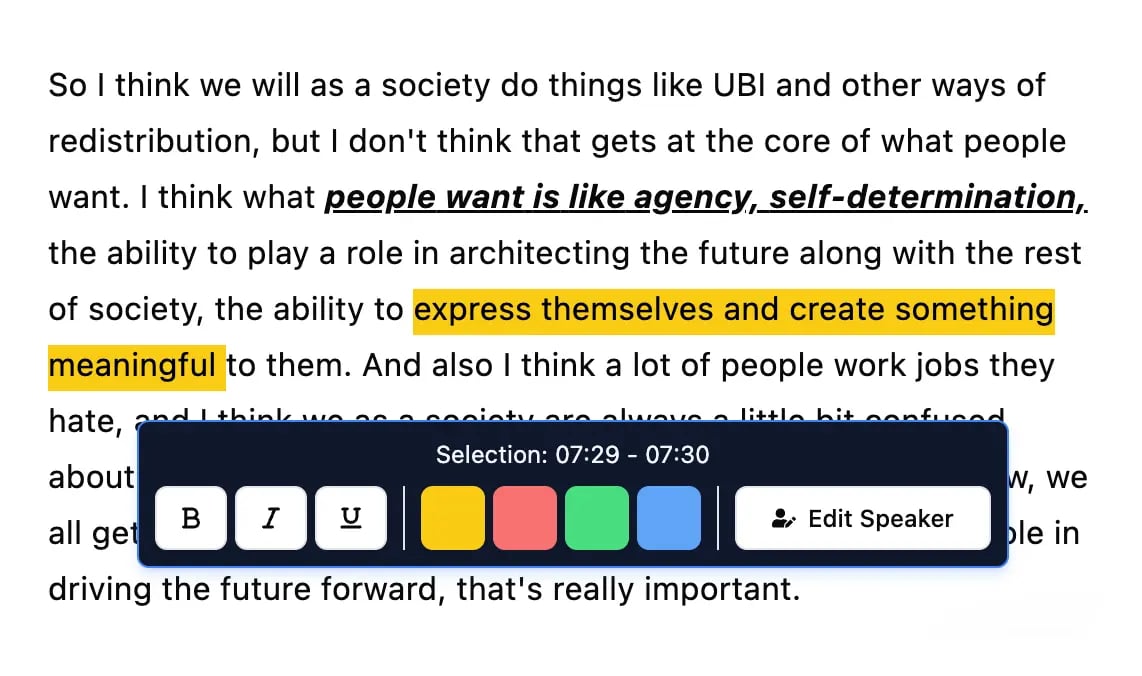
Bearbeitungswerkzeuge
Bearbeite Transkripte mit leistungsstarken Werkzeugen wie Suchen und Ersetzen, Sprecherzuordnung, Rich-Text-Formate und Hervorhebungen.
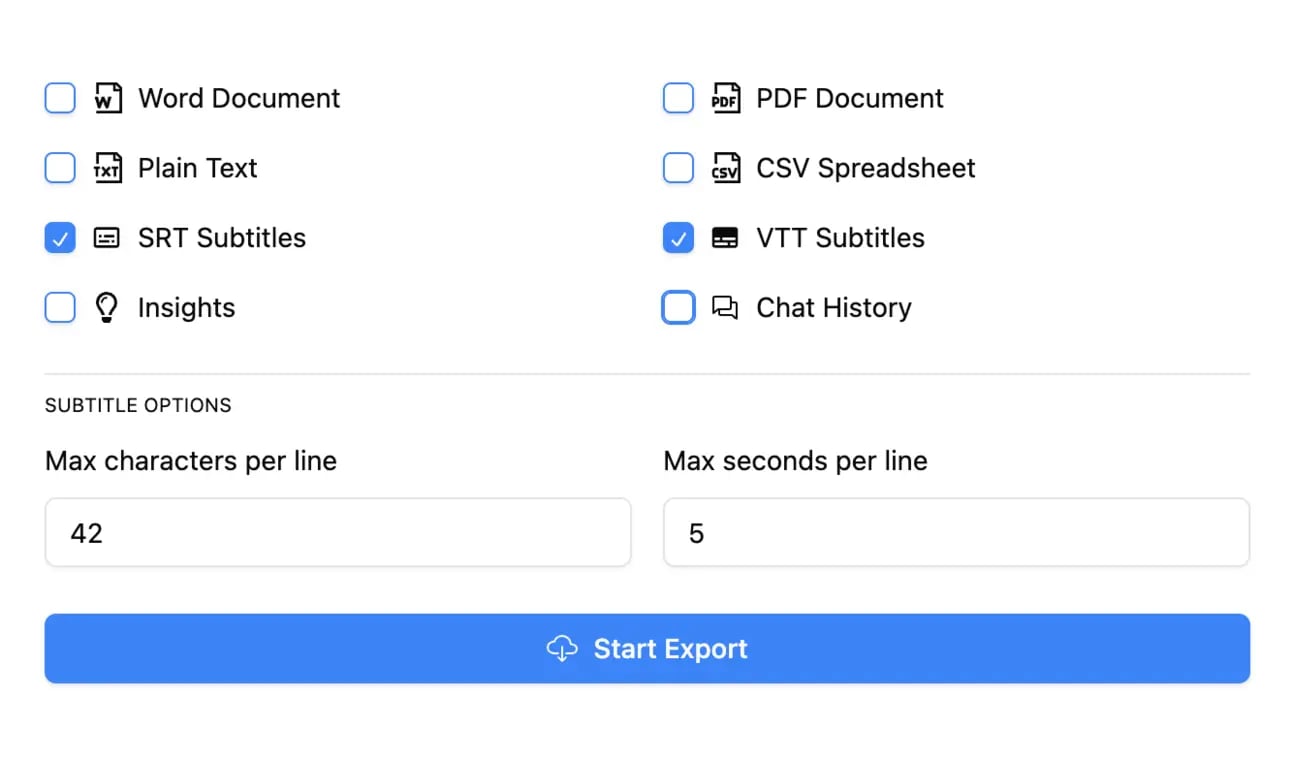
In mehreren Formaten exportieren
Exportiere deine Transkripte in mehreren Formaten, einschließlich TXT, DOCX, PDF, SRT und VTT mit anpassbaren Formatierungsoptionen.
Die Kosten-Nutzen-Analyse: Mensch vs. KI
Die Preisspanne zwischen beiden ist riesig. Derzeit liegen KI-Dienste im Durchschnitt bei etwa 0,10 bis 0,25 US-Dollar pro Minute. Vergleichen Sie das mit den 1,50 bis 3,00 US-Dollar pro Minute, die Sie für menschliche Transkriptionen erwarten können.
Diese Effizienz ist ein echter Game-Changer und ermöglicht es Organisationen, riesige Mengen an Inhalten zu verarbeiten, ohne das Budget zu sprengen. Vor 2020 war es keine Seltenheit, dass manuelle Transkriptionen 30 % des Budgets einer Anwaltskanzlei für Zeugenvernehmungen verschlangen. Jetzt kann die KI einen ersten Durchgang mit 90 % Genauigkeit liefern, der die Kosten um bis zu 80 % senkt und die Bearbeitungszeiten von Tagen auf nur wenige Minuten verkürzt. Sie können tiefer in das Wachstum des KI-Transkriptionsmarktes eintauchen und sehen, wie er die Dinge aufmischt.
Diese Grafik gibt Ihnen eine hervorragende Aufschlüsselung, wie die Komplexität des Projekts und Ihre Wahl der Methode die Endkosten beeinflussen.
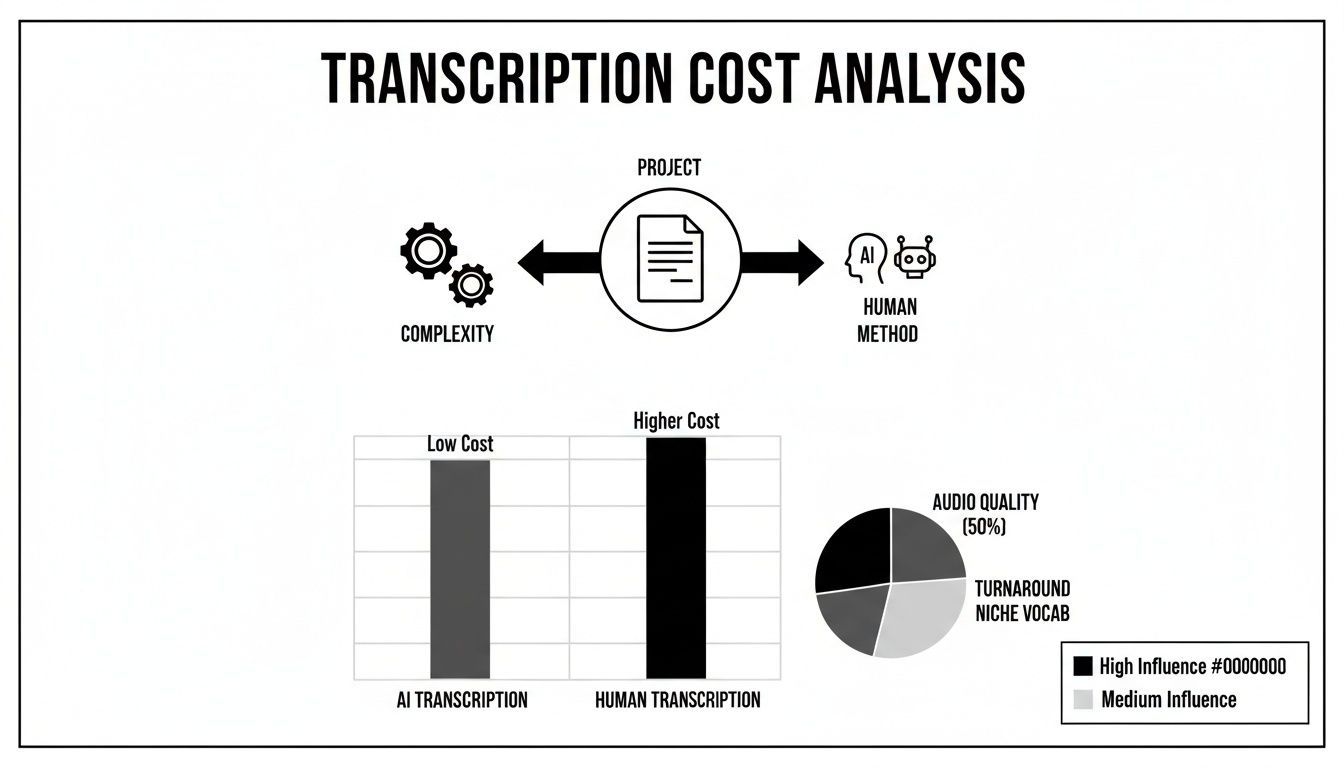
Wie Sie sehen, ist die Wahl zwischen Mensch und KI der größte Faktor, aber die Komplexität Ihres Audios spielt immer eine Rolle beim Endpreis.
Menschliche vs. KI-Transkription im Überblick
Wie wählen Sie also aus? Es kommt ganz darauf an, was Sie brauchen. Ein Podcaster, der nur einen schnellen Entwurf für einen Blogbeitrag benötigt, hat ganz andere Prioritäten als ein Anwalt, der ein beglaubigtes Transkript für einen Gerichtsfall benötigt. Während KI einen unglaublichen Wert bietet, ist sie nicht immer das richtige Werkzeug für Situationen mit hohem Einsatz, in denen jedes einzelne Wort zählt.
Um die Wahl zu erleichtern, finden Sie hier einen direkten Vergleich dessen, was Sie mit jedem Dienst erhalten.
| Merkmal | Menschliche Transkription | KI-Transkription |
|---|---|---|
| Genauigkeitsrate | 99 % oder höher, auch bei komplexem Audio. | 85-98 %, hat Schwierigkeiten mit Rauschen und Akzenten. |
| Durchschnittskosten | 1,50 - 3,00 US-Dollar+ pro Audiominute. | 0,10 - 0,25 US-Dollar pro Audiominute oder Abonnement. |
| Bearbeitungszeit | 24 Stunden bis mehrere Tage. | Wenige Minuten bis eine Stunde. |
| Am besten geeignet für | Gerichtsverfahren, medizinische Aufzeichnungen und Inhalte für die Endveröffentlichung. | Erste Entwürfe, interne Besprechungen, Forschungsnotizen und Massen-Inhalte. |
Letztendlich ist die beste Wahl diejenige, die den spezifischen Anforderungen Ihres Projekts an Genauigkeit, Bearbeitungszeit und natürlich Budget entspricht.
Schlüsselfaktoren, die Ihre endgültige Transkriptionsrechnung beeinflussen
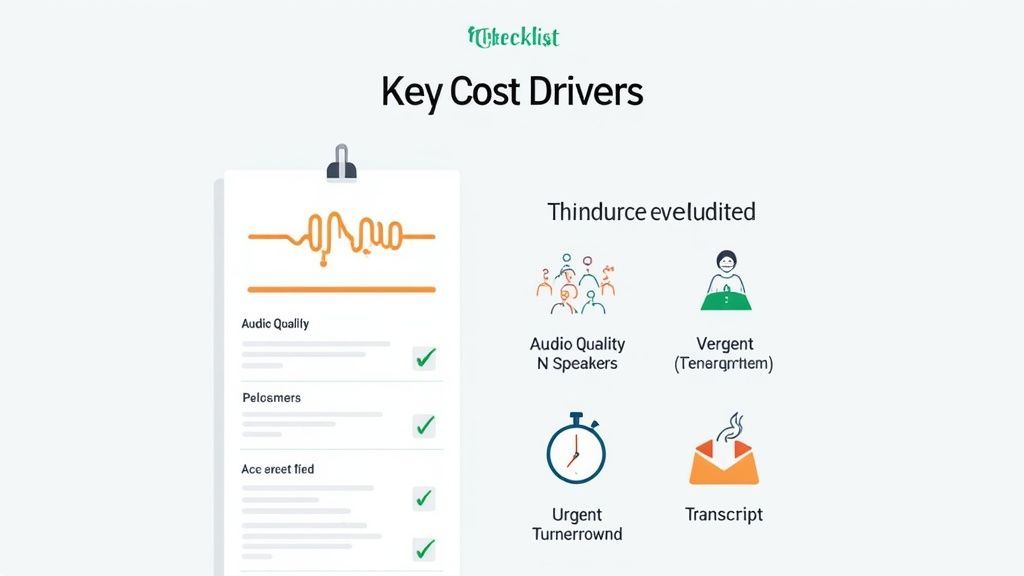
Haben Sie jemals eine Audiodatei zur Angebotserstellung eingereicht und waren vom Preis überrascht? Die endgültigen Kosten für Transkriptionsdienste hängen nicht nur von der Länge Ihrer Aufnahme ab. Einige kritische Variablen können Ihre endgültige Rechnung dramatisch nach oben oder unten beeinflussen.
Diese Faktoren zu verstehen, ist ein bisschen wie beim Autokauf. Sie wissen, dass der Listenpreis nur der Anfang ist – Ledersitze, ein Schiebedach oder ein besserer Motor ändern die Endsumme. Bei der Transkription ist es dasselbe. Bestimmte Audiodateien erfordern einfach mehr Aufwand und spezialisierte Fähigkeiten, und das spiegelt sich im Preis wider.
Audioqualität und Klarheit
Der größte Faktor, der Ihre Rechnung beeinflusst – direkt nach der Transkriptionsmethode selbst – ist die Qualität Ihres Audios.
Stellen Sie sich vor, Sie bitten einen Transkriptionisten, mit einer Aufnahme von schlechter Qualität zu arbeiten. Es ist, als würde man versuchen, einem Gespräch in einem lauten, überfüllten Restaurant zu folgen. Es erfordert intensive Konzentration und wiederholtes Zurückspulen, nur um jedes Wort zu verstehen.
Dieser zusätzliche Aufwand schlägt sich direkt in höheren Kosten nieder. Eine saubere, klare Aufnahme einer sprechenden Person in einem ruhigen Raum? Das ist das einfachste und günstigste Szenario. Auf der anderen Seite werden Dateien mit diesen Problemen fast immer mehr kosten:
- Hintergrundgeräusche: Verkehr, Stimmengewirr in einem Café oder ein summender Klimaanlagen können Wörter leicht übertönen.
- Schlechte Mikrofone: Gedämpftes Audio von einem billigen Mikrofon macht Stimmen schwer unterscheidbar.
- Geringe Lautstärke: Wenn die Sprecher zu leise aufgenommen werden, muss der Transkriptionist sich anstrengen, um den Dialog zu hören.
Eine klare Audiodatei ist der wichtigste Weg, um Ihr Transkriptionsbudget im Griff zu behalten. Je weniger Rätselraten ein Transkriptionist betreiben muss, desto schneller kann er arbeiten, was Ihren Preis pro Minute niedrig hält.
Sprecher- und Inhaltskomplexität
Als Nächstes überlegen Sie, wer spricht und worüber gesprochen wird. Ein einfaches Einzelgespräch ist ziemlich unkompliziert. Aber eine Fokusgruppe mit fünf Personen, die alle gleichzeitig sprechen? Das ist ein viel schwierigeres Puzzle, das zusammengesetzt werden muss.
Die Anzahl der Sprecher wirkt sich direkt auf den Arbeitsaufwand aus. Transkriptionisten müssen jede Person sorgfältig identifizieren und kennzeichnen, was viel mehr Zeit in Anspruch nimmt als eine Diktieraufnahme mit einem einzigen Sprecher.
Auch der Inhalt spielt eine große Rolle.
- Fachjargon: Audio, das mit branchenspezifischen Begriffen gefüllt ist – rechtlich, medizinisch oder technisch – erfordert einen Transkriptionisten, der die Fachsprache kennt. Diese Expertise hat ihren Preis.
- Starke Akzente: Starke oder ungewohnte Akzente können schwer zu entschlüsseln sein, was den gesamten Prozess natürlich verlangsamt.
- Überlappende Sprache: Wenn Menschen übereinander sprechen, bedarf es echter Fähigkeiten, um genau festzuhalten, was wer gesagt hat.
Bearbeitungszeit und Transkriptionsstil
Schließlich beeinflussen Ihre Fristen und Formatierungsanforderungen den Preis. Benötigen Sie ein Transkript in wenigen Stunden zurück? Erwarten Sie, dass Sie für diesen Eilservice einen Aufpreis zahlen, manchmal bis zu 50-100 % mehr als der Standardtarif.
Auch der Detailgrad, den Sie benötigen, spielt eine Rolle. Es gibt wirklich zwei Hauptstile:
- Clean Read (Nicht wörtlich): Dies ist die häufigste und erschwinglichste Wahl. Der Transkriptionist bereinigt den Text, indem er Füllwörter ("äh", "ähm"), Stottern und falsche Anfänge entfernt. Das Ergebnis ist ein poliertes, leicht lesbares Transkript.
- Streng wörtlich: Dies erfasst alles – jedes Stottern, Husten, jede Pause und jedes Füllwort. Es ist entscheidend für Dinge wie Gerichtsvernehmungen oder detaillierte qualitative Forschung, ist aber arbeitsintensiver und kostet mehr.
Die Wahl des richtigen Stils und die Planung Ihrer Fristen sind zwei einfache Möglichkeiten, Ihre Endkosten zu verwalten. Es unterstreicht auch die Bedeutung von Korrekturlesen bei der Transkription, was aus einer rohen Textdatei ein genaues, lesbares Endprodukt macht.
Durchschnittliche Transkriptionsraten und was Sie erwarten können
Zu wissen, was die Kosten treibt, ist eine Sache, aber was bedeutet das tatsächlich für Ihren Geldbeutel? Gehen wir von der Theorie zu realen Zahlen über. Die Welt der Kosten für Transkriptionsdienste ist ziemlich breit gefächert, aber sobald Sie die typischen Preisklassen verstehen, können Sie ein faires Angebot erkennen und Ihre Ausgaben mit Zuversicht planen.
Stellen Sie es sich wie beim Kaffeekauf vor. Ein einfacher schwarzer Kaffee (KI-Transkription) ist schnell und günstig. Aber ein schicker, handgefertigter Latte mit besonderen Zutaten (menschliche Transkription für eine Gerichtsvernehmung) erfordert mehr Geschick und Zeit, daher kostet er natürlich mehr. Beides bringt Sie zu dem, was Sie brauchen, aber das Erlebnis und der Preis sind Welten entfernt.
Standard- und KI-Transkriptionspreisspannen
Für die meisten alltäglichen Inhalte – sei es für geschäftliche, schulische oder kreative Projekte – sind die Preise ziemlich einfach. Diese Raten gehen davon aus, dass Sie Standardaudio mit guter Klarheit haben und es nicht in fünf Minuten zurück benötigen.
- KI-Transkription: Dies ist Ihre budgetfreundlichste Option, die normalerweise zwischen 0,10 und 0,25 US-Dollar pro Audiominute liegt. Viele Plattformen bieten auch Abonnementpläne an, die diese Kosten noch weiter senken können, was eine Rettung ist, wenn Sie viel Audio zu verarbeiten haben.
- Menschliche Transkription: Wenn Genauigkeit entscheidend ist, rechnen Sie mit 1,50 bis 3,00 US-Dollar pro Audiominute. Dies verschafft Ihnen einen professionellen Transkriptionisten, der moderate Akzente entwirren und mehrere Sprecher präzise verfolgen kann.
KI senkt die Kosten
KI-Transkriptionstools haben die Transkriptionskosten um bis zu 70 % gesenkt. Organisationen verarbeiten jetzt große Mengen an Inhalten schneller und kostengünstiger als je zuvor.
Automatisierung krempelt die Dinge wirklich um. Der US-Transkriptionsmarkt wurde im Jahr 2024 auf satte 30,42 Milliarden US-Dollar geschätzt, und ein wichtiger Grund für dieses Wachstum ist KI. Sie senkt die Kosten im Vergleich zu herkömmlichen, rein menschlichen Diensten um bis zu 70 %. Für jeden mit einem knappen Budget kann die Suche nach der besten kostenlosen Transkriptionssoftware ein großartiger, kostenloser Ausgangspunkt sein.
Premium-Preise für spezialisierte Bereiche
Wenn die Einsätze hoch sind, folgt der Preis. Spezialisierte Bereiche wie Medizin und Recht erfordern mehr als nur das Abtippen von Wörtern; sie erfordern tiefes Fachwissen, makellose Genauigkeit und strenge Compliance.
In diesen Bereichen zahlen Sie nicht nur für ein Transkript – Sie investieren in ein zertifiziertes, rechtlich verwertbares oder medizinisch präzises Dokument. Die Kosten spiegeln das spezialisierte Wissen des Transkriptionisten und die Haftung des Anbieters wider.
Für diese Premium-Dienste können die Preise leicht auf 3,00 bis 5,00 US-Dollar+ pro Audiominute steigen. Dieser höhere Preis deckt einige nicht verhandelbare Essentials ab:
- Fachwissen: Transkriptionisten müssen komplexe juristische oder medizinische Fachbegriffe verstehen, um kritische – und potenziell kostspielige – Fehler zu vermeiden.
- Strikte Formatierung: Juristische Dokumente müssen oft bis ins kleinste Detail spezifischen, gerichtsfertigen Formatierungsregeln folgen.
- Compliance und Sicherheit: Medizinische Transkription muss HIPAA-konform sein, was Sicherheitsebenen und Prozesskontrollen hinzufügt, die die Betriebskosten erhöhen.
Genau deshalb kostet die Transkription einer fünfminütigen juristischen Aussage weit mehr als ein fünfminütiges Podcast-Interview. Das Risiko eines falschen Wortes in einem juristischen oder medizinischen Umfeld ist enorm, was die Investition in einen erstklassigen Service absolut rechtfertigt.
Die hohen Kosten für spezialisierte juristische und medizinische Transkription
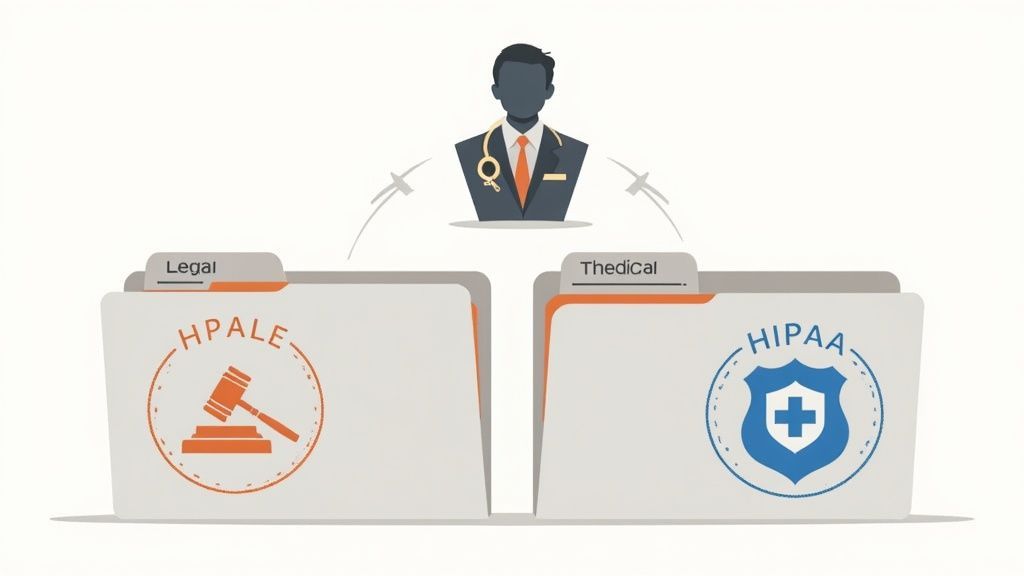
Wenn Sie sich in Hochrisikobereiche wie Recht und Medizin begeben, ist Transkription kein einfacher Tippservice mehr. Sie wird zu einer kritischen Funktion, die an Compliance, Risiko und professionelle Integrität gebunden ist, bei der ein kleiner Fehler zu einem massiven Problem eskalieren kann. Genau deshalb spielen diese spezialisierten Dienste in einer völlig anderen Kostenliga.
Sie bezahlen nicht nur jemanden dafür, dass er tippt, was er hört; Sie stellen einen Experten ein, der das Thema in- und auswendig kennt. Dieses Fachwissen ist unerlässlich, um die dichte Fachsprache und die starren Formatierungen zu beherrschen, die in diesen Branchen nicht verhandelbar sind. Die höheren Kosten für Transkriptionsdienste spiegeln diese erhöhte Kompetenz, Sicherheit und Verantwortung direkt wider.
Warum juristische Transkription einen Aufpreis hat
In der juristischen Welt ist Präzision nicht nur ein Ziel – sie ist eine Anforderung. Ein falsch platziertes Komma oder ein einziges falsch gehörtes Wort kann die Bedeutung einer Aussage verzerren, einen Vertrag zum Scheitern bringen oder andere schwerwiegende rechtliche Konsequenzen haben. Zertifizierte juristische Transkriptionisten sind darauf geschult, wortgetreue Transkripte zu erstellen, die alles erfassen – jede Äußerung, jedes Stottern und jede unbeholfene Pause.
Darüber hinaus müssen diese Dokumente strengen, gerichtsfertigen Formatierungsregeln folgen. Es ist diese Kombination aus absoluter Genauigkeit und komplexer Formatierung, die die Arbeit so sorgfältig und zeitaufwendig macht und den höheren Preis leicht rechtfertigt.
Der US-Markt für juristische Transkription wird bis 2025 voraussichtlich 2,62 Milliarden US-Dollar erreichen. Für zertifizierte wortgetreue Arbeiten sehen Sie oft Preise zwischen 3 und 6 US-Dollar pro Audiominute, da eine nahezu perfekte Genauigkeit und die Einhaltung von Vorschriften einfach obligatorisch sind. Weitere Einblicke finden Sie auf dem wachsenden Markt für juristische Transkription.
Die kritischen Anforderungen an medizinische Transkription
Medizinische Transkription ist im selben Boot und unterliegt unglaublich strengen Regeln für Genauigkeit und Datenschutz. Ein winziger Fehler in der Patientenakte könnte zu einer falschen Behandlung oder einer übersehenen Diagnose führen und eine enorme Haftung für den Gesundheitsdienstleister bedeuten. Transkriptionisten müssen eine ganz andere Sprache komplexer medizinischer Terminologie fließend beherrschen, von Anatomie bis Pharmakologie.
Über die Fachsprache hinaus muss die gesamte Arbeit in einem sicheren, konformen Rahmen erfolgen, um Patientendaten zu schützen. Dies ist ein wichtiger Faktor, der die Betriebskosten und damit den Endpreis, den Sie zahlen, erhöht. Unser Leitfaden zu HIPAA-konformen Transkriptionsdiensten befasst sich eingehend damit, was diese Sicherheitsanforderungen tatsächlich bedeuten.
Letztendlich ist die Prämie, die Sie für juristische und medizinische Transkription zahlen, eine notwendige Investition in Fachwissen, Sicherheit und Risikomanagement. Es sind die Kosten dafür, dass sensible, kritische Informationen mit der höchstmöglichen Sorgfalt dokumentiert werden.
Häufig gestellte Fragen zu Transkriptionskosten
Seien wir ehrlich, die Welt der Transkriptionspreise kann etwas verwirrend sein. Selbst nachdem Sie die Grundlagen verstanden haben, tauchen viele praktische Fragen auf. Wir haben Sie abgedeckt.
Dieser Abschnitt soll Ihnen klare, unkomplizierte Antworten auf die Fragen geben, die wir am häufigsten hören. Betrachten Sie ihn als Ihren schnellen Nachschlagewerke, der Ihnen hilft, Ihr Budget zu planen und Ihr nächstes Projekt mit Zuversicht zu planen.
Was ist der kostengünstigste Weg, Audio zu transkribieren?
Wenn Sie ein knappes Budget haben, ist KI-Transkription der unangefochtene Champion. Mit Preisen, die oft nur wenige Cent pro Minute betragen, ist es eine fantastische Option für interne Notizen, grobe Rechercheentwürfe oder erste Inhaltsentwürfe, bei denen 99 % Genauigkeit kein Dealbreaker ist.
Aber was ist, wenn Sie bessere Qualität benötigen, ohne den vollen Premiumpreis für einen Menschen zu zahlen? Der Hybridansatz ist hier Ihr bester Freund. Lassen Sie Ihr Audio zuerst durch ein KI-Tool laufen und beauftragen Sie dann einen menschlichen Korrekturleser, um das endgültige Transkript zu polieren.
Diese zweistufige Methode bietet Ihnen eine enorme Qualitätssteigerung für einen Bruchteil dessen, was ein vollständiger menschlicher Transkriptionsdienst kosten würde. Und denken Sie daran, egal welchen Weg Sie wählen, mit klarem Audio und minimalen Hintergrundgeräuschen zu beginnen, hilft immer, Ihre Kosten niedrig zu halten.
Wie wird die Preisgestaltung pro Audiominute berechnet?
Die Preisgestaltung pro Audiominute ist der Industriestandard aus einem einfachen Grund: Sie ist vorhersehbar. Die Berechnung basiert ausschließlich auf der Länge Ihrer Audio- oder Videodatei, nicht darauf, wie lange eine Person tatsächlich zum Abtippen braucht.
Hier ein einfaches Beispiel: Wenn Sie eine 30-minütige Aufnahme haben und der Dienst 1,50 US-Dollar pro Audiominute berechnet, ist die Rechnung einfach:
30 Minuten * 1,50 $/Minute = 45,00 US-Dollar
Dieses Modell lässt Sie die genauen Kosten kennen, bevor Sie überhaupt auf "Senden" klicken. Beachten Sie jedoch, dass bestimmte Dinge – wie schlechte Audioqualität, viele verschiedene Sprecher oder die Anforderung einer strengen wortgetreuen Transkription – den Basispreis pro Minute erhöhen können.
Beeinflusst die Bearbeitungszeit die Transkriptionskosten?
Absolut. Wie schnell Sie Ihr Transkript benötigen, ist einer der größten Faktoren für Ihre Endabrechnung. Die Standardlieferung ist immer die günstigste Option, mit typischen Zeitrahmen von 24 Stunden bis zu einigen Werktagen, je nach Anbieter.
Brauchen Sie es so schnell wie möglich? Sie können fast immer einen Eil- oder Expressservice wählen, der Ihnen ein fertiges Transkript in nur wenigen Stunden liefern kann.
Aber diese Geschwindigkeit hat ihren Preis. Ein Eilauftrag bedeutet, dass der Anbieter alles fallen lassen und Ihr Projekt priorisieren muss, was manchmal den doppelten Standardpreis pro Minute betragen kann.
Gibt es versteckte Gebühren, auf die ich achten sollte?
Die meisten seriösen Dienste sind transparent über ihre Preise, aber es ist immer ratsam zu fragen, was zusätzliche Gebühren auslösen könnte. Sie sind nicht wirklich "versteckt", aber es sind bedingte Gebühren, die für anspruchsvollere Audiodateien anfallen.
Hier sind die häufigsten Zuschläge, die Sie möglicherweise sehen:
- Schwieriges Audio: Dateien mit viel Hintergrundgeräuschen, gedämpften Stimmen oder geringer Aufnahme-Lautstärke.
- Mehrere Sprecher: Die Verfolgung von mehr als drei Sprechern ist komplex, daher gibt es oft eine zusätzliche Gebühr.
- Zeitstempel: Wenn Sie Zeitstempel in bestimmten Intervallen benötigen, kann dies eine kleine Gebühr verursachen.
- Strikte Wortgenauigkeit: Jedes einzelne "Ähm", Stottern und Husten zu erfassen, ist viel mehr Arbeit, und der Preis spiegelt dies wider.
Der beste Weg, Überraschungen zu vermeiden, ist, ein detailliertes Angebot anzufordern und die Nutzungsbedingungen des Anbieters schnell zu überfliegen, bevor Sie sich verpflichten.
Sind Sie bereit für schnelle, genaue und erschwingliche Transkripte ohne Rätselraten? Mit Transcript.LOL können Sie Dateien von überall hochladen – von Ihrem Computer, Google Drive oder sogar einem YouTube-Link – und erhalten Sie in Sekundenschnelle ein KI-gestütztes Transkript. Generieren Sie Zusammenfassungen, identifizieren Sie Sprecher und exportieren Sie Ihren Text in jedem gewünschten Format. Probieren Sie Transcript.LOL kostenlos aus und erleben Sie, wie einfach Transkription sein kann.