What Is Active Listening and How to Master It
Discover what is active listening and learn the essential skills and practical techniques to transform your professional and personal relationships.
Kate, Praveen
August 20, 2025
Let’s be honest: we’ve all been in a conversation where we heard every word but retained almost nothing. It happens. That’s the critical difference between passively hearing and actively listening.
Hearing is just a biological process. It’s the low hum of your air conditioner or the traffic outside your window—it happens automatically, with zero real effort on your part.
Active listening, on the other hand, is a skill you have to practice. Think of it like a musician carefully tuning their guitar to hit the perfect note. You’re intentionally focusing all your attention to comprehend, retain, and thoughtfully respond to what someone is actually saying.
This conscious choice is what turns a one-sided monologue into a real, two-way exchange.
"Most of us think we’re good listeners. We nod. We let people talk. We wait until they’re finished… and then we make our point. But much of the time, we aren’t really listening—we’re just reloading."
Simply letting words wash over you means the information is gone in minutes. But when you truly listen, you’re building a bridge of understanding and respect. It’s the difference between just acknowledging someone’s presence and genuinely valuing their perspective.
Active Listening Is a Learnable Skill
Active listening is not an inborn talent—it’s a skill developed through intention and practice. Anyone can improve their listening ability by focusing on comprehension, memory, and thoughtful responses in everyday conversations.
So, how do you make the switch from hearing to listening? It's more than just staying quiet. It involves a few key behaviors:
- Paying full attention: This means putting away your phone, shutting down your internal monologue, and giving the speaker your undivided focus.
- Showing you’re engaged: Simple non-verbal cues like nodding, maintaining eye contact, and leaning in slightly make a huge difference.
- Providing feedback: Paraphrase or reflect on what you heard to make sure you understood correctly. A simple, "So, if I'm hearing you right..." can work wonders.
Choosing to actively listen is a small shift that can fundamentally change your interactions, both at work and in your personal life.
Passive Hearing vs Active Listening At A Glance
To make the difference crystal clear, let's break down how these two approaches stack up side-by-side. You'll quickly see that one is a default, automatic function, while the other is a conscious, relationship-building skill.
| Attribute | Passive Hearing | Active Listening |
|---|---|---|
| Effort | Automatic and effortless | Intentional and focused |
| Focus | Divided or on other tasks | Fully on the speaker |
| Goal | To simply let sound in | To fully understand the message |
| Body Language | Distracted, blank, or disengaged | Attentive, nodding, eye contact |
| Response | Delayed, irrelevant, or none | Thoughtful, timely, and relevant |
| Outcome | Misunderstandings, missed info | Stronger relationships, clarity |
Ultimately, the table shows that while hearing is something that just happens to you, listening is something you do for others. It's a choice that communicates respect and fosters genuine connection.
The Core Components of Genuine Listening
Active listening isn't just one thing; it's a powerful mix of distinct skills working in concert. I like to think of it as a three-legged stool—if one leg is wobbly, the whole thing falls apart. To really get what active listening is, you have to nail these three pillars that turn simply hearing into real, genuine engagement.
These elements build on each other, creating a solid framework for communication that actually works.
Comprehending the Full Message
First up is comprehension. This is so much more than just hearing the words someone is saying. True comprehension means you’re actively piecing together the message on every level—paying close attention to their tone, their body language, and the emotional current running underneath their statements.
It’s the difference between hearing a coworker say, "I'm fine," and actually seeing the slight hesitation and downcast eyes that tell you they're anything but. Comprehension demands your full attention to get the complete picture, not just a verbal snapshot.
Retaining Key Information
Once you've grasped the message, the next step is retention. This is your brain's ability to actually store and recall what was shared. Without it, even the most focused listening is temporary. It’s pretty shocking, but the average person remembers only about 50% of a conversation right after it happens. Wait 48 hours, and that number plummets to under 25%. You can read more about these listening statistics to see just how fast we forget without a conscious effort.
This rapid information decay is exactly why retention is so crucial. It’s about creating mental hooks for the important stuff, making sure the conversation leaves a lasting mark instead of just vanishing.
The image below breaks down the fundamental difference between just hearing and truly listening—which is where retention begins.
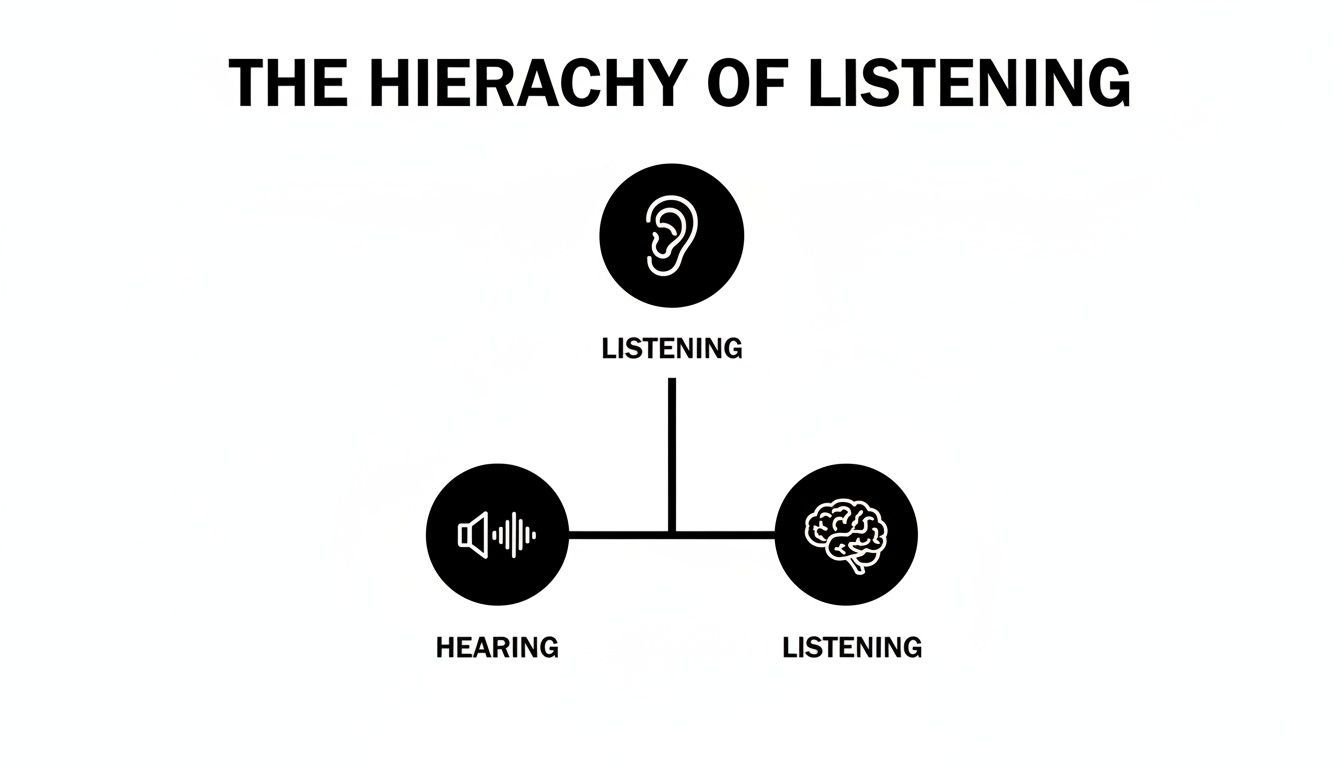
As you can see, hearing is passive. It just happens. Listening, on the other hand, is an active process that fully engages your brain.
Modern Work Demands Active Listening More Than Ever
In fast-paced digital workplaces, listening has become more difficult due to constant interruptions. As collaboration becomes more remote and complex, active listening is no longer optional—it’s essential for clarity and trust.
Responding with Intention
Finally, we get to the third component: responding. A thoughtful response is the ultimate proof that you were actively listening. This isn't about just waiting for your turn to talk or mentally drafting a comeback while the other person is still speaking.
An effective response shows you have comprehended and retained the information. It validates the speaker and confirms that their message was truly received.
This can look like a few different things:
- Paraphrasing: "Okay, so if I'm hearing you right, the main problem is..."
- Asking clarifying questions: "Can you tell me a bit more about what happened after that?"
- Acknowledging feelings: "Wow, that sounds like it was an incredibly frustrating experience."
When these three components—comprehension, retention, and responding—are all working together smoothly, you create an environment built on trust and real, mutual understanding.
What Active Listening Improves in Daily Life?
Clear Understanding
Active listening reduces misunderstandings by ensuring messages are fully processed. This leads to fewer assumptions, better alignment, and more productive conversations.
Stronger Relationships
People feel valued when they are truly heard. Active listening builds emotional safety, respect, and long-term trust in both personal and professional relationships.
Better Decision-Making
By listening carefully, you gain access to more complete information. This allows you to make informed decisions instead of reacting based on partial understanding.
Personal & Career Growth
Strong listeners stand out as leaders and problem-solvers. Over time, this skill boosts confidence, influence, and career advancement.
Why Active Listening Is Your Professional Superpower
So, what does active listening actually do for you in the real world? In a professional setting, it’s not just a soft skill—it’s a strategic advantage. It’s the tool that builds bridges, stops conflict before it even starts, and creates a culture where people genuinely want to collaborate.
When team members feel heard, they become more engaged and innovative. Misunderstandings fade, productivity climbs, and projects just run smoother because everyone is on the same page. This isn't about being nice; it's about creating an environment where great work can actually happen.
Active listening also helps leaders improve team performance by building psychological safety. When people feel safe enough to voice ideas or concerns without fear of being shut down, the entire organization gets better.
Building Trust and Influence
Trust is the bedrock of any solid professional relationship, and you build it one conversation at a time. Active listening is the fastest way to earn it. When you give someone your full attention, you’re sending a clear signal: "I value what you have to say." That simple act builds instant rapport and strengthens your influence.
This isn't just a gut feeling; there's data to back it up. Research shows a massive gap in trust scores directly tied to how well a leader listens. Leaders rated as poor listeners barely scraped the 15th percentile in trustworthiness. The great listeners? They soared to the 86th percentile.
The takeaway is simple: becoming an exceptional listener is one of the most direct paths to becoming a trusted and respected leader.
Enhancing Your Career Trajectory
Ultimately, mastering active listening is a direct investment in your own career growth. It’s a key part of the powerful executive communication skills that make you stand out from the pack. It helps you negotiate better deals, lead teams more effectively, and build a professional network that actually means something.
The benefits stack up over time:
- Conflict Resolution: You can cut through the noise to find the root of a disagreement and guide people toward common ground.
- Client Relationships: You’ll understand what your clients really need, which leads to happier customers and better retention.
- Leadership Potential: People are naturally drawn to leaders who listen. When you make others feel seen and valued, they want to follow you.
By making these skills a consistent practice, you position yourself as the go-to problem-solver and a respected colleague, opening doors to your next big opportunity.
Overcoming the Barriers to Effective Listening
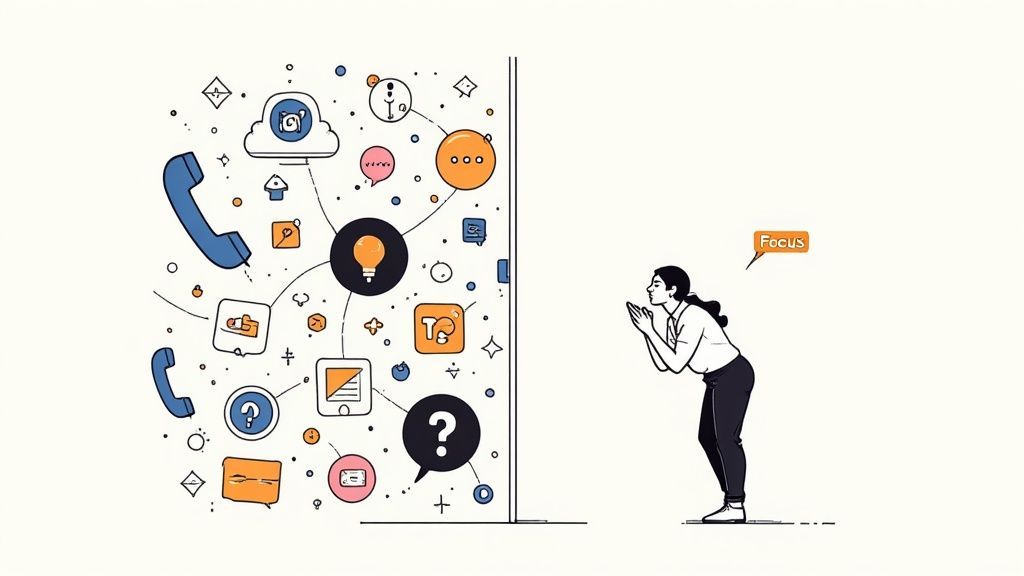 If active listening is such a superpower, why is it so rare? The honest answer is that our modern world is practically built to sabotage it. We're fighting a constant battle against both external and internal roadblocks that make genuine focus a massive challenge.
The most obvious culprit is the endless flood of digital distractions. Notifications from emails, Slack messages, and social media apps keep us in a state of "continuous partial attention." We’re always a little bit distracted.
Distraction Is the Biggest Enemy of Listening
Multitasking during conversations severely reduces comprehension and memory. Without intentional focus, important information is missed, relationships weaken, and misunderstandings increase.
Research backs this up—one study found that 64% of professionals believe listening has gotten harder in the digital workplace, and a staggering 80% admit to multitasking during conference calls. You can dig into those workplace listening stats here.
Taming Your Inner Critic
But beyond the external noise, our own internal barriers can be even tougher to beat. These are the mental habits that constantly pull our attention away from the speaker and back to ourselves.
The biggest barrier to active listening is often our own internal monologue—the voice that's busy preparing a response, judging the speaker, or getting distracted by a random thought.
These internal roadblocks show up in a few common ways:
- Formulating a rebuttal: Instead of listening to understand, we listen just long enough to figure out what we’re going to say next.
- Emotional triggers: A certain word or topic hits a nerve, and we just shut down. Our emotions take over, and we stop processing what’s being said.
- Personal biases: We all have preconceived ideas that can color what we hear, causing us to jump to conclusions or make assumptions.
Getting past these barriers takes a conscious effort to quiet your mind. A simple, practical first step is to turn off all your notifications before an important conversation.
Features That Remove Listening Barriers
State-of-the-art AI
Powered by OpenAI's Whisper for industry-leading accuracy. Support for custom vocabularies, up to 10 hours long files, and ultra fast results.

Import from multiple sources
Import audio and video files from various sources including direct upload, Google Drive, Dropbox, URLs, Zoom, and more.
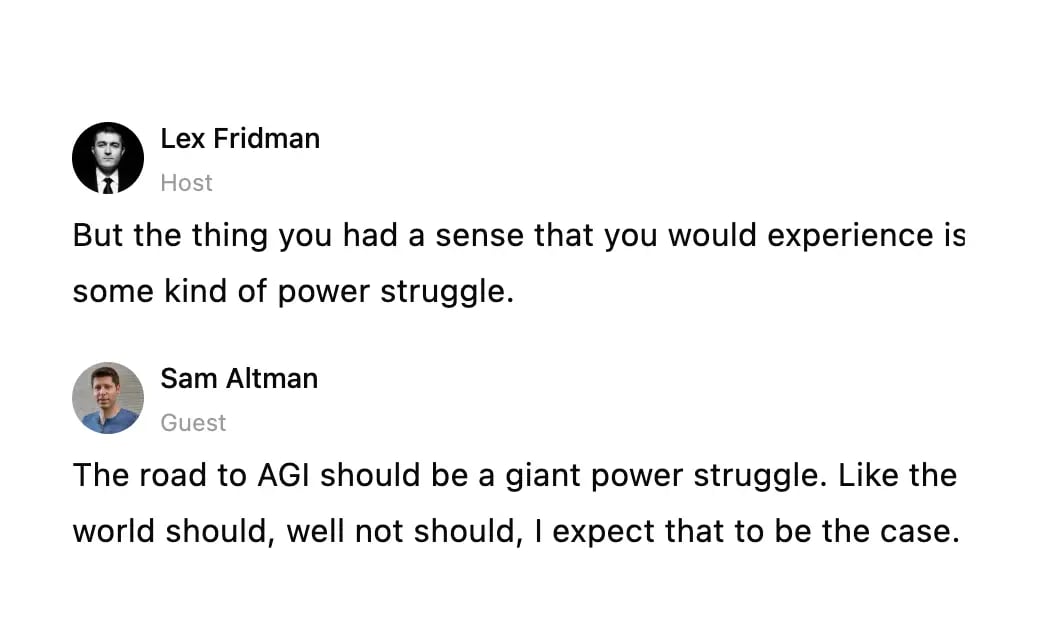
Speaker detection
Automatically identify different speakers in your recordings and label them with their names.
Another great strategy is to offload the task of remembering everything. Using an AI note taker for Zoom can capture all the key points for you, freeing you up to focus completely on the person speaking. When you stop worrying about missing details, you can finally give them your full attention.
Practical Techniques You Can Use Today
 Knowing the theory is one thing, but actually putting active listening into practice is where the magic happens. Here are a few dead-simple methods you can start using in your very next conversation.
These techniques are designed to show the speaker you’re locked in and fully present.
Paraphrasing to Confirm Understanding
One of the best ways to prove you’re listening is to summarize what you just heard back to the other person in your own words. The goal isn't to parrot them—it's to process their message and confirm you’ve got it right.
Start with simple, open phrases to make sure you're on the same page:
- "So, what I'm hearing is the project deadline is the real source of stress right now. Is that correct?"
- "Let me see if I have this right. You feel we need more resources before we can move to the next phase?"
This tiny step can prevent massive misunderstandings and makes the speaker feel heard. It’s also incredibly useful after a long discussion to summarize a meeting, ensuring everyone walks away with the same key takeaways.
Asking Powerful Open-Ended Questions
Closed questions—the kind you can answer with a simple "yes" or "no"—are conversation killers. Open-ended questions, on the other hand, are invitations for the speaker to elaborate and share more detail.
Instead of asking, "Did you finish the report?" try this: "How did you find the process of putting that report together?"
This shift in approach signals genuine curiosity. You’re no longer just after the facts; you want to understand their perspective. It’s a game-changer for building a real exchange.
Reflecting Feelings to Show Empathy
Let’s be honest, sometimes the most important part of a conversation isn't the words, but the feeling behind them. Acknowledging those emotions is how you build a real connection. You don't have to agree with the feeling, just show that you see it.
Try using phrases that name the emotion you’re picking up on:
- "It sounds like you felt really frustrated by that whole situation."
- "I can see why you'd be disappointed with that outcome."
This shows you’re listening on a much deeper level. It builds trust and makes people feel safe enough to be honest.
Listening Creates Psychological Safety
When people feel heard, they are more open and honest. Active listening encourages trust, emotional openness, and collaboration, especially during difficult or sensitive conversations.
Your Path to Becoming a Better Communicator
Mastering active listening is a journey, not a destination. It’s a skill you build intentionally, one conversation at a time. The whole practice really rests on three pillars: truly comprehending the message, retaining what was said, and responding with care.
Nailing these components helps you build trust, sidestep misunderstandings, and genuinely strengthen all your relationships. This isn't just a "soft skill"—it’s essential for everything from personal connection to professional success. Better listening, for instance, is the cornerstone of taking minutes at meetings that actually reflect what was decided.
The most crucial takeaway is that small, consistent efforts are what move the needle. You don’t need to be perfect overnight.
Your path to becoming a better communicator will naturally lead to stronger relationships. For anyone looking to explore this further, there’s a gentle guide on how to communicate better in relationships.
To get started, just pick one technique from this guide. Try it out this week. See what happens.
Active Listening FAQs
Even after you get the hang of the basics, real-world conversations can throw some curveballs. Let's tackle a few of the most common questions people have when putting active listening into practice.
What's the Difference Between Active and Empathic Listening?
Great question. Think of active listening as the essential foundation—it’s all about making sure you fully hear and process what the other person is saying. You’re focused on the facts, the details, and the core message.
Empathic listening is the next step up. It goes beyond just understanding the words and aims to connect with the speaker's feelings. You're not just registering that they feel frustrated; you're trying to genuinely understand why they feel that way from their point of view.
Can I Actually Do This Over Text or Email?
You absolutely can, but it takes a bit more deliberate effort. Since you can't rely on tone of voice or body language, your words have to do all the heavy lifting to show you're engaged.
The trick is to be extra clear. Try summarizing what they’ve said back to them ("So, if I'm tracking, the main issues are X and Y?") and ask clarifying questions before jumping in with your own thoughts. This shows you took the time to absorb their message instead of just skimming it.
How Do I Actively Listen When I Completely Disagree?
This is where active listening really shows its power. The key is to separate understanding from agreement. You can show someone you respect and understand their perspective without giving up your own.
Start with phrases like, "I can see why you feel that way," or "Help me understand your thinking on this point." Your first job is to fully grasp where they're coming from. A productive disagreement can only happen after the other person feels genuinely heard.
At Transcript.LOL, we build tools that let you focus on the conversation, not on taking notes.
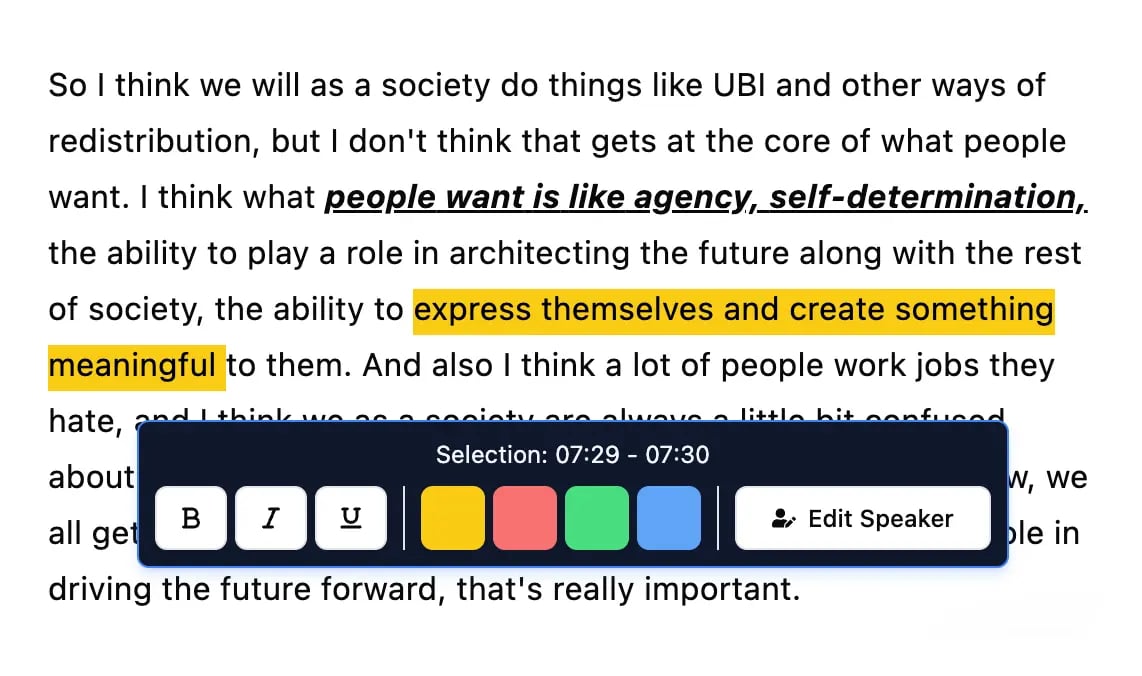
Editing tools
Edit transcripts with powerful tools including find & replace, speaker assignment, rich text formats, and highlighting.
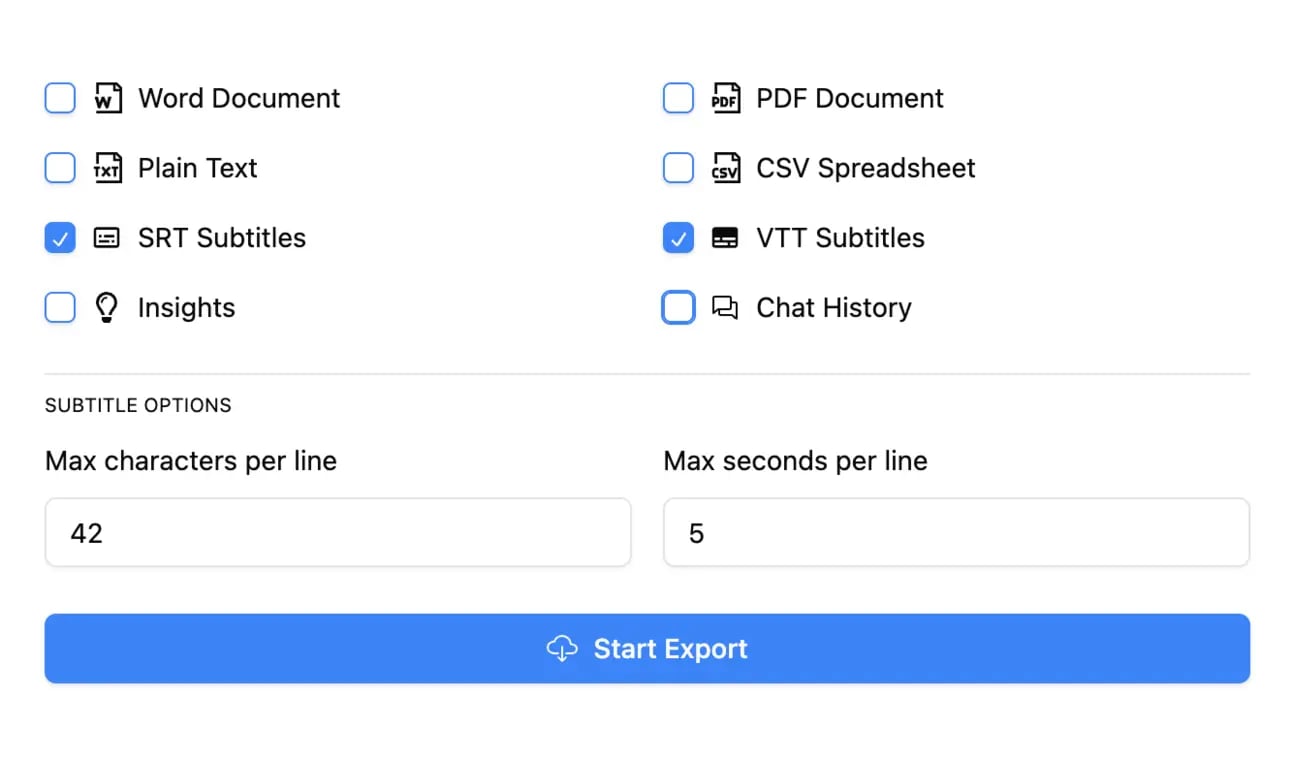
Export in multiple formats
Export your transcripts in multiple formats including TXT, DOCX, PDF, SRT, and VTT with customizable formatting options.
Summaries and Chatbot
Generate summaries & other insights from your transcript, reusable custom prompts and chatbot for your content.
Our AI-powered transcription captures every word, so you can stay present, practice active listening, and build much stronger connections. Learn more about how Transcript.LOL can help.