7 Essential Interview Notes Sample Templates to Use in 2026
Discover 7 expert-approved interview notes sample templates for any scenario. Download fillable guides for HR, podcasting, research, and legal contexts.
Praveen
February 27, 2026
In any high-stakes interview, whether you're hiring a new VP, deposing a key witness, or recording a podcast, the quality of your notes determines the outcome. Generic, disorganized scribbles lead to biased decisions, missed opportunities, and wasted time. The solution isn't just to write more; it's to use a structured system tailored to your specific goal.
A well-designed interview notes sample doesn't just capture words; it organizes thoughts, reveals patterns, and provides a clear, defensible record of the conversation. Bad notes are a liability, forcing you to rely on flawed memory or gut feelings. Great notes are a strategic asset, enabling objective analysis and confident decision-making long after the meeting ends.
This guide provides 7 battle-tested templates for various professional contexts, from corporate hiring using the STAR method to academic research and podcast production. We will break down the strategic purpose of each sample, offer actionable tips for implementation, and show you how to pair them with powerful AI tools. You'll learn how to use Transcript.LOL to transform your note-taking from a frantic chore into a precise, efficient system. This approach ensures you capture every critical detail, identify key themes, and produce polished, actionable summaries with minimal effort.
1. The Structured Interview Note Template
For roles where consistency and objectivity are paramount, the structured interview note template is the gold standard. This systematic approach uses a predefined format with sections for candidate details, specific questions, and scoring criteria. Its primary goal is to ensure every candidate is evaluated against the same benchmarks, reducing bias and making post-interview comparisons much more straightforward.
What Every Interview Template Should Capture?
Verbatim Quotes
Capture exact phrases instead of paraphrasing. Direct quotes remove bias and help justify decisions later with evidence.
Behavioral Evidence
Document what the person did, not what they claim. Specific actions and outcomes reveal true competence.
Context & Environment
Note time, stakeholders, and situation. Context explains why decisions were made and prevents misinterpretation later.
Immediate Impressions
Add quick post-interview reflections while memory is fresh. These notes often surface insights transcripts alone can’t show.
This method is heavily used by organizations like Google and McKinsey, where hiring processes involve multiple interviewers assessing a large pool of candidates for similar roles. The uniformity of the notes allows hiring committees to compare apples to apples, focusing on the substance of a candidate's responses rather than an interviewer's subjective recall.
Why This Method Works
A great interview notes sample built on a structured template helps standardize the evaluation process. By asking each candidate the same core questions and scoring their answers against a predefined rubric, you create a powerful dataset. This data-driven approach is crucial for defending hiring decisions and ensuring fairness. It moves the evaluation from a gut feeling to a measurable assessment.
Key Insight: The power of a structured template isn't just in the questions asked, but in the consistency of the documentation. It creates a level playing field for every applicant.
Actionable Takeaways
- Integrate with Transcription: Manually taking notes during a structured interview can be distracting. Use a tool like Transcript.LOL to record and transcribe the conversation. Afterward, you can pull direct quotes and key responses into your template, ensuring complete accuracy.
- Create Custom Vocabularies: If you're hiring for a technical role, pre-load industry-specific acronyms and terms into Transcript.LOL's custom vocabulary. This guarantees the AI correctly transcribes complex jargon.
- Use Speaker Labels: Set up speaker detection to automatically differentiate between the interviewer's questions and the candidate's answers. This makes it quick to locate specific responses when filling out your template later.
- Generate Action Items: After the interview, use the transcript to generate a summary and identify action items, such as "Follow up with candidate on Project X details" or "Share portfolio with the design team."
Capture Everything Without Multitasking
State-of-the-art AI
Powered by OpenAI's Whisper for industry-leading accuracy. Support for custom vocabularies, up to 10 hours long files, and ultra fast results.

Import from multiple sources
Import audio and video files from various sources including direct upload, Google Drive, Dropbox, URLs, Zoom, and more.
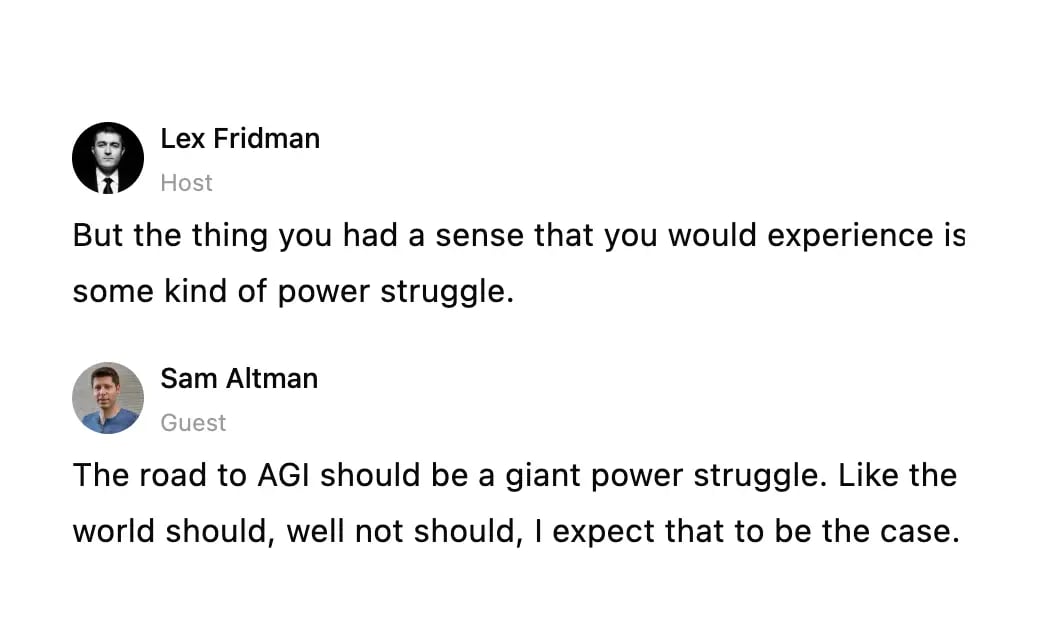
Speaker detection
Automatically identify different speakers in your recordings and label them with their names.
2. The Cornell Note-Taking System for Interviews
The Cornell Note-Taking System is a proven methodology that structures your page for active listening and organized review. It divides your notes into three distinct sections: a large main column for raw notes, a narrower cue column for questions and keywords, and a summary section at the bottom. Originally designed by Dr. Walter Pauk for university students, its application for interviews is incredibly effective.
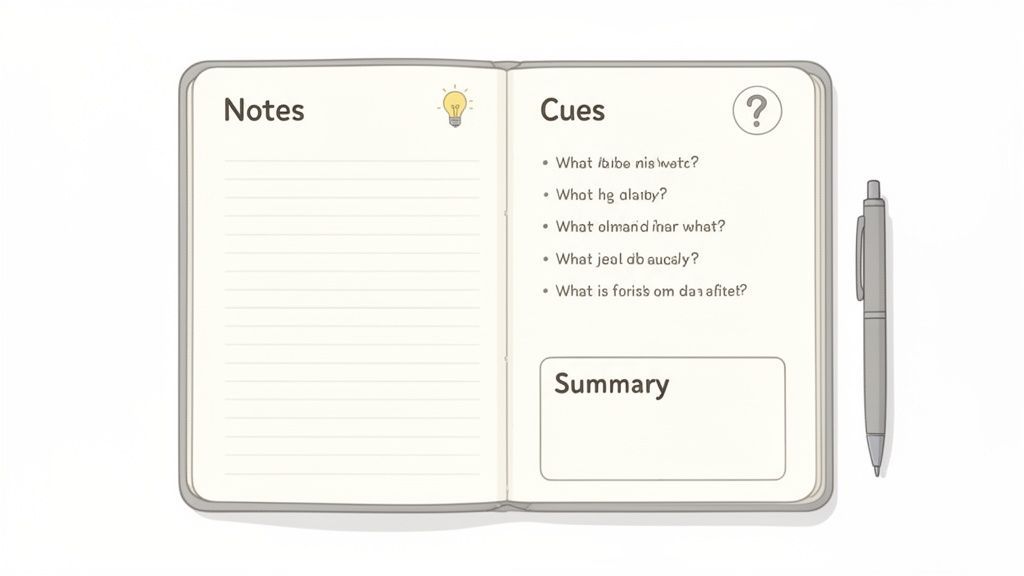
This method is ideal for contexts that require deep comprehension and follow-up, such as qualitative research or investigative journalism. By separating detailed notes from high-level cues, you can engage fully during the conversation while creating a built-in study guide for later analysis. It forces you to process information actively rather than just passively transcribing it.
Notes + Transcripts Work Best Together
Transcripts capture every word with precision, ensuring nothing important is missed. Notes, on the other hand, focus on interpretation and meaning - highlighting key insights, decisions, and action points. When you combine both, you get the perfect balance of context and accuracy, creating a complete and reliable record for smarter decision-making.
A powerful interview notes sample using the Cornell system promotes active recall and synthesis. During the interview, you focus on capturing key points in the main column. Afterward, you populate the cue column with questions or main ideas that correspond to your notes. This process of reviewing and condensing information cements your understanding and prepares you for analysis, making it one of the most effective note-taking methods available.
Key Insight: The Cornell system turns note-taking into a two-step process: capturing information and then processing it. This separation prevents mental overload during the interview and ensures deeper comprehension afterward.
Actionable Takeaways
- Pair with a Transcript: Focus on the conversation, not frantic writing. Record the interview with Transcript.LOL and use the generated transcript to fill out your Cornell notes later with complete accuracy.
- Use Cues for Follow-ups: As you review your transcript, pull key concepts or surprising statements into your cue column. This creates a list of targeted follow-up questions for your next interaction or themes for your final report.
- Leverage Timestamps: When a specific quote in your notes is critical, use Transcript.LOL's timestamps to link back to that exact moment in the audio. This is invaluable for verifying context and accuracy.
- Summarize with AI: After filling out your notes and cues, use the AI summary feature in Transcript.LOL to generate a concise overview. You can then refine this summary and place it in the bottom section of your Cornell notes for a high-level takeaway.
3. The Behavioral Interview Note Template (STAR Method)
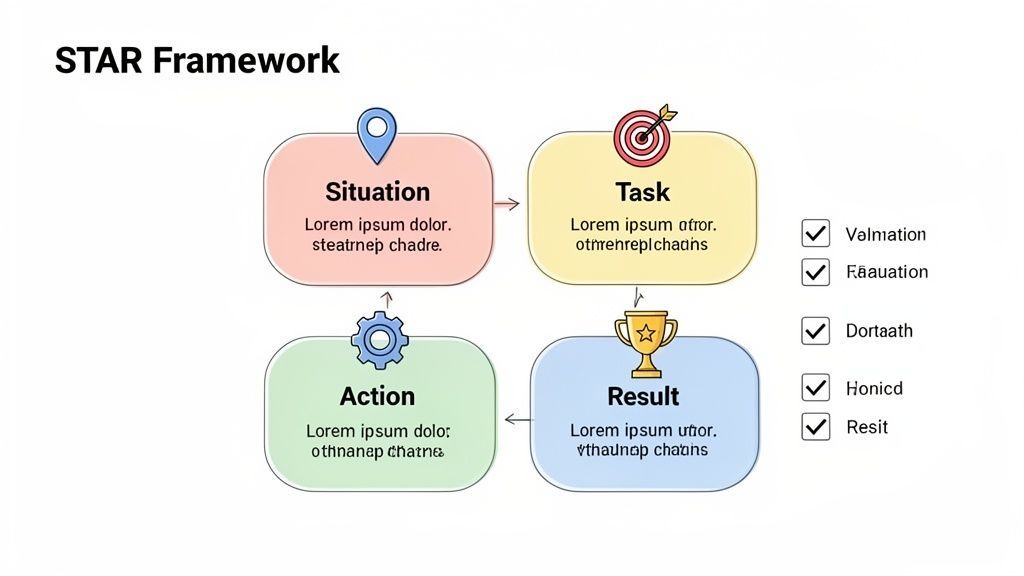
For assessing past performance as a predictor of future success, the behavioral interview note template is indispensable. It is built around the STAR method, a framework that breaks down a candidate's experiences into four distinct parts: Situation, Task, Action, and Result. This structured approach forces candidates to provide concrete examples rather than abstract theories, giving interviewers a clear view of their problem-solving skills, competencies, and real-world impact.
This method is famously championed by companies like Amazon, which uses it to evaluate candidates against its Leadership Principles. Similarly, tech giants like Microsoft and Salesforce employ the STAR method to dig deep into how candidates have handled specific challenges in previous roles, making it a cornerstone of modern competency-based hiring. Even the candidate's response to a simple prompt can be revealing, which is why knowing how to answer the 'tell me about yourself' question effectively often sets the stage for a successful STAR-based discussion.
Why This Method Works
An interview notes sample organized by the STAR framework captures the full narrative of a candidate's experience. It prevents interviewers from getting lost in vague descriptions and pushes for evidence of specific contributions. By documenting each component, you create a rich, evidence-based profile that clearly demonstrates a candidate's ability to handle critical situations relevant to the job.
Key Insight: The STAR method transforms anecdotal stories into measurable data points. It separates candidates who have actually done the work from those who just talk about it.
Actionable Takeaways
- Isolate Candidate Narratives: Use a tool like Transcript.LOL to record and transcribe the interview. The automatic speaker detection makes it easy to isolate the candidate’s full STAR responses from your questions, so you can analyze them without distraction.
- Search for Action Keywords: After the interview, search the transcript for action-oriented verbs like "led," "developed," "resolved," or "implemented." This quickly identifies the "Action" part of their stories, helping you fill out your template faster.
- Generate Competency Summaries: Use the AI summary feature in Transcript.LOL to create a concise overview of the interview. Ask it to specifically highlight statements related to key competencies, giving you a quick reference when comparing candidates.
- Export for Easy Organization: Export the full transcript to a DOCX file. You can then copy and paste the candidate's exact words directly into the S, T, A, and R sections of your note template, ensuring 100% accuracy in your documentation.
4. The Legal/Compliance Interview Note Template
In legal, healthcare, and other highly regulated fields, interview notes are more than just records; they are official documents that can be scrutinized in court or by auditors. The legal/compliance note template is a meticulously designed system for creating a precise, verifiable, and defensible record of conversations. Its purpose is to capture every detail with accuracy, including dates, times, attendees, and exact statements.
This rigorous documentation method is standard practice in legal depositions, HR investigations, and insurance claim interviews. The detailed format ensures that every piece of information is attributed correctly and contextualized properly, which is vital for protecting an organization from liability and ensuring adherence to strict regulatory standards like HIPAA.
Why This Method Works
A great interview notes sample for legal or compliance purposes creates an unassailable record of what was said, by whom, and when. This level of detail is non-negotiable when notes might become evidence in a legal proceeding or part of a regulatory audit. It removes ambiguity and relies on factual, timestamped data rather than an interviewer’s memory, which is essential for withstanding intense scrutiny.
Key Insight: For compliance and legal matters, the note-taking process itself is a form of risk management. The goal is to produce a document that is precise, objective, and defensible under pressure.
Actionable Takeaways
- Export Timestamped Transcripts: Use Transcript.LOL to generate a full, timestamped transcript of the interview. Export it as a PDF to serve as the official, unaltered record that can be attached to your notes.
- Ensure Data Privacy: Take advantage of Transcript.LOL's no-training policy on user data. This provides peace of mind, knowing sensitive conversations from HR investigations or healthcare incidents remain confidential and secure.
- Confirm Legal Requirements: Recording laws vary by location. Before recording any compliance-related interview, it's critical to understand your obligations. You can learn more about the legalities of recording conversations to ensure you remain compliant.
- Generate Searchable Archives: A searchable transcript is a powerful tool for legal discovery. Quickly find key terms, names, or statements across multiple interviews without having to manually review hours of audio or pages of notes.
5. The Podcast/Content Creator Interview Notes Template
For podcasters and video creators, an interview is not just a conversation; it's raw material for content. This template is specifically designed to support the entire content lifecycle, from pre-interview research to post-production editing and marketing. It focuses on capturing compelling narratives, quotable moments, and technical cues, turning a simple discussion into a well-structured episode.
🛠️ Turn Interviews Into Usable Assets
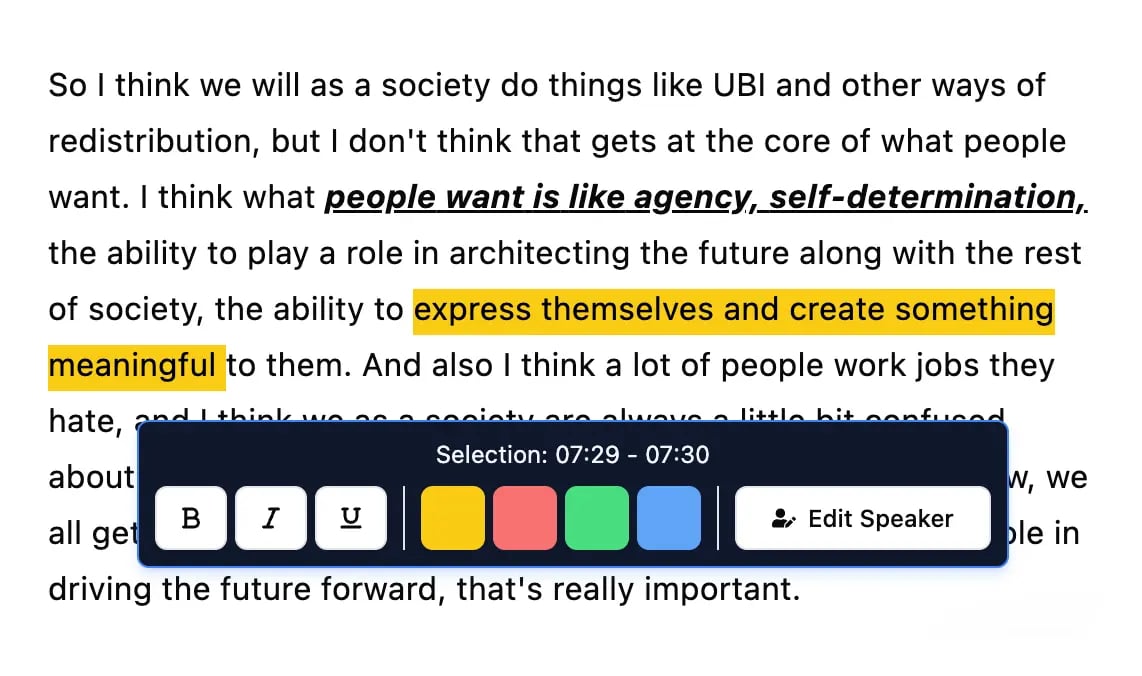
Editing tools
Edit transcripts with powerful tools including find & replace, speaker assignment, rich text formats, and highlighting.
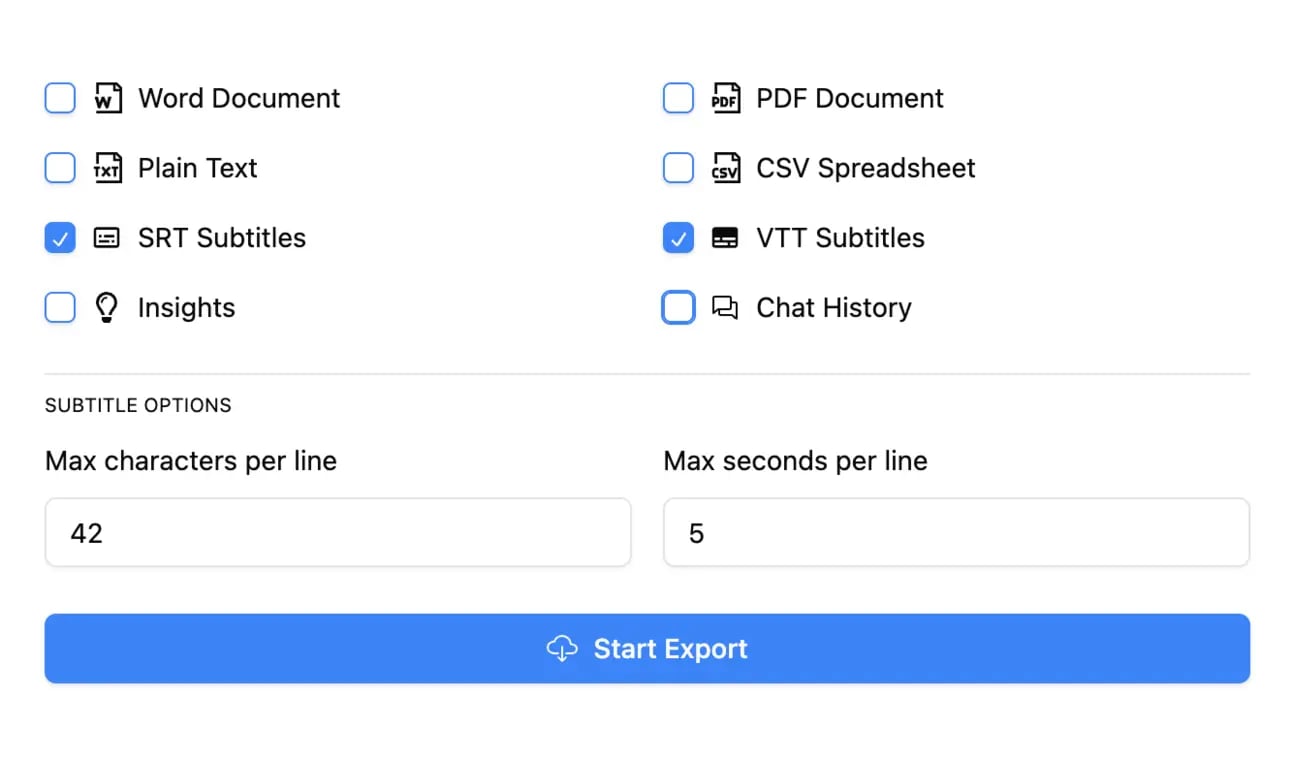
Export in multiple formats
Export your transcripts in multiple formats including TXT, DOCX, PDF, SRT, and VTT with customizable formatting options.
Summaries and Chatbot
Generate summaries & other insights from your transcript, reusable custom prompts and chatbot for your content.
Why This Method Works
This method is common across top-tier media production, from NPR's meticulously planned segments to the content engines behind major YouTube creators and podcast networks like HubSpot. The goal is to document the conversation in a way that makes editing, clip creation, and promotion as efficient as possible. It treats the interview as a source for multiple content assets.
Why This Method Works
A strong interview notes sample for a content creator is a production blueprint. It helps you track the story arc, identify potential viral clips, and note timestamps for key insights. This preparation ensures that the final product is engaging and that valuable moments aren't lost in hours of raw footage. It connects the interview directly to the content distribution strategy.
Key Insight: For creators, the interview notes are not just a record of what was said, but a map for how the content will be packaged, edited, and shared with the world.
Actionable Takeaways
- Timestamp Key Moments: During the interview, manually jot down timestamps for powerful quotes or stories. After uploading the audio/video to Transcript.LOL, you can immediately jump to these marked sections in the transcript for quick editing.
- Auto-Generate Show Notes: Use the AI summary feature to create a draft of your show notes or a blog post. This saves hours of work and provides a solid foundation for your episode's accompanying content. You can learn more about how to do this by exploring how to transcribe a podcast effectively.
- Create Social Media Clips: Use the transcript to identify short, impactful segments. Export these precise sections as audio or video clips, and use the SRT export option to add perfectly synced captions for platforms like TikTok, Instagram Reels, and YouTube Shorts.
- Separate Speaker Insights: Enable speaker detection to get a clean transcript that clearly distinguishes between the host and the guest. This is essential for pulling accurate quotes and understanding the flow of conversation during the editing process.
6. The Academic Research Interview Template
Designed for academics and qualitative researchers, this template prioritizes rigor, thematic analysis, and data integrity. It's built to support formal research methodologies where the interview is a primary data collection tool. The structure typically includes sections for participant demographics, informed consent confirmation, research question alignment, thematic coding, and reflexive notes from the researcher.
This methodical approach is fundamental in academic settings, particularly for PhD dissertation research, sociological studies, and healthcare research. Its purpose is to create a clear, auditable trail from raw interview data to analytical findings, which is often required by Institutional Review Boards (IRBs) and academic journals to ensure research validity.
Why This Method Works
A robust interview notes sample for academic research connects every piece of data back to the core research objectives. It facilitates systematic coding and thematic analysis, allowing researchers to identify patterns, contradictions, and nuances across multiple participant interviews. This structure ensures that the interpretation of data is grounded in the evidence provided by participants, not just the researcher's impressions.
Key Insight: The academic template isn't just for note-taking; it's a critical component of the analytical process itself. It forces researchers to think systematically about the data as it's being collected.
Actionable Takeaways
- Prepare for Analysis: Use Transcript.LOL to get a precise, searchable transcript of each interview. Export the DOCX file and import it directly into qualitative analysis software like NVivo or Atlas.ti to begin coding.
- Search for Themes: As your analysis progresses, use the transcript's search function to quickly locate specific quotes or recurring phrases across your entire dataset, which helps in building and validating thematic codes.
- Maintain Data Integrity: Use speaker detection to ensure every quote is correctly attributed. This is crucial for maintaining accuracy in research papers and defending your findings.
- Create Participant Summaries: After transcribing, generate a summary for each interview. These summaries provide a high-level overview, making it easier to compare and contrast participant perspectives during the analysis phase.
7. The Real-Time Collaborative Interview Notes Template
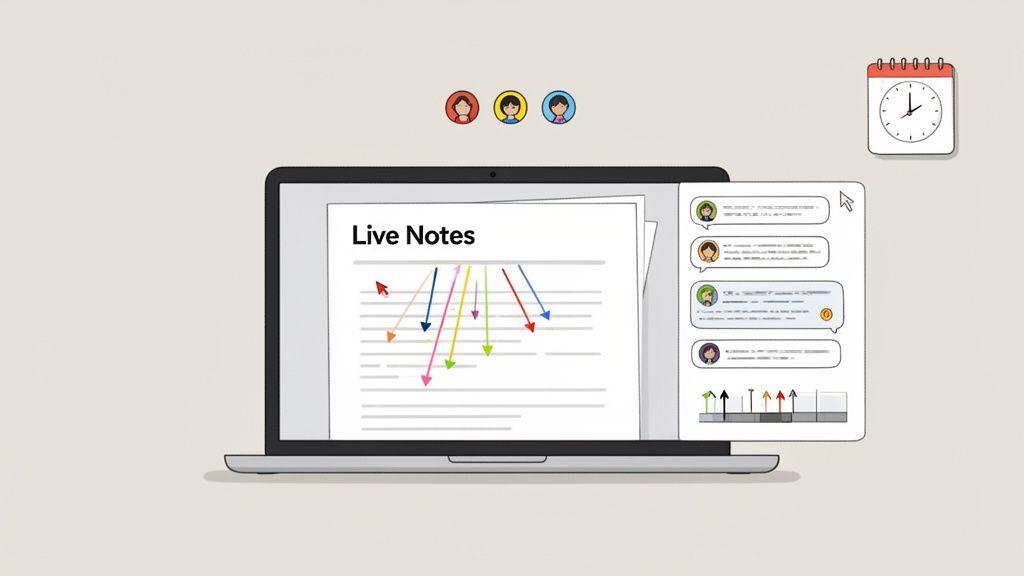
For modern, distributed teams, the real-time collaborative template is essential. This approach turns note-taking into a shared, live experience where multiple stakeholders can document observations, ask follow-up questions, and discuss impressions simultaneously. It's built for remote interviews where hiring managers, team members, and other observers join from different locations.
This method is standard practice for remote-first companies like Zapier and GitLab, where hiring decisions require cross-functional input and async communication. The shared document or platform allows the entire hiring panel to contribute to a single source of truth, capturing a more complete and multi-faceted view of the candidate.
Why This Method Works
A great interview notes sample using a collaborative template breaks down information silos and speeds up the decision-making process. Instead of waiting for individual interviewers to compile and share their thoughts, feedback is captured instantly. This collective approach helps identify consensus or disagreement on a candidate's qualifications right away, making debrief meetings more efficient.
Key Insight: Real-time collaboration shifts the focus from individual recall to collective intelligence, ensuring a richer, more balanced evaluation of every candidate.
Actionable Takeaways
- Share Live Transcripts: Use a tool that functions as an AI note taker for Zoom to generate a live transcript. Share the link with observers, allowing them to follow along and add comments in a shared workspace without distracting the primary interviewer.
- Create a Central Hub: Set up a shared folder or workspace in Transcript.LOL for all of a candidate's interviews. This gives the entire hiring team access to every transcript, summary, and note in one organized place.
- Tag Team Members: As you review the transcript, use comments or annotations to @mention specific colleagues to draw their attention to a key response or concern. This facilitates asynchronous discussion directly on the interview record.
- Generate Instant Summaries: Create an AI-generated summary of the interview immediately after it ends. Post this summary in your team's communication channel (like Slack or Teams) for members who couldn't attend, enabling them to catch up quickly.
7 Interview Notes Templates Compared
| Template | 🔄 Implementation complexity | ⚡ Resource requirements | ⭐ Expected outcomes / quality | 📊 Ideal use cases | 💡 Key advantages / tips |
|---|---|---|---|---|---|
| The Structured Interview Note Template | Moderate — predefined sections; needs question planning | Moderate — templates, scoring scales, optional transcription integration | High — consistent, comparable candidate records | Corporate hiring, recruiters, HR teams | Standardizes evaluation; use Transcript.LOL for transcript + speaker labels |
| The Cornell Note-Taking System for Interviews | Low–Medium — simple layout but needs practice | Low — notebook or digital template; use transcripts for review | Good — strong recall and synthesis; less uniform formatting | Journalists, solo researchers, podcasters | Encourages active listening; use timestamps to populate cue column |
| The Behavioral Interview Note Template (STAR Method) | Medium–High — requires skilled probing for complete STAR answers | Moderate — STAR template, competency mapping, transcription tools | High — evidence-based competency assessment; defensible hiring decisions | Competency-based hiring, executive recruitment, team-fit evaluations | Captures concrete examples; search for action keywords in transcripts |
| The Legal/Compliance Interview Note Template | High — strict timing, attestation, and format requirements | High — secure storage, legal oversight, timestamped verbatim transcripts | Very high — legally defensible and audit-ready documentation | Depositions, healthcare incidents, compliance investigations | Verbatim capture and audit trail; export timestamped PDFs and secure folders |
| The Podcast/Content Creator Interview Notes Template | Low–Medium — focused on highlights and editorial flow | Low–Moderate — transcription, SRT/caption export, editing tools | High for content extraction and speed-to-publish; lower completeness | Podcasts, video creators, content marketing workflows | Optimized for clips/quotables; use Transcript.LOL to mark timestamps and generate social posts |
| The Academic Research Interview Template | High — requires methodological rigor and coding | Moderate–High — transcripts, qualitative analysis software (NVivo/Atlas.ti) | High — supports thematic validity, coding, replicability | Qualitative studies, dissertations, market research | Facilitates thematic coding and audit trail; export transcripts to analysis tools |
| The Real-Time Collaborative Interview Notes Template | Medium — supports live multi-editor workflows; needs management | Moderate — shared workspace, commenting, voting, team tools | High for multi-stakeholder alignment and faster decisions | Distributed hiring panels, remote teams, startups | Enables simultaneous input and live scoring; share Transcript.LOL links for panel review |
From Raw Notes to Actionable Intelligence
Moving beyond a blank page to a structured note-taking system is the first critical step toward mastering any interview. Throughout this guide, we've explored a variety of specialized templates, from the structured STAR method for hiring managers to the thematic approach for podcasters and the meticulous detail required for legal compliance. Each interview notes sample serves a distinct purpose, providing a framework to capture what truly matters in different contexts.
The core lesson is that intentionality transforms note-taking from a passive recording task into an active strategic process. Whether you are using the Cornell Method to distill key themes for academic research or a collaborative document for a team-based hiring decision, the goal remains the same: to turn a conversation's raw data into clear, actionable intelligence. Adopting these frameworks helps you listen more effectively, ask better follow-up questions, and recall critical details with precision long after the conversation has ended.
Key Takeaways for Better Interview Notes
Remember these central principles as you refine your approach:
- Structure Dictates Focus: A well-chosen template is not a constraint; it's a guide. It directs your attention to the most important information, preventing you from getting lost in trivial details.
- Consistency Builds a Knowledge Base: Using a consistent format for similar types of interviews (e.g., all first-round candidate screenings or all user feedback sessions) creates a comparable, searchable archive of insights over time.
- Technology is Your Ally: Manual note-taking, while valuable, has its limits. You can miss nuances while trying to type or write. Combining a solid template with a transcription tool creates a complete, unbiased record that you can analyze later without pressure.
Ultimately, the power of a great interview notes sample lies in its application. It’s the bridge between listening and understanding, and between understanding and making informed decisions. By consciously selecting and adapting these templates, you are not just becoming a better note-taker; you are becoming a more effective interviewer, researcher, creator, and leader. Your notes stop being a simple transcript of what was said and become a strategic asset that fuels growth, informs content, and helps you build stronger teams. The next time you prepare for an interview, don’t just think about the questions you’ll ask. Think about how you’ll capture the answers.
Ready to elevate your note-taking from manual scribbles to an intelligent workflow? Stop trying to type and listen at the same time. Let Transcript.LOL handle the heavy lifting by accurately transcribing your interviews, so you can focus on the conversation and apply these structured templates to a perfect record of every word. Try Transcript.LOL today and turn your conversations into searchable, summarizable assets.