How to Write an Objective Summary: A Clear, Neutral Guide
Learn how to write an objective summary with clear, neutral analysis. Identify core ideas quickly and craft concise summaries that guide readers.
Kate, Praveen
February 18, 2026
Writing an objective summary is all about creating a no-fluff, factual account of a piece of content, completely stripped of your personal opinions. The goal is to deliver the core message and nothing else, focusing only on the main ideas and essential details from the original source.
What an Objective Summary Actually Is and Why It Matters
Ever read a movie review versus a plot synopsis? The review is packed with opinions—"the acting was brilliant," "the plot was predictable." It’s designed to tell you what to think.
A plot synopsis, on the other hand, just tells you what happened. That’s the essence of an objective summary. It's the "what happened" and nothing more.
Mastering this skill isn't just some academic exercise; it's a fundamental communication tool that pays off in the real world.
The Real-World Impact
Knowing how to properly summarize objectively gives you a serious edge in a few key areas:
- For Students: It's your best tool for breaking down dense academic articles, research papers, and long lectures. It proves you understand the material without letting your own biases creep in.
- For Professionals: It’s how you brief your team on a two-hour meeting, report on project progress without the drama, or distill messy client feedback into clear, actionable points. A sharp summary respects everyone’s time.
- For Content Creators: This is how you efficiently repurpose content. Turn a long podcast episode into a concise blog post or a series of social media updates that accurately reflect the original conversation.
Your summary should be a completely standalone document. The goal is for someone who hasn't read the original article or attended the meeting to grasp all the essential information just from what you’ve written.
Why Objectivity Builds Trust?
Objective summaries eliminate bias and reduce confusion by focusing only on the essential facts. Instead of mixing opinions with information, they present clear and neutral insights that readers can rely on. This transparency strengthens credibility, enhances professionalism, and makes your notes easier to understand and act upon. When information is presented without distortion, trust naturally follows.
Before we get into the nitty-gritty of how to write one, it helps to have a clear mental checklist of what to aim for and what to avoid. Think of it as your framework for analyzing the source material.
This quick table breaks down the core do's and don'ts to keep you on the right track.
Objective Summary Writing Do's and Don'ts
| Do | Don't |
|---|---|
| Focus on the main ideas. Find the central argument or the primary points being made. | Include your personal opinions. Ditch phrases like "I think," "I believe," or any other judgmental language. |
| Use neutral, unbiased language. Stick to the facts and simply report what was said or written. | Add minor details or trivial facts. Leave out secondary examples, long-winded anecdotes, or tangential info. |
| Attribute ideas to the source. Use phrases like, "The author states..." or "The report concludes..." to give credit. | Use direct quotes excessively. Paraphrase in your own words. This shows you actually understand the content. |
| Remain accurate and faithful. Make sure your summary correctly represents the original's meaning and context. | Make assumptions or interpret. Stick strictly to the information that's actually there. |
Keeping these simple rules in mind will make the entire process smoother and ensure your final summary is truly objective and useful.
A Proven Workflow for Crafting Your Summary
Knowing the theory behind a good objective summary is one thing, but actually writing one—consistently—is another beast entirely. The secret isn't some magical writing talent. It's about having a reliable, repeatable process that takes you from raw source material to a clean, neutral final draft. I break this down into three phases: active engagement, neutral drafting, and a final, rigorous revision.
This whole workflow is designed to keep you focused and efficient.
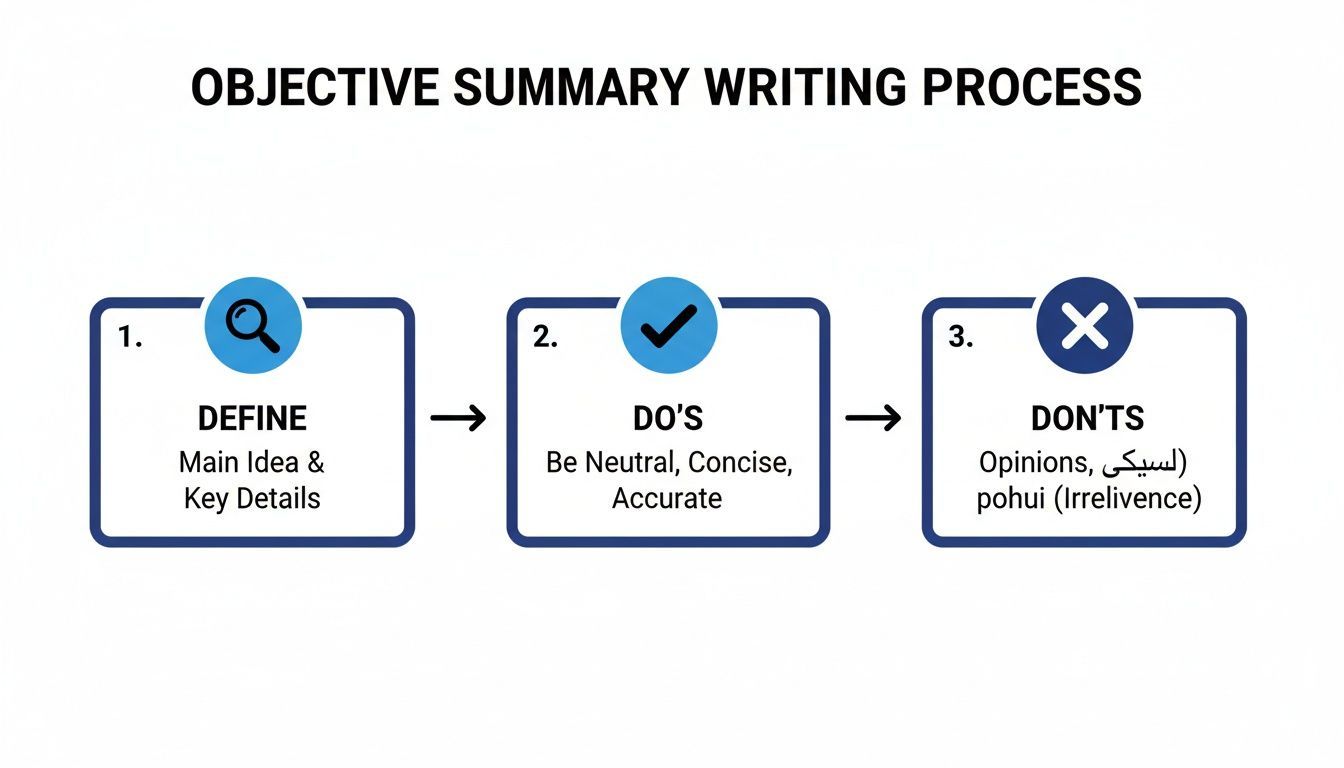
As you can see, it all starts with nailing the core message before you even start writing. From there, it's about sticking to the do's and avoiding the don'ts.
Engage Actively With the Source
First things first: you need to go on a hunt for the central argument and its main supporting pillars. This isn't passive reading or listening; think of it more like an investigation. As you go through the article, meeting transcript, or video, keep asking yourself one critical question: What is the single most important message here?
Once you’ve locked that down, your next job is to find the key pieces of evidence or the main points used to back it up. You're essentially looking for the "who, what, when, where, and why" of the content. I find it helps to either highlight these points directly or just jot them down on a separate doc.
- For a business meeting transcript: You’d pull out the action items, key decisions, and any hard numbers like quarterly performance stats.
- For an academic article: You'd zero in on the thesis statement, the methodology, the core findings, and the conclusion.
This handful of core ideas becomes the skeleton of your summary. Get this part right, and everything else falls into place much more easily.
What a Great Summary Actually Delivers?
Instant Clarity
Key points surface immediately without the need to reread the entire source. Readers can grasp the main message within seconds, making complex information simple, structured, and easy to scan. This allows you to focus on understanding rather than searching.
Faster Decisions
Teams save time because there is no confusion about what was said. Important facts and action items are clearly documented, reducing misunderstandings. With clarity in communication, work moves forward more confidently and efficiently.
Better Retention
Condensed information is easier to remember and process. By focusing only on essential insights instead of unnecessary details, learning becomes more effective. Clear summaries help ideas stay in memory longer.
Easy Repurposing
A single transcript can quickly transform into notes, reports, emails, or social media posts. This flexibility allows you to reuse content across multiple formats with minimal effort. The result is higher productivity with less time spent rewriting.
Draft With Neutrality
With your outline ready, it's time to start drafting. The main goal here is to turn your notes into clear, concise sentences while keeping your voice completely neutral. This is where personal bias loves to sneak in, so you have to be vigilant.
The key skill to master is accurate paraphrasing. This just means restating the author's ideas in your own words without twisting the meaning. Drop any charged adjectives or emotional language. Instead of saying an argument was "brilliant" or "unconvincing," just state what the argument was.
Pro Tip: Try writing your first draft without looking back at the original text. Work only from your outline of main ideas. This forces you to use your own language and helps you avoid accidentally mimicking the source's tone or, worse, plagiarizing.
After that first pass, you can go back and check your draft against the original material for factual accuracy. If you're dealing with a long recording, AI-powered tools that generate summaries and pull out key points can be a huge help. You can see how transcription platforms simplify this on our docs page.
Features That Power Faster Transcription
State-of-the-art AI
Powered by OpenAI's Whisper for industry-leading accuracy. Support for custom vocabularies, up to 10 hours long files, and ultra fast results.

Import from multiple sources
Import audio and video files from various sources including direct upload, Google Drive, Dropbox, URLs, Zoom, and more.
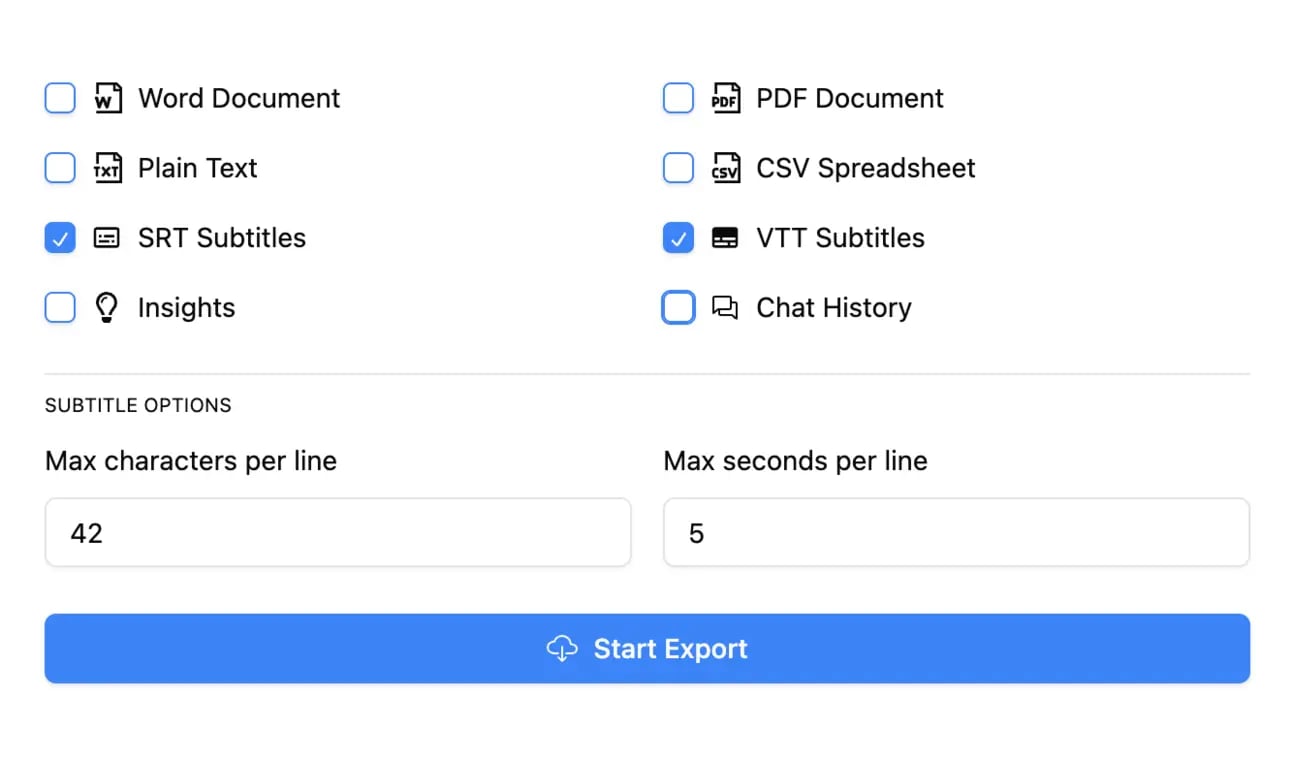
Export in multiple formats
Export your transcripts in multiple formats including TXT, DOCX, PDF, SRT, and VTT with customizable formatting options.
Revise for Clarity and Objectivity
The final phase is all about bias-checking and condensing. Revision isn't just about fixing typos; it's about sharpening your summary until it's as objective and tight as possible.
Read through your draft with one mission: find any hint of your own opinion and destroy it.
- Are there any loaded words? (Things like "shockingly," or "obviously.")
- Did you interpret anything, or did you just report it?
- Can every single sentence be traced directly back to the source?
Once you've scrubbed it clean of bias, it's time to tighten the language. Cut out redundant phrases, combine choppy sentences, and swap weak verbs for stronger ones. Your final summary should be a dense, fact-based reflection of the original, where every single word earns its keep.
Seeing It in Action With Annotated Examples
Understanding the rules of an objective summary is one thing, but seeing them in practice is what makes the concept click. Let's walk through a couple of real-world scenarios to show the difference between a weak, subjective summary and a strong, objective one.
I'll break down each example to show you exactly what works and what doesn't.
Our first source is a snippet from an internal business meeting about a new marketing campaign. The goal is to give a quick update to a stakeholder who couldn't be there.
Business Meeting Scenario
Here's a bit of the raw transcript: "The marketing team presented the new 'Project Aurora' campaign. It focuses on social media ads and influencer collaborations. The initial budget is set at $50,000, but honestly, it felt a little low to me. The design lead showed some amazing mockups, and everyone got really excited. The main concern raised was the tight deadline of a Q3 launch."
Now, let's look at two different attempts to summarize this update.
Before (Weak Summary)
The meeting was pretty productive. Marketing showed off the awesome new 'Project Aurora' campaign, which is all about social media. I think the $50,000 budget they mentioned is definitely not enough to make a real impact. The designs were the best part—super impressive stuff that got everyone fired up. The only problem is the crazy deadline they're trying to hit.
This version is just dripping with personal opinion ("pretty productive," "awesome," "definitely not enough") and emotional language ("crazy deadline," "fired up"). It completely fails to provide a neutral account of what happened.
After (Objective Summary)
The marketing team introduced 'Project Aurora,' a new campaign centered on social media advertising and influencer partnerships. The proposed initial budget is $50,000. The team presented design mockups for the campaign. A key concern was identified regarding the proposed Q3 launch deadline.
See the difference? This is pure fact. It states the campaign's focus, reports the exact budget, and pinpoints the main issue raised—all without a hint of subjective commentary.
Research Article Scenario
Next up, let's tackle something denser: a research article about IRS theft loss deductions for scam victims. Summarizing this kind of text means you have to pull out the core findings without getting bogged down in jargon or your own feelings about the topic.
Before (Weak Summary)
The article talks about a terrible situation where the IRS makes it hard for scam victims to get their money back. It seems so unfair that people who get tricked have to pay taxes on money they lost. The author rightfully argues that Congress needs to fix this broken system immediately.
This summary is completely driven by emotion ("terrible situation," "so unfair") and opinion ("rightfully argues"). It focuses on the injustice of it all, not the actual substance of the article or its recommendations.
Key Takeaway: An objective summary's power comes from its neutrality. When you strip away emotional language and personal interpretation, you deliver a clear, trustworthy account of the source material.
After (Objective Summary)
A recent IRS Chief Counsel memo clarified that victims of investment scams may qualify for a theft loss deduction under specific conditions. However, the Tax Cuts and Jobs Act (TCJA) currently prevents victims of personal scams (e.g., romance scams) from claiming similar deductions. The author recommends that Congress allow the TCJA restriction to expire, waive early withdrawal penalties for victims, and extend the statute of limitations for filing claims.
This version is infinitely more useful. It's specific and factual:
- Who is affected (scam victims).
- What the core issue is (deduction eligibility under the TCJA).
- What the proposed solutions are (expiring restrictions, waiving penalties).
It accurately reflects the article's main points without any emotional bias.
Mastering this skill is critical for anyone from students summarizing lectures to professionals drafting meeting minutes. You can check out more professional applications and how transcription tools can help on our use cases page.
The Art of Condensing Without Losing the Core Message
Writing a good objective summary isn't just about what you keep—it's about what you're brave enough to cut. The real challenge is being ruthless with your word count without killing the main point. Think of it as distilling a dense report into something clear, scannable, and powerful.

Your mission is to find the essential "who, what, when, where, and why" of the original text. Any word that doesn't directly answer one of those questions is probably dead weight. Remember, a shorter summary isn't just about saving space; it's about creating impact.
Making Every Word Count
One of the most effective tricks I've learned is to swap weak, wordy phrases for strong, precise verbs. This one change can shrink your word count fast while making your sentences punchier and more direct.
Here are a few common culprits I see all the time:
- Instead of "made a decision to," just say "decided."
- Instead of "came to the conclusion that," try "concluded."
- Instead of "has the ability to," use "can."
This isn't just about trimming fat; it's about injecting energy into your writing. Each swap sharpens the focus and gets the reader straight to the action, which is exactly what a great summary should do.
Succinctness is everything in summary writing. Research shows that boiling information down to its core elements directly boosts clarity and reader confidence. For marketing folks, this is huge: concise summaries drive 40% higher engagement rates than their long-winded counterparts. You can dig deeper into this in a great executive summary writing guide.
Practical Strategies for Tightening Your Language
Beyond strong verbs, there are other ways to tighten things up. First, go on a hunt for redundant words. Phrases like "final conclusion" (a conclusion is already final) or "completely finished" are easy targets. Zap them.
Next, look for sentences that are doing the same job. If you have two back-to-back sentences talking about the same thing, they can almost always be merged into one stronger sentence.
Here’s an example of what I mean:
- Before: The report outlined the company's Q2 financial performance. The report also identified key areas for growth in the next quarter.
- After: The report outlined the company's Q2 financial performance and identified key growth areas for the next quarter.
See? That simple edit saves words and makes the whole thing flow better.
At the end of the day, whether you're writing for a busy executive or a social media manager, the summary that gets straight to the point is the one that gets read, remembered, and acted on. Mastering these condensing techniques will help you write a summary that's not just accurate, but incredibly effective.
Using AI and Transcription Tools for a Smarter Start
Staring at a blank page when you need to summarize a long meeting or a dense podcast is a total drag. It’s where most of the time gets wasted. This is exactly where a modern workflow gives you a massive advantage, letting technology do the heavy lifting so you can focus on the important stuff.
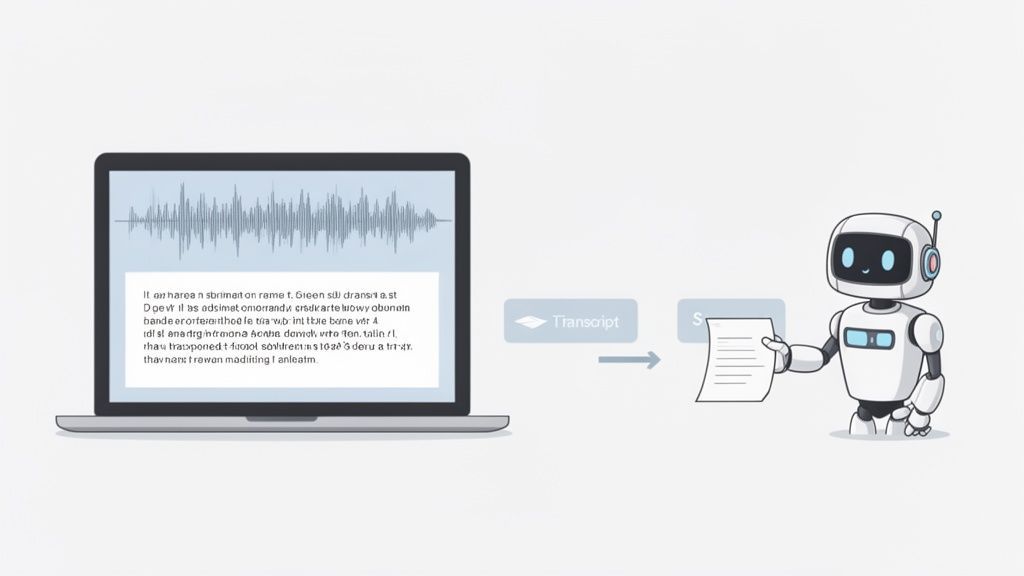
The whole process starts by turning that audio or video into text. A clean, accurate transcript is your foundation. Without it, you’re building your summary on shaky ground right from the start.
Generating Your First Draft with AI
Once you have that transcript, AI-powered tools can generate a first-draft summary almost instantly. They're built to spot main ideas, pull out key terms, and stitch together a coherent overview in seconds. No more manually scrubbing through hours of audio just to find the core message. You can find some great options on our list of AI transcription tools.
Features That Make Summarizing Faster
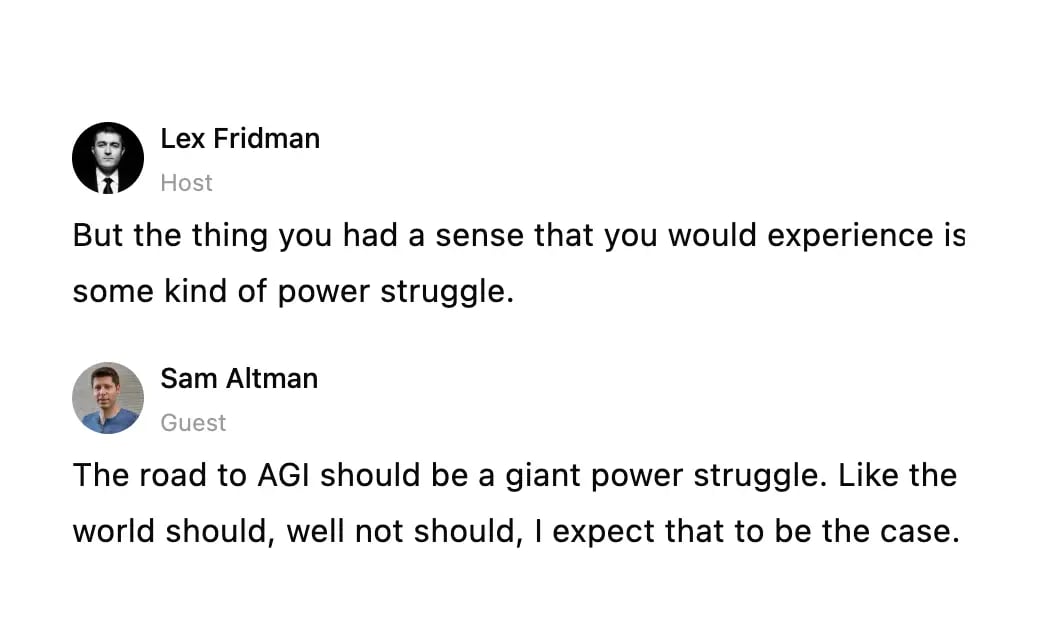
Speaker detection
Automatically identify different speakers in your recordings and label them with their names.
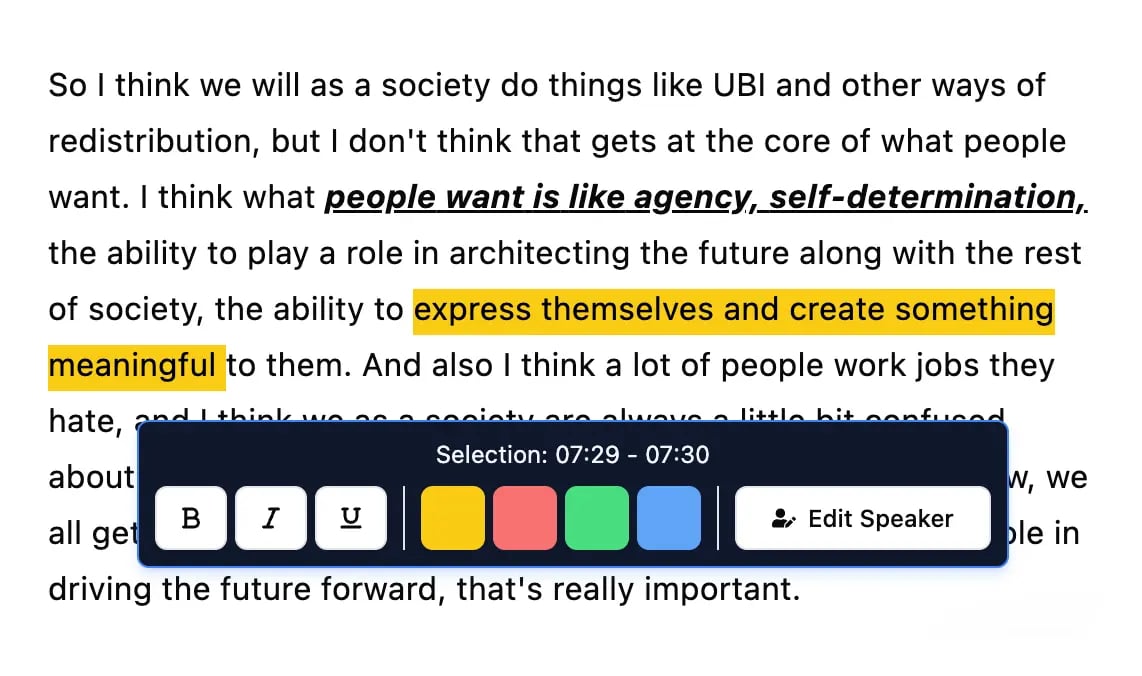
Editing tools
Edit transcripts with powerful tools including find & replace, speaker assignment, rich text formats, and highlighting.
Summaries and Chatbot
Generate summaries & other insights from your transcript, reusable custom prompts and chatbot for your content.
But here’s the key: you have to treat this AI-generated text as just that—a first draft. The AI is your assistant, not the author. Its job is to give you a running start, saving you the time and mental energy you'll need for the real work. For a truly efficient workflow, you can even find tools that extract data from PDFs automatically, getting the raw info ready so you can focus on crafting the narrative.
The real value of AI here is efficiency, not replacement. It handles the 80% of grunt work—finding the key points—so you can apply your expertise to the final 20%: the crucial human touch of editing and nuance.
The Essential Human Editing Phase
Your real work begins once you have the AI draft in hand. This is where your human understanding of context, objectivity, and audience comes into play.
Here's a quick checklist for refining that AI-generated summary:
- Hunt for Bias: AI can sometimes pick up on emotional language or use loaded words. Go through it with a fine-tooth comb and swap any hint of opinion for neutral, objective phrasing.
- Fact-Check Everything: Don't trust the AI blindly. Cross-reference names, numbers, and key takeaways with the original source. AI is good, but it's not perfect.
- Refine the Flow: Rewrite clunky sentences and make sure the summary reads smoothly from one point to the next. Adjust the tone so it’s right for your audience, whether that’s an internal memo for your team or a public-facing blog post.
This "human-in-the-loop" approach is non-negotiable, especially in business. For instance, an executive summary should ideally be a single page. Decision-makers often spend only 1-2 minutes reviewing them, so every word has to count. By using AI to get the first draft done fast, you can dedicate your time to surgical editing—creating a powerful, objective summary that gets straight to the point.
Common Questions About Writing Objective Summaries
Even with a solid process, a few questions always pop up when you're getting the hang of objective summaries. Let's tackle the common hurdles right now so you can move forward with confidence.
Think of this as your go-to guide for troubleshooting those tricky spots.
One of the first things people ask is about length. How long should a summary actually be?
There’s no magic number, but a good rule of thumb is to aim for about 10-25% of the original source's length. If you're tackling a 10-page report, a one-page summary is a solid target. The goal is to be concise but still get all the critical information across.
Can a Summary Include Numbers or Data?
Absolutely. In fact, it often should.
If the original text uses specific data points, stats, or dates to back up its main ideas, you should definitely include them. Reporting that "sales increased" is pretty vague. Stating that "sales increased by 15% in Q3" is an objective fact that adds real value.
The key is to pull only the most critical data—the numbers that directly support the core argument. You can leave out the minor stats or trivial figures that don’t really change the big picture.
Don't be afraid to pull direct numbers from the source. An objective summary is all about factual representation, and data is a powerful tool for that. It grounds your summary in concrete evidence instead of fuzzy descriptions.
Another common point of confusion is how to handle direct quotes. Is it okay to use them?
Is It Okay to Use Direct Quotes?
While it’s not strictly forbidden, you should use direct quotes sparingly. The whole point of writing a summary is to show you understand the material by putting it into your own words.
Over-relying on quotes can make your summary feel more like a lazy copy-paste job than a true distillation of the content.
If you absolutely must use a quote, save it for a moment where the author's original phrasing is so precise or powerful that paraphrasing would lose its impact. And, of course, always attribute it properly.
Still have more questions about summary writing? We have an extensive list of answers you can explore in our frequently asked questions guide.
Ready to stop summarizing from scratch? Let Transcript.LOL handle the heavy lifting. Our AI-powered platform turns any audio or video into an accurate transcript and generates a first-draft summary in seconds, so you can focus on refining the final product. Try Transcript.LOL for free today!