
10 mejores prácticas de creación de contenido para escalar tu producción i...
Desbloquea flujos de trabajo escalables con nuestras 10 mejores prácticas de creación de contenido. Aprende a aprovechar la IA, la transcripción y la reutilización para maximizar tu impacto.
Kate
February 2, 2026
En un mundo saturado de contenido, simplemente crear más no es suficiente. Los creadores y equipos que prosperan son aquellos que trabajan de manera más inteligente, no más duro. Esto requiere un cambio estratégico de una mentalidad de producción manual y única a un flujo de trabajo escalable y sistematizado. La clave reside en aprovechar herramientas potentes y adoptar un nuevo conjunto de mejores prácticas de creación de contenido que multiplican el valor de cada pieza que produces. El éxito ya no se trata solo de la grabación inicial; se trata de lo que haces con esa grabación después.
¿Por qué los creadores modernos empiezan con sistemas?
Grabar una vez y reutilizar muchas veces es como los mejores equipos escalan sin agotarse. Un flujo de trabajo estructurado multiplica la producción sin multiplicar el esfuerzo. Los sistemas inteligentes vencen al esfuerzo bruto siempre.
Esta guía ofrece 10 estrategias prácticas diseñadas para el creador moderno. Iremos más allá de los consejos genéricos y nos centraremos en cómo la transcripción impulsada por IA puede revolucionar todo tu proceso, desde la grabación inicial hasta la distribución multiplataforma. En lugar de tratar el audio y el video como productos finales, aprenderás a verlos como activos fundamentales para un vasto ecosistema de contenido. Para una comprensión más amplia del despliegue estratégico de contenido y cómo generar tráfico y participación, revisa estas 10 Mejores Prácticas de Marketing de Contenidos para ver cómo estas tácticas de creación encajan en un plan más amplio.
Ya seas un podcaster que busca expandir su alcance, un creador de video que aspira a una mejor capacidad de búsqueda, un profesional del marketing encargado de generar más clientes potenciales, o parte de un equipo corporativo que necesita documentar conocimientos, estas prácticas te ayudarán a construir un motor de contenido más eficiente, accesible e impactante. Exploraremos cómo transformar una sola grabación en docenas de activos, hacer que tu contenido sea descubrible por los motores de búsqueda, mejorar la accesibilidad para todas las audiencias y construir una base de conocimientos consultable a partir de tu trabajo. Sumergámonos en los flujos de trabajo específicos que convierten a los creadores en potencias de contenido.
1. Transcribe Primero, Edita Después: Aprovecha la Transcripción con IA para una Base de Contenido Precisa
Una de las mejores prácticas de creación de contenido más impactantes es cambiar tu flujo de trabajo para comenzar con una transcripción automatizada. En lugar de tomar notas manualmente o crear una transcripción después de los hechos, el método de "transcribir primero, editar después" utiliza servicios impulsados por IA para generar una versión de texto completa y con marca de tiempo de tu contenido de audio o video antes de que comiences a editar. Este documento de texto se convierte en tu plano fundamental.
Este enfoque transforma el contenido hablado en un activo consultable y editable desde el principio. Para podcasters y creadores de video, significa que puedes identificar rápidamente fragmentos clave, estructurar tu narrativa e incluso crear una edición en papel simplemente resaltando y organizando texto. Esto acelera drásticamente la postproducción al convertir un proceso basado en la escucha en uno más rápido y basado en la lectura.
⚡ Funciones de transcripción que ahorran horas
IA de última generación
Impulsado por Whisper de OpenAI para una precisión líder en la industria. Soporte para vocabularios personalizados, archivos de hasta 10 horas y resultados ultra rápidos.

Importar desde múltiples fuentes
Importa archivos de audio y video desde diversas fuentes, incluyendo carga directa, Google Drive, Dropbox, URLs, Zoom y más.
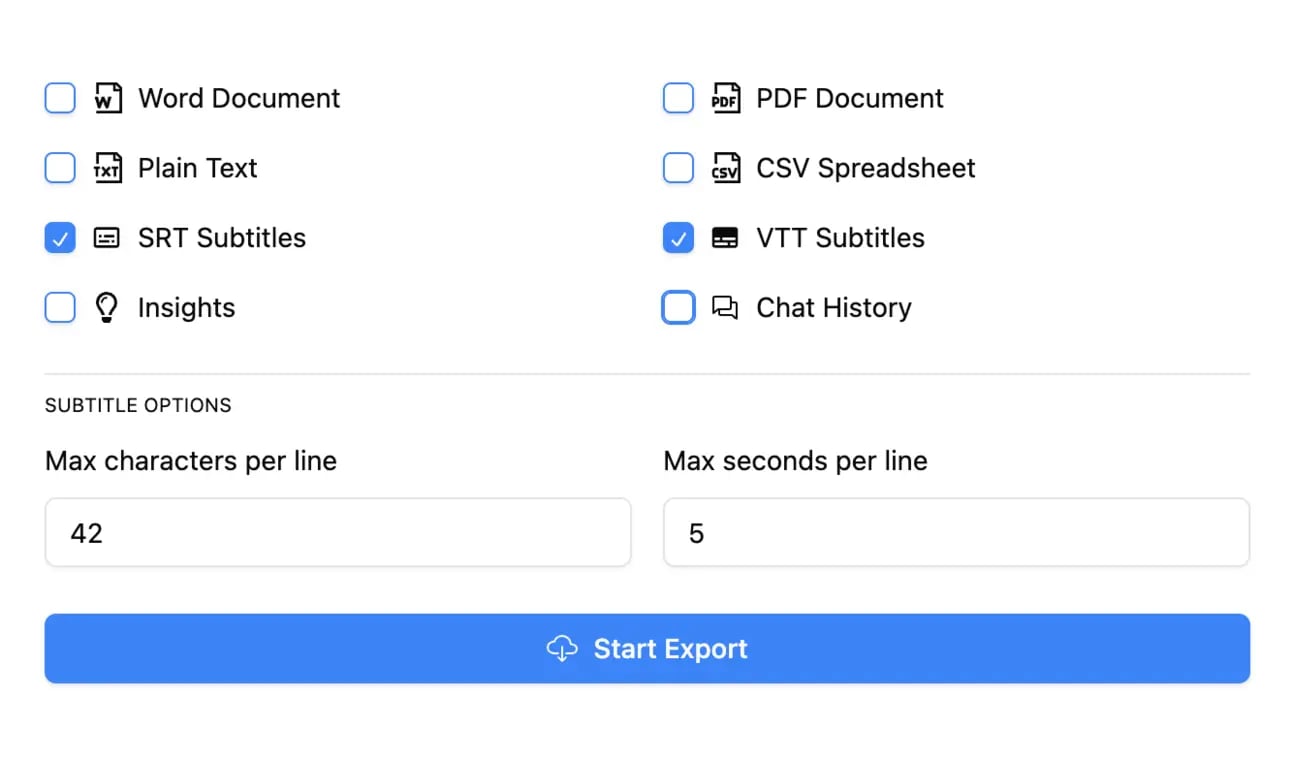
Exportar en múltiples formatos
Exporta tus transcripciones en múltiples formatos incluyendo TXT, DOCX, PDF, SRT y VTT con opciones de formato personalizables.
Cómo Funciona en la Práctica
- Redes de Podcasts: Una red puede usar una herramienta como Transcript.LOL para procesar nuevos episodios, generando una transcripción completa en minutos. Los productores pueden luego escanear este documento para identificar momentos para clips en redes sociales, escribir notas de programa precisas y crear publicaciones de blog sin tener que volver a escuchar la grabación completa.
- Formación Corporativa: Una empresa puede grabar una sesión de formación virtual de varias horas y transcribirla instantáneamente. Esto crea una biblioteca de videos buscable donde los empleados pueden encontrar información específica simplemente buscando una palabra clave en la transcripción, que luego se vincula al momento exacto en el video.
Idea Clave: Tratar tu transcripción como el documento fuente principal, en lugar de una ocurrencia tardía, desbloquea oportunidades de eficiencia y reutilización que de otro modo se perderían. Hace que tu contenido sea más accesible y descubrible.
Consejos Prácticos para la Implementación
Para sacar el máximo provecho de este flujo de trabajo, sigue estos pasos:
- Usa Vocabulario Personalizado: Antes de procesar, agrega términos específicos de la industria, nombres de marcas y ortografías únicas al diccionario de la IA. Esto mejora significativamente la precisión y reduce el tiempo de corrección manual.
- Verifica las Etiquetas de Orador: Para contenido con varios oradores, comprueba que la configuración de detección de orador esté identificando y etiquetando correctamente a cada individuo. Esto es crucial para crear guiones limpios y legibles.
- Exporta Estratégicamente: Elige el formato de archivo adecuado para tus necesidades. Usa SRT o VTT para subtítulos de video, DOCX para borradores de publicaciones de blog y TXT para análisis simples.
- Empieza Poco a Poco: Prueba tu flujo de trabajo primero con un archivo corto de 5-10 minutos. Esto te ayuda a comprender el proceso y a ajustar tu configuración antes de comprometerte con contenido más largo y complejo.
2. Reutilización de Contenido Multiformato: Transforma una Grabación en Múltiples Piezas de Contenido
Una de las mejores prácticas más eficientes para la creación de contenido es dejar de crear activos únicos y, en su lugar, adoptar una mentalidad de reutilización. Esto implica tomar una pieza de contenido única y principal, como un seminario web o un episodio de podcast, y deconstruirla sistemáticamente en numerosos activos más pequeños para diferentes plataformas. Con una transcripción como guía, puedes maximizar el retorno de tu esfuerzo de grabación inicial transformándola en publicaciones de blog, actualizaciones en redes sociales y más.
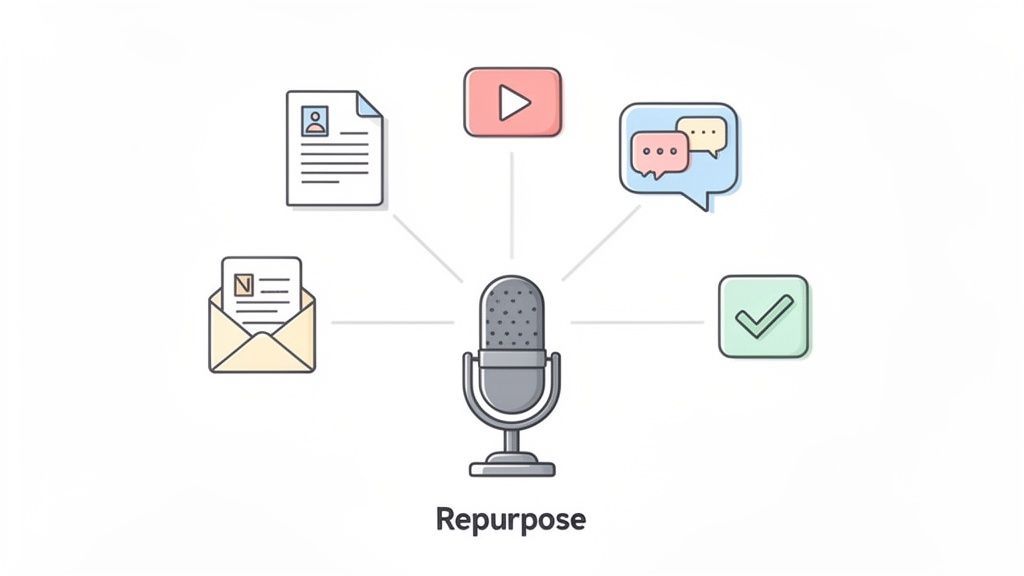
Este enfoque asegura que tu mensaje principal llegue a una audiencia más amplia en los formatos que prefieren. En lugar de un único punto de contacto, una grabación puede alimentar tu calendario de contenido durante semanas. Usar una transcripción como material fundamental hace que este proceso sea increíblemente eficiente, permitiéndote extraer rápidamente citas, resumir ideas clave y estructurar contenido derivado sin tener que volver a ver o escuchar la grabación original.
No dejes que las grabaciones se desperdicien
La mayoría de los creadores publican una vez y se olvidan. Sin reutilización, el 90% del valor de tu contenido desaparece. Siempre extrae varios activos antes de pasar a la siguiente grabación.
Cómo Funciona en la Práctica
- Equipos de Marketing: Un equipo puede tomar un video de demostración de producto de 45 minutos, transcribirlo y luego usar ese texto para crear una publicación de blog paso a paso, extraer cinco puntos clave de características para Twitter, diseñar una infografía para Pinterest y editar varios clips de video cortos para Instagram Reels.
- Podcasters: Un creador puede usar una herramienta como Transcript.LOL para generar automáticamente un resumen de su último episodio. Luego, puede usar este resumen como base para su boletín informativo por correo electrónico, expandir puntos clave para un artículo de LinkedIn y extraer citas directas para audiogramas para compartir en redes sociales.
Idea Clave: Ver cada pieza de contenido de formato largo como un contenedor de activos más pequeños y reutilizables cambia fundamentalmente tu estrategia de contenido. Cambia el enfoque de la creación constante a la distribución y amplificación estratégicas.
Consejos Prácticos para la Implementación
Para construir un motor de reutilización exitoso, integra estos pasos en tu flujo de trabajo:
- Planifica con Anticipación: Antes de siquiera presionar grabar, piensa en posibles activos derivados. Esto te ayuda a estructurar tu contenido principal para incluir secciones distintas, citas potentes y puntos de datos que sean fáciles de extraer más tarde.
- Extrae Momentos Clave: Usa tu transcripción para escanear rápidamente las estadísticas, citas y anécdotas más convincentes. Estos son perfectos para crear gráficos visualmente atractivos para redes sociales o publicaciones de texto cortas.
- Aprovecha las Etiquetas de Orador: Para entrevistas o paneles de discusión, una transcripción con etiquetas de orador precisas te permite atribuir citas al instante. Esto agrega credibilidad al crear activos como publicaciones de resumen de expertos o tarjetas de citas.
- Mapea a un Calendario de Contenido: Crea un cronograma de distribución para tus activos reutilizados. Esto asegura que estés lanzando contenido estratégicamente a lo largo del tiempo para maximizar la participación y mantener a tu audiencia interesada sin ser repetitivo.
3. Implementa la Detección y Etiquetado de Oradores para Claridad y Accesibilidad
Para cualquier contenido que involucre a más de una persona, la identificación adecuada del orador no es un detalle menor; es una práctica recomendada fundamental para la creación de contenido. Implementar la detección automática de oradores y un etiquetado diligente transforma un bloque de texto confuso en una conversación clara y fácil de seguir. Este proceso garantiza que tu audiencia, incluidas aquellas con necesidades de accesibilidad, pueda distinguir fácilmente entre diferentes voces en entrevistas, paneles de discusión o reuniones.
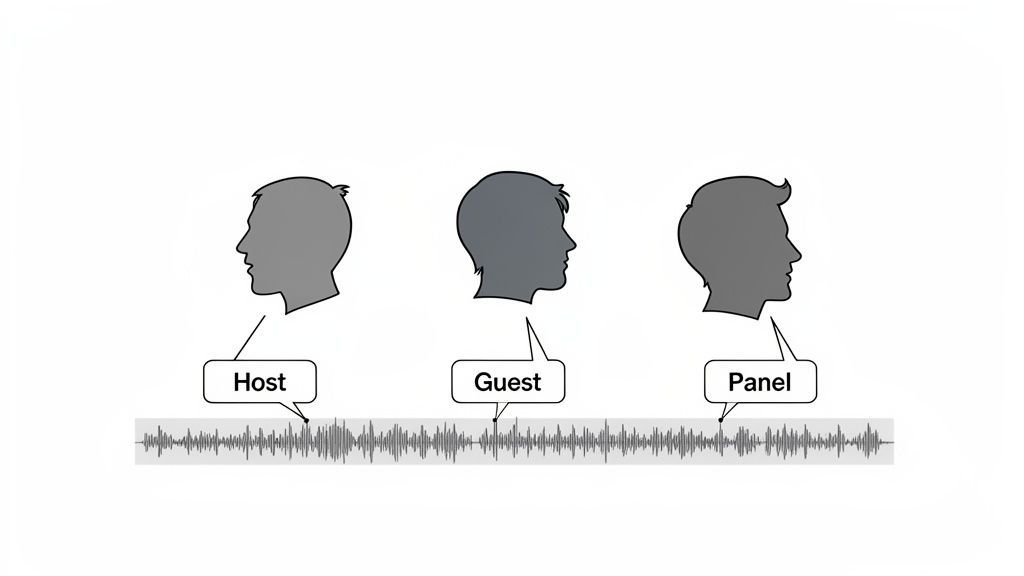
Esta práctica eleva la profesionalidad y la usabilidad de tu contenido. Al asignar con precisión nombres o roles a cada parte del diálogo, creas una transcripción que no solo es más fácil de leer, sino también más valiosa para la reutilización. Las etiquetas de orador claras facilitan la extracción de citas precisas, el análisis de las contribuciones de diferentes participantes y la creación de materiales accesibles que cumplen con estándares como WCAG.
Cómo Funciona en la Práctica
- Redes de Podcasts: Un productor de podcasts utiliza un servicio como Transcript.LOL para detectar automáticamente diferentes oradores en una entrevista. Luego, corrige y nombra manualmente las etiquetas (por ejemplo, "Jane Doe - Anfitriona", "John Smith - Invitado"), asegurando que la transcripción final sea perfecta para crear publicaciones de blog y gráficos de redes sociales con citas atribuidas.
- Legal y Corporativo: Un asistente legal transcribe una deposición con varios abogados y un testigo. El etiquetado adecuado del orador es crucial para crear un registro legal preciso donde cada declaración esté correctamente atribuida, evitando confusiones y manteniendo la integridad del documento. Los equipos corporativos hacen lo mismo para las actas de reuniones para rastrear los elementos de acción.
Idea Clave: Las etiquetas de orador convierten un monólogo de texto en un diálogo estructurado. Esta claridad es esencial para la comprensión de la audiencia, el cumplimiento de la accesibilidad y la creación de contenido de nivel profesional que genera confianza y autoridad.
Consejos Prácticos para la Implementación
Para implementar correctamente el etiquetado de oradores en tu flujo de trabajo, sigue estos pasos:
- Revisa y Corrige la Detección de IA: Siempre revisa manualmente las etiquetas de orador generadas por IA. Aunque son muy precisas, la tecnología a veces puede atribuir erróneamente frases cortas o cruces de palabras. Una revisión rápida garantiza una precisión del 100%.
- Utiliza Convenciones de Nomenclatura Consistentes: Establece un formato claro para las etiquetas, como "Nombre Apellido - Rol" (por ejemplo, "Sarah Chen - Entrevistadora"). Esta consistencia ayuda a los lectores y es un sello distintivo del contenido profesional.
- Anonimiza Cuando Sea Necesario: Para contenido sensible como entrevistas de investigación o sesiones de retroalimentación de usuarios, anonimiza a los oradores con etiquetas claras y consistentes (por ejemplo, "Participante 1", "Investigador") para proteger la privacidad mientras se mantiene la legibilidad.
- Aprovecha las Etiquetas para la Búsqueda: Utiliza los nombres de los oradores como etiquetas o metadatos al publicar contenido. Esto permite a los usuarios buscar contribuciones de un invitado específico en múltiples episodios o artículos.
4. Aprovecha las Transcripciones para SEO y Búsqueda: Haz que el Contenido de Audio/Video Sea Descubrible
Una práctica recomendada de creación de contenido crítica que a menudo se pasa por alto es hacer que tus activos de audio y video sean descubribles por los motores de búsqueda. Los bots de búsqueda no pueden "escuchar" un podcast ni "ver" un video para comprender su contenido, pero se destacan en la indexación de texto. Al publicar una transcripción completa junto con tus medios, proporcionas a los motores de búsqueda un documento rico en palabras clave que pueden rastrear, indexar y clasificar.
Esta única acción transforma tu contenido multimedia de un archivo aislado e indescubrible en un poderoso activo de SEO. Desbloquea el potencial para que tus episodios y videos aparezcan en los resultados de búsqueda orgánica para palabras clave muy específicas y de cola larga pronunciadas durante la grabación. Esta estrategia mejora tanto la legibilidad de la máquina para SEO como la accesibilidad humana para tu audiencia.
¿Qué ganas con un flujo de trabajo centrado en la transcripción?
Producción más rápida
Editar texto es significativamente más rápido que revisar audio. Detectas momentos clave al instante y ahorras horas en postproducción cada semana.
Mayor alcance
Las transcripciones hacen que tu contenido sea buscable en Google y utilizable en blogs, redes sociales y boletines informativos, ampliando tu audiencia de forma orgánica.
Mejor accesibilidad
Los subtítulos y el texto legible garantizan que todos puedan consumir tu contenido, incluidos los hablantes no nativos y los usuarios con problemas de audición.
Valor a largo plazo
Cada grabación se convierte en un activo permanente que puedes reutilizar, referenciar y monetizar una y otra vez.
Cómo Funciona en la Práctica
- Podcasters de Negocios: Un podcast que discute tendencias de marketing puede usar una transcripción para empezar a posicionarse para frases de nicho como "desafíos de integración de plataformas de datos de clientes". Los oyentes que buscan este término encuentran el episodio del podcast, generando tráfico orgánico altamente cualificado.
- Instituciones Educativas: Una universidad puede publicar transcripciones de conferencias en línea. Esto no solo ayuda a los estudiantes en su revisión, sino que permite que el contenido de la institución sea descubierto por futuros estudiantes e investigadores que buscan temas académicos específicos discutidos en la conferencia.
Idea Clave: Sin una transcripción basada en texto, tu contenido de audio y video es prácticamente invisible para Google. Publicar una transcripción es la forma más efectiva de desbloquear el valor SEO inherente de tus palabras habladas.
Consejos Prácticos para la Implementación
Para maximizar el impacto SEO de tus transcripciones, sigue estos pasos:
- Publica Transcripciones en la Página: Incrusta la transcripción completa y legible directamente en la misma página que tu reproductor de audio o video. Esto asegura que todo el valor de las palabras clave se asocie con el activo de contenido principal.
- Optimiza con Encabezados: Estructura la transcripción con encabezados H2 y H3, al igual que una publicación de blog, para dividir temas y señalar la estructura del contenido a los motores de búsqueda.
- Incorpora Marcado de Esquema (Schema Markup): Utiliza el esquema VideoObject o Article para proporcionar a los motores de búsqueda contexto explícito sobre tu contenido, lo que puede mejorar cómo se muestra en los resultados de búsqueda.
- Enfócate en la Creación de Enlaces (Link Building): Una vez que tu contenido sea descubrible, enfócate en construir autoridad. Para un SEO integral, comprender las 10 mejores estrategias de creación de enlaces entrantes puede aumentar significativamente la visibilidad en línea de tu contenido.
5. Usa Transcripciones para Contenido Accesible e Inclusivo: Llega a Audiencias Más Amplias
Más allá de la eficiencia del flujo de trabajo, un principio fundamental de las mejores prácticas modernas de creación de contenido es priorizar la accesibilidad. Proporcionar transcripciones y subtítulos precisos para todo el contenido de audio y video ya no es una característica "agradable de tener"; es un paso esencial para garantizar que tu mensaje sea inclusivo. Esta práctica hace que tu contenido sea accesible para audiencias sordas o con problemas de audición, hablantes no nativos y personas con diferentes preferencias de procesamiento cognitivo.

Un enfoque inclusivo amplía el alcance de tu audiencia y mejora significativamente la experiencia del usuario para todos. Las personas en entornos ruidosos que no pueden reproducir audio o aquellas que simplemente prefieren leer pueden interactuar con tu material. Además, este compromiso cumple con los estándares legales de accesibilidad como las WCAG, lo que lo convierte tanto en un imperativo ético como en una decisión comercial inteligente que mejora la reputación de la marca.
Cómo Funciona en la Práctica
- Instituciones Educativas: Las universidades transcriben conferencias para apoyar a estudiantes con problemas de audición y proporcionar ayudas de estudio para todos los alumnos. Esto crea un entorno de aprendizaje más equitativo y mejora la comprensión y retención.
- Organizaciones de Medios: Los medios de noticias y las plataformas de streaming como Netflix proporcionan subtítulos y transcripciones detalladas para todo el contenido de video. Esto no solo cumple con las regulaciones, sino que también permite a los espectadores ver en entornos sensibles al sonido, aumentando la participación.
- Comunicaciones Corporativas: Una empresa puede usar una herramienta como Transcript.LOL para generar automáticamente subtítulos para todos los videos de capacitación interna. Esto garantiza que cada empleado, independientemente de su capacidad o idioma principal, tenga igual acceso a información crítica.
Idea Clave: La accesibilidad no es un requisito de nicho, sino un principio de diseño universal. Integrarla en tu flujo de trabajo de contenido desde el principio con transcripciones amplía tu audiencia, fortalece la integridad de la marca y crea una mejor experiencia para todos los usuarios.
Consejos Prácticos para la Implementación
Para hacer que tu contenido sea verdaderamente accesible, sigue estos pasos:
- Publica Transcripciones con los Medios: Siempre proporciona una transcripción completa y de fácil acceso junto con tus incrustaciones de audio y video. No hagas que los usuarios la busquen.
- Usa SRT/VTT para Subtítulos: Para contenido de video, exporta tu transcripción como un archivo SRT o VTT usando un servicio como Transcript.LOL. Estos formatos están diseñados específicamente para subtítulos precisos y codificados por tiempo.
- Agrega Descripciones No Verbales: Edita manualmente tu transcripción generada por IA para incluir descripciones de sonido relevantes, como
[aplausos],[comienza la música]o[se cierra la puerta], para proporcionar contexto completo. - Verifica la Precisión: Si bien la IA es poderosa, siempre revisa y edita las transcripciones para verificar la precisión de la gramática, la ortografía y la identificación del hablante antes de publicarlas para garantizar una experiencia profesional y clara.
6. Extrae y Reutiliza Puntos de Acción y Decisiones Clave de Grabaciones de Reuniones
Para los equipos corporativos, una de las prácticas de creación de contenido más prácticas es convertir las reuniones internas en activos accionables. En lugar de depender de la toma de notas manual, este enfoque utiliza la transcripción de IA para capturar automáticamente cada palabra y luego extraer decisiones clave, puntos de acción y seguimientos de la grabación. Esto preserva información crítica que a menudo se pierde y crea un registro oficial y buscable.
Este método transforma conversaciones transitorias en resultados estructurados y documentados. Elimina el problema de "¿quién se suponía que debía hacer qué?" al crear un registro claro y con marca de tiempo de los compromisos. Para gerentes de proyecto, ejecutivos y equipos remotos, esto garantiza la responsabilidad y la alineación, convirtiendo una reunión estándar en una fuente de datos verificables que se puede utilizar para poblar listas de tareas y rastrear el progreso.
Cómo Funciona en la Práctica
- Equipos de Gestión de Proyectos: Un equipo puede grabar su sincronización semanal en Zoom, luego usar una herramienta como Transcript.LOL para procesar la grabación. La IA puede identificar y listar automáticamente todos los puntos de acción discutidos, que luego se pueden copiar directamente en una herramienta de gestión de proyectos como Asana o Trello, con contexto.
- Liderazgo Ejecutivo: Una empresa Fortune 500 puede transcribir sus reuniones trimestrales de junta. El documento resultante sirve como un registro oficial de decisiones estratégicas, protegiendo a la organización y proporcionando un archivo buscable para referencia futura y auditorías de cumplimiento.
Idea Clave: Tratar las grabaciones de reuniones como una fuente primaria de documentación, en lugar de solo una copia de seguridad, automatiza la responsabilidad y crea una única fuente de verdad confiable para las decisiones y los próximos pasos de la organización.
Consejos Prácticos para la Implementación
Para integrar esto de manera efectiva en tu flujo de trabajo, considera estos pasos:
- Establece un Protocolo Claro: Durante las reuniones, anima a los oradores a usar frases de activación consistentes como "El punto de acción es..." o "Sarah hará el seguimiento de..." para hacer que la detección de IA sea más precisa.
- Asigna Propietarios Inmediatamente: Cuando se declara un punto de acción, asigna verbalmente una persona y, si es posible, una fecha límite. Esto asegura que la información extraída sea inmediatamente accionable.
- Integra con Herramientas de Gestión de Proyectos: Utiliza plataformas como Zapier para crear flujos de trabajo automatizados que envíen los puntos de acción extraídos de tu transcripción directamente a herramientas como Monday.com o Jira, creando tareas automáticamente.
- Revisa y Distribuye: Antes de archivar, revisa rápidamente el resumen generado por IA de las decisiones y los puntos de acción para verificar su precisión. Distribuye este resumen junto con la transcripción completa a todos los asistentes para una transparencia total.
7. Crea Resúmenes Optimizados para Palabras Clave para Múltiples Niveles de Audiencia
Una transcripción completa es un activo invaluable, pero no todos los miembros de la audiencia tienen el tiempo o la necesidad de consumirla en su totalidad. Una práctica esencial de creación de contenido es crear resúmenes múltiples y escalonados a partir de tu material fuente. Este enfoque se adapta a diferentes niveles de participación de la audiencia, desde el ejecutivo que necesita una descripción general de 30 segundos hasta el investigador que desea un resumen detallado.
Al generar resúmenes optimizados para palabras clave, haces que tu contenido sea más accesible y descubrible. Un resumen ejecutivo puede servir como un poderoso gancho en las redes sociales o en un boletín por correo electrónico, mientras que un resumen más detallado puede funcionar como una publicación de blog o una sección de notas del programa. Esta estrategia asegura que captures la atención de diversos segmentos de audiencia, brindando valor a su profundidad de consumo preferida.
Cómo Funciona en la Práctica
- Redes de Podcasts de Negocios: Una red puede usar una herramienta de IA como Transcript.LOL para generar un resumen ejecutivo de un párrafo a partir de una entrevista de una hora. Esto es perfecto para una publicación de LinkedIn o un boletín por correo electrónico, generando tráfico al episodio completo y a la transcripción para aquellos que buscan más detalles.
- Comunicaciones Corporativas: Después de una asamblea general de toda la empresa, el equipo de comunicaciones puede crear tres resúmenes de la transcripción completa: una lista de "Decisiones Clave" de tres puntos para un canal de Slack general, un resumen de una página para los jefes de departamento y un resumen detallado para la base de conocimiento interna.
Idea Clave: Proporcionar contenido en diferentes niveles de detalle respeta el tiempo y las preferencias de tu audiencia. Los resúmenes actúan como puntos de entrada estratégicos, guiando a los usuarios hacia una mayor participación con tu contenido de formato completo.
Consejos Prácticos para la Implementación
Para crear y utilizar resúmenes escalonados de manera efectiva, sigue estos pasos:
- Genera, Luego Refina: Usa un generador de resúmenes de IA como punto de partida. Luego, refina manualmente la salida para asegurarte de que capture el mensaje central y se alinee con el tono de voz de tu marca.
- Crea 2-3 Niveles de Resumen: Estandariza tus niveles. Por ejemplo, crea un resumen "Ejecutivo" (menos de 100 palabras), un resumen "Estándar" (250 palabras) y un resumen "Detallado" (más de 500 palabras) para cada pieza de contenido.
- Optimiza para la Búsqueda: Incorpora tus palabras clave objetivo de forma natural en los resúmenes. Esto mejora su descubribilidad en los motores de búsqueda y los portales de búsqueda internos sin sacrificar la legibilidad o el valor.
- Destaca Métricas Clave: Asegúrate de que tus resúmenes presenten prominentemente datos, estadísticas, citas o decisiones importantes. Esto señala inmediatamente el valor del contenido al lector.
8. Establece Flujos de Trabajo de Control de Calidad: Revisa, Edita y Verifica Transcripciones Antes de Publicar
Si bien la tecnología de transcripción de IA es notablemente rápida y precisa, una de las mejores prácticas de creación de contenido más críticas es implementar un flujo de trabajo de control de calidad (QC) dedicado. Este proceso implica una revisión y edición humana sistemática de la transcripción generada por IA antes de que se publique o se utilice como documento fuente. Este paso es esencial para detectar errores sutiles, corregir terminología especializada y garantizar la coherencia de la voz de la marca.
Este enfoque de "humano en el bucle" garantiza que el resultado final cumpla con los más altos estándares de precisión y profesionalismo. Para el contenido que trata información técnica, legal o médica, esta verificación es innegociable. Transforma un borrador altamente preciso en un activo pulido, autorizado y confiable, previniendo la propagación de información errónea y protegiendo la credibilidad profesional.
Cómo Funciona en la Práctica
- Bufetes de Abogados: Un asistente legal puede revisar una transcripción de deposición generada por IA, utilizando una herramienta de edición para verificar nombres propios, terminología legal y etiquetas de hablante. Esto garantiza que el documento esté listo para el tribunal y sea un registro preciso de los procedimientos.
- Instituciones Médicas: Un experto en la materia revisa una conferencia médica transcrita. Pueden usar la interfaz de edición en una herramienta como Transcript.LOL para corregir términos anatómicos y nombres de medicamentos complejos, asegurando que el material educativo sea 100% preciso para estudiantes y profesionales.
- Periodistas: Antes de publicar un artículo, un periodista verifica cada cita en la transcripción de una entrevista con el audio original. Este paso crucial defiende la integridad periodística y garantiza que el contexto y la intención del hablante se representen con precisión.
Idea Clave: El control de calidad no se trata de desconfiar de la IA; se trata de refinar su resultado. Un sólido flujo de trabajo de QC eleva tu contenido de "suficientemente bueno" a profesionalmente pulido, lo cual es especialmente vital cuando la precisión es primordial.
Consejos Prácticos para la Implementación
Para construir un flujo de trabajo de QC efectivo para tus transcripciones, sigue estos pasos:
- Establece Directrices Editoriales: Crea una guía de estilo clara que defina los estándares de calidad para la gramática, el formato y el tono. Esto garantiza la coherencia en todo el contenido revisado.
- Asigna Expertos en la Materia: Para contenido técnico o especializado, asigna tareas de revisión a miembros del equipo con experiencia relevante. Ellos pueden detectar errores que un editor general podría pasar por alto.
- Usa Buscar y Reemplazar Sistemáticamente: Aprovecha las herramientas de edición para corregir errores recurrentes o abreviaturas no estándar en todo el documento a la vez.
- Implementa una Revisión de Dos Personas: Para contenido de alto riesgo como documentos legales o investigaciones publicadas, haz que una segunda persona revise la transcripción después de la edición inicial para detectar cualquier problema restante.
9. Crea una Base de Conocimiento Privada y Buscable a partir de Todo el Contenido Usando Espacios de Trabajo de Equipo
Una de las prácticas de creación de contenido más valiosas para las organizaciones es transformar tus medios brutos en una base de conocimiento privada y buscable. En lugar de dejar que las videollamadas, las sesiones de capacitación y los podcasts residan en carpetas dispersas, este enfoque utiliza un espacio de trabajo de equipo central para albergar todo el contenido transcrito, convirtiendo un archivo desorganizado en un potente motor de búsqueda interno. Esto hace que el conocimiento institucional sea accesible y accionable.
Al centralizar y transcribir todo el audio y video, rompes los silos de información y creas una única fuente de verdad. Cualquier miembro del equipo puede encontrar instantáneamente momentos, citas o puntos de datos específicos de meses o incluso años de contenido simplemente buscando palabras clave. Esta estrategia convierte tu biblioteca de medios pasiva en un activo activo y estratégico que impulsa la eficiencia y la toma de decisiones informada.
🚀 Funciones para equipos y escalado
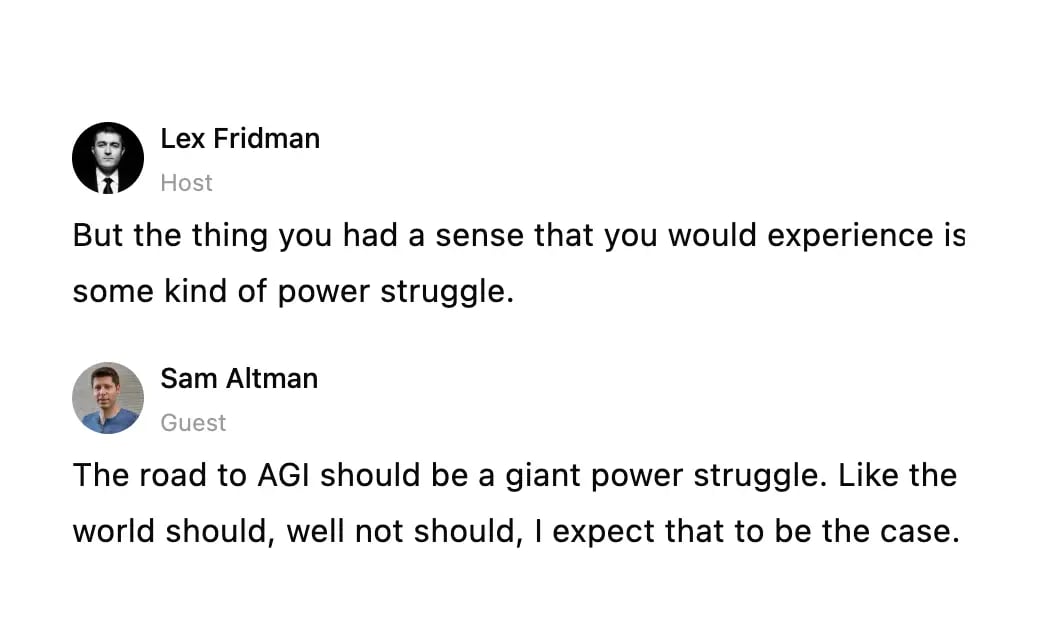
Detección de hablantes
Identifica automáticamente diferentes hablantes en tus grabaciones y etiquétalos con sus nombres.
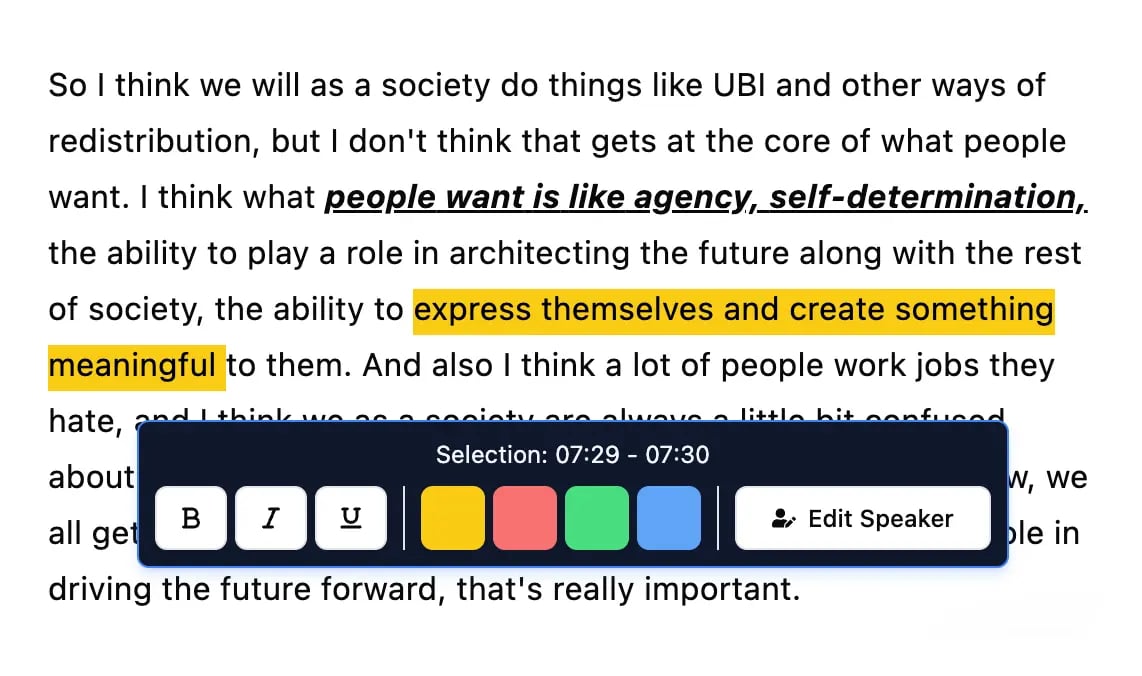
Herramientas de edición
Edita transcripciones con herramientas potentes como buscar y reemplazar, asignación de hablantes, formatos de texto enriquecido y resaltado.
Resúmenes y Chatbot
Genera resúmenes y otros análisis de tu transcripción, prompts personalizados reutilizables y chatbot para tu contenido.
Cómo Funciona en la Práctica
- Bufetes de Abogados: Un bufete puede cargar y transcribir todas las deposiciones, reuniones y llamadas de casos de clientes. Esto crea una biblioteca segura y con capacidad de búsqueda donde los asistentes legales y los abogados pueden encontrar instantáneamente menciones de detalles específicos del caso o precedentes sin revisar horas de grabaciones.
- Agencias de Marketing: Una agencia puede construir una base de conocimientos a partir de todas las llamadas de inicio de clientes, sesiones de estrategia y resúmenes de campañas. Al iniciar un nuevo proyecto, los miembros del equipo pueden buscar en el archivo información de clientes pasados similares, acelerando la investigación y mejorando la estrategia.
Idea Clave: Su colección de contenido hablado es una mina de oro de inteligencia organizacional. Al hacerla centralmente buscable, desbloquea su valor y permite a su equipo encontrar respuestas e información bajo demanda, reduciendo el trabajo redundante.
Consejos Prácticos para la Implementación
Para construir una base de conocimientos eficaz, siga estos pasos:
- Establezca una Estructura Clara de Carpetas: Organice su espacio de trabajo con una jerarquía lógica que refleje los departamentos, proyectos o clientes de su empresa. Una estructura limpia es la base de un sistema utilizable.
- Utilice Convenciones de Nomenclatura Consistentes: Implemente un formato de nomenclatura estandarizado (por ejemplo, "AAAA-MM-DD_NombreProyecto_TipoReunión") para todos los archivos. Esto hace que el contenido sea fácilmente identificable y clasificable de un vistazo.
- Aproveche Metadatos y Etiquetas: Agregue etiquetas relevantes a cada transcripción para temas, oradores o iniciativas específicas. Esto proporciona otra capa de capacidad de búsqueda más allá del texto transcrito en sí.
- Establezca Permisos de Acceso: Utilice una herramienta como Transcript.LOL para configurar permisos basados en roles, asegurando que la información confidencial solo sea accesible para los miembros autorizados del equipo.
10. Integre Transcripciones con Chatbots de IA y Herramientas de Contenido para la Distribución de Contenido a Escala
Una de las mejores prácticas más avanzadas para la creación de contenido implica transformar su transcripción en una fuente de datos dinámica que impulse otros sistemas de IA. En lugar de simplemente usar transcripciones para la reutilización, este método alimenta el texto en chatbots de IA, flujos de trabajo automatizados y otras herramientas de contenido. Esto crea un ecosistema de contenido interconectado donde su grabación original puede potenciar el soporte al cliente, generar materiales educativos y distribuirse a escala.
Esta estrategia amplifica el valor de cada pieza de contenido al convertirla en un activo operativo y activo. Al integrar datos de transcripción con herramientas como Zapier o al entrenar modelos de IA personalizados, puede automatizar tareas que alguna vez requirieron un esfuerzo manual significativo. Se trata de construir un sistema donde la distribución y la utilidad del contenido se expandan exponencialmente con cada nueva grabación que cree.
Cómo Funciona en la Práctica
- Plataformas Educativas: Un creador de cursos en línea puede transcribir conferencias en video y alimentar el texto a una herramienta de IA para generar automáticamente guías de estudio, tarjetas de memoria y cuestionarios. Esto agrega un valor inmenso para los estudiantes sin requerir trabajo adicional del instructor.
- Equipos de Soporte al Cliente: Una empresa puede usar transcripciones de llamadas de soporte para entrenar un chatbot de servicio al cliente. Este bot puede responder preguntas comunes con precisión, haciendo referencia a la base de conocimientos construida a partir de interacciones reales de clientes, lo que libera a los agentes humanos para problemas más complejos.
- Automatización de Marketing: Un anfitrión de podcast puede usar una herramienta como Transcript.LOL para generar indicaciones de chatbot y luego, a través de una integración de Zapier, enviar automáticamente resúmenes de episodios a su lista de correo electrónico, publicar citas clave en Twitter y crear borradores de publicaciones de blog en su CMS.
Idea Clave: El ciclo de vida de su contenido no termina con la publicación. Al integrar transcripciones con herramientas de IA, convierte el contenido pasivo en un motor activo de participación, educación y distribución automatizada en toda su presencia digital.
Consejos Prácticos para la Implementación
Para construir su propio ecosistema de contenido automatizado, siga estos pasos:
- Comience con Integraciones Simples: Utilice plataformas sin código como Zapier para conectar su servicio de transcripción con otras herramientas primero. Por ejemplo, cree un "Zap" que envíe resúmenes de nuevas transcripciones a un canal de Slack o los agregue a una Hoja de Google.
- Establezca Estándares de Calidad de Datos: Antes de entrenar un chatbot, asegúrese de que sus transcripciones sean limpias y precisas. Utilice un "conjunto de oro" de datos de transcripción verificados y de alta calidad para establecer una línea de base de rendimiento para su IA.
- Cree Indicaciones Específicas para Casos de Uso: Genere diferentes indicaciones de chatbot para diferentes objetivos. Una indicación para un bot enfocado en ventas debe ser diferente de una diseñada para soporte técnico o descubrimiento de contenido.
- Monitoree y Refine: Revise regularmente las respuestas de su chatbot y las automatizaciones de flujo de trabajo. Utilice los datos de rendimiento para identificar debilidades y refinar sus datos de entrenamiento o las reglas de Zapier para mejorar la precisión y la efectividad.
Comparación de las 10 Mejores Prácticas de Creación de Contenido
| Práctica | 🔄 Complejidad de Implementación | ⚡ Requisitos de Recursos | 📊 Resultados Esperados (⭐) | 💡 Casos de Uso Ideales | ⭐ Ventajas Clave |
|---|---|---|---|---|---|
| Transcribir Primero, Editar Después: Aproveche la Transcripción de IA para una Base de Contenido Precisa | Bajo–Medio — transcripción automatizada, necesita revisión | Moderado — calidad de audio, tiempo del editor, vocabulario personalizado ocasional | Base de alta precisión para la reutilización; ⭐⭐⭐⭐ | Podcasters, creadores de video, profesionales que necesitan transcripciones rápidas | Rápida entrega, alta precisión de base, soporte por lotes, controles de privacidad |
| Reutilización de Contenido Multiformato: Transforme una Grabación en Múltiples Piezas de Contenido | Medio — requiere planificación del flujo de trabajo y plantillas | Moderado — tiempo de edición, plantillas/herramientas para formatos | Mayor producción y alcance de contenido; Aumento del ROI; ⭐⭐⭐⭐ | Especialistas en marketing de contenidos, anfitriones de webinars, educadores | Escala la producción, mejora el SEO, reutilización rentable |
| Implemente Detección y Etiquetado de Oradores para Claridad y Accesibilidad | Medio — autodetección + corrección manual | Bajo–Moderado — revisión para garantizar etiquetas precisas | Mejor legibilidad y accesibilidad; ⭐⭐⭐⭐ | Podcasts con múltiples oradores, transcripciones legales, entrevistas de investigación | Cumplimiento de accesibilidad, atribución precisa de citas, transcripciones más claras |
| Aproveche las Transcripciones para SEO y Capacidad de Búsqueda: Haga que el Contenido de Audio/Video sea Descubrible | Medio — publicar y optimizar transcripciones en el sitio | Moderado — edición, integración CMS, trabajo de SEO | Visibilidad y descubribilidad orgánica significativas; ⭐⭐⭐⭐⭐ | Podcasters, YouTubers, editores educativos | Mejora los rankings de búsqueda, enlace por marca de tiempo, captura de palabras clave de cola larga |
| Use Transcripciones para Contenido Accesible e Inclusivo: Llegue a Audiencias Más Amplias | Medio — producir transcripciones/subtítulos precisos y formateados | Moderado — edición, múltiples formatos de exportación, pruebas con tecnología de asistencia | Mayor alcance de audiencia y cumplimiento legal; ⭐⭐⭐⭐ | Plataformas de streaming, instituciones educativas, capacitación corporativa | Cumplimiento ADA/WCAG, inclusión, reducción del riesgo legal |
| Extraiga y Reutilice Puntos de Acción y Decisiones Clave de Grabaciones de Reuniones | Medio — depende de la claridad de la reunión y la configuración de la integración | Moderado — integración (Zapier/herramientas PM), revisión de los elementos extraídos | Mayor responsabilidad y ROI de las reuniones; ⭐⭐⭐⭐ | Equipos corporativos, gerentes de proyecto, equipos legales | Captura automática de tareas/propietarios, registros de decisiones buscables, listo para integración |
| Cree Resúmenes Optimizados para Palabras Clave para Múltiples Niveles de Audiencia | Bajo–Medio — generar y luego refinar por tono/palabras clave | Bajo — edición y optimización ligera de SEO | Mayor participación; Niveles de consumo adaptados; ⭐⭐⭐⭐ | Resúmenes ejecutivos, resúmenes de investigación, destacados sociales | Múltiples formatos de audiencia, orientación por palabras clave, flujo de contenido de vista previa a completo |
| Establezca Flujos de Trabajo de Control de Calidad: Revise, Edite y Verifique Transcripciones Antes de Publicar | Medio–Alto — procesos y roles de revisión formales | Alto — revisores capacitados, tiempo, herramientas de colaboración | Garantiza la precisión y reduce el riesgo legal/reputacional; ⭐⭐⭐⭐ | Legal, salud, periodismo, sectores regulados | Mantiene la credibilidad, detecta errores técnicos, control de versiones |
| Construya una Base de Conocimientos Privada y Buscable a partir de Todo el Contenido Usando Espacios de Trabajo de Equipo | Alto — diseñar taxonomía, permisos y incorporación | Alto — organización inicial, mantenimiento continuo, controles de acceso | Conocimiento centralizado y recuperación más rápida; ⭐⭐⭐⭐ | Grandes organizaciones, bufetes de abogados, instituciones de investigación | Reduce silos, mejora la incorporación, preserva la memoria institucional |
| Integre Transcripciones con Chatbots de IA y Herramientas de Contenido para la Distribución de Contenido a Escala | Alto — integraciones técnicas y ingeniería de indicaciones | Alto — desarrollo, monitoreo, mantenimiento de integraciones | Distribución escalable y compromiso 24/7; ⭐⭐⭐⭐ | Plataformas de e-learning, soporte al cliente, automatización de marketing | Automatiza la distribución, habilita chatbots, escalado multicanal |
Construya su Motor de Contenido para el Mañana
El viaje desde una gran idea individual hasta una próspera biblioteca de contenido de alto impacto puede parecer abrumador. Como hemos explorado, el camino está pavimentado no con tácticas aisladas, sino con un sistema integrado e inteligente. Adoptar estas mejores prácticas de creación de contenido es más que una mejora operativa; es un cambio fundamental en cómo percibe, produce y propaga su mensaje. Se trata de construir un motor de contenido resiliente y escalable que no solo produce más, sino que produce de manera más inteligente.
En el corazón de este motor moderno se encuentra un principio simple pero transformador: la transcripción no es una ocurrencia tardía, sino la base. Al comenzar con una transcripción precisa generada por IA, desbloquea un universo de posibilidades que antes eran lentas o completamente inalcanzables. Pasa de un ciclo de producción lineal de "una vez y hecho" a un ecosistema dinámico e interconectado donde cada pieza de audio o video se convierte en una rica fuente de activos derivados.
Recapitulación de su Camino hacia la Excelencia en Contenido
Destilemos las estrategias centrales que hemos cubierto en una visión cohesiva para su flujo de trabajo. Esto no es solo una lista de verificación; es un plano para el crecimiento y la influencia sostenibles.
- La Base Primero: El método "Transcribir Primero, Editar Después" (Práctica #1) establece su grabación en bruto como un activo estructurado basado en texto. Este simple paso es el catalizador de todo lo que sigue, desde ediciones de video precisas hasta publicaciones de blog precisas.
- Valor Exponencial: La verdadera eficiencia proviene de la reutilización multiformato (Práctica #2). Un episodio de podcast no es solo un episodio; es una publicación de blog, una serie de clips de redes sociales, un boletín informativo por correo electrónico y un conjunto de citas perspicaces. Esto multiplica su alcance sin multiplicar su tiempo de grabación.
- Mejoras Centradas en la Audiencia: La implementación de la detección de oradores (Práctica #3) y la creación de contenido accesible (Práctica #5) no son solo características técnicas. Son actos de empatía, que hacen que su contenido sea más claro, más inclusivo y más valioso para una audiencia más amplia, incluidas aquellas con discapacidades auditivas.
- Descubrimiento y Conocimiento Interno: El aprovechamiento de las transcripciones para SEO (Práctica #4) hace que su contenido de audio y video sea descubrible por los motores de búsqueda, conectándolo con nuevas audiencias que buscan activamente su experiencia. Internamente, la construcción de una base de conocimientos con capacidad de búsqueda (Práctica #9) transforma su archivo de contenido de una unidad de almacenamiento pasiva a una biblioteca activa e inteligente para su equipo.
Al tejer estos hilos juntos, crea un poderoso volante. Una entrevista se convierte en un documento con capacidad de búsqueda. Una reunión de equipo se transforma en tareas procesables y un registro permanente (Práctica #6). Un seminario web complejo se destila en resúmenes optimizados para palabras clave para diferentes niveles de audiencia (Práctica #7). Esta es la esencia de una estrategia de contenido moderna: una que está interconectada, es eficiente y es infinitamente valiosa.
Sus Próximos Pasos Accionables: De la Teoría a la Práctica
Dominar estas mejores prácticas de creación de contenido no requiere una revisión completa de la noche a la mañana. La clave es comenzar poco a poco y generar impulso. Elija una o dos prácticas que tendrán el mayor impacto inmediato en su flujo de trabajo.
Por ejemplo, comience transcribiendo su próximo video o episodio de podcast. Utilice esa transcripción para escribir una publicación de blog detallada y extraiga tres citas clave para las redes sociales. Una vez que experimente el ahorro de tiempo y el alcance ampliado de ese único esfuerzo, la integración de la siguiente práctica, como el establecimiento de un flujo de trabajo de control de calidad (Práctica #8), se sentirá como una evolución natural y necesaria.
El objetivo final es construir un sistema donde la creación de contenido multiformato de alta calidad sea la norma, no la excepción. Se trata de crear un flujo de trabajo que anticipe sus necesidades, automatice lo tedioso y le permita concentrarse en lo que hace mejor: compartir su voz y visión únicas con el mundo.
Al adoptar estas herramientas impulsadas por IA y marcos estratégicos, no solo se mantiene al día con las tendencias; está construyendo el motor de contenido que impulsará su crecimiento durante años.
Las operaciones de contenido impulsadas por IA son ahora el estándar
Equipos de todas partes están reemplazando las notas manuales con transcripciones y resúmenes automatizados. Lo que antes llevaba horas, ahora lleva minutos. Los primeros en adoptar obtienen una ventaja de velocidad masiva.
¿Listo para sentar las bases de tu nuevo motor de contenido? Transcript.LOL proporciona la transcripción de IA rápida, precisa y segura que necesitas para implementar estas mejores prácticas de creación de contenido hoy mismo. Transforma tu audio y video en texto procesable y desbloquea todo el potencial de cada grabación en Transcript.LOL.