
8 Wesentliche Vorlagen für Besprechungsprotokolle mit Aktionspunkten...
Entdecken Sie 8 von Experten genehmigte Vorlagen für Besprechungsprotokolle mit Aktionspunkten für jedes Szenario. Optimieren Sie Ihren Prozess und fördern Sie die Verantwortlichkeit noch heute.
Kate, Praveen
April 9, 2025
Meetings können entweder mächtige Treiber des Fortschritts oder Produktivitäts-Schwarze Löcher sein. Der Unterschied liegt oft in einem kritischen Dokument: dem Besprechungsprotokoll. Aber nicht irgendwelche Notizen reichen aus. Um Diskussionen wirklich in greifbare Ergebnisse zu verwandeln, benötigen Sie ein klares, strukturiertes System zur Erfassung von Entscheidungen und, am wichtigsten, zur Zuweisung umsetzbarer nächster Schritte. Ohne dies stocken Gespräche und das Momentum geht verloren.
Dieser Leitfaden geht über generische Vorlagen hinaus, um eine strategische Aufschlüsselung dessen zu bieten, was Besprechungsdokumentationen effektiv macht. Wir werden acht verschiedene Muster für Besprechungsprotokolle mit Aktionspunkten zerlegen, die jeweils für spezifische Szenarien von agilen Scrums bis hin zu formellen Vorstandssitzungen maßgeschneidert sind. Für jedes Beispiel finden Sie eine tiefgehende Analyse seiner Struktur, taktische Einblicke zur Implementierung und replizierbare Strategien, um sicherzustellen, dass jede Besprechung mit Klarheit und Verantwortlichkeit endet.
Sie lernen nicht nur was Sie schreiben sollen, sondern warum ein bestimmtes Format funktioniert und wie Sie es an die spezifischen Bedürfnisse Ihres Teams anpassen können. Wir behandeln alles, von grundlegenden Team-Synchronisationen bis hin zu komplexen Projektmanagement-Frameworks. Vergessen Sie Protokolle, die abgelegt und vergessen werden; dies ist Ihre Blaupause für die Erstellung von Dokumenten, die Schwung aufbauen und Projekte vorantreiben.
Funktionen, die Besprechungsprotokolle in Aktionen verwandeln
Modernste KI
Angetrieben von OpenAIs Whisper für branchenführende Genauigkeit. Unterstützung für benutzerdefinierte Vokabulare, bis zu 10 Stunden lange Dateien und ultraschnelle Ergebnisse.

Aus mehreren Quellen importieren
Importiere Audio- und Videodateien aus verschiedenen Quellen, einschließlich direktem Upload, Google Drive, Dropbox, URLs, Zoom und mehr.
Sprechererkennung
Identifiziere automatisch verschiedene Sprecher in deinen Aufnahmen und beschrifte sie mit ihren Namen.
Lassen Sie uns die perfekte Vorlage finden, um die Effektivität Ihres Teams zu steigern.
1. Grundlegende Besprechungsprotokollvorlage mit Aktionspunkten
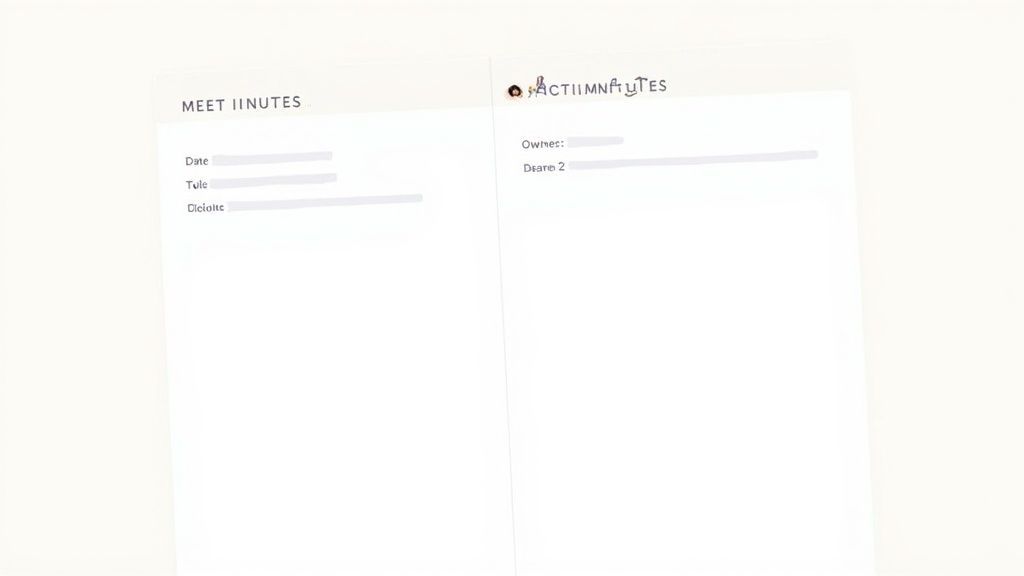
Die grundlegende Vorlage für eine effektive Besprechungsdokumentation ist das Grundlegende Besprechungsprotokoll mit Aktionspunkten. Dieses universell einsetzbare Format dient als Rückgrat für nahezu jede andere spezialisierte Vorlage. Es konzentriert sich auf die Erfassung des absolut Wesentlichen: Wer hat teilgenommen, was wurde besprochen, was wurde entschieden und wer ist für die nächsten Schritte verantwortlich. Seine Einfachheit ist seine Stärke und sorgt für Klarheit und Verantwortlichkeit ohne unnötige Komplexität.
Diese Struktur ist ideal für eine Vielzahl gängiger Geschäftsszenarien, vom wöchentlichen Stand-up eines kleinen Teams bis hin zu einem formellen Projekt-Kick-off-Meeting. Sie schafft eine klare, professionelle Aufzeichnung, die Missverständnisse vermeidet und den Schwung aufrechterhält. Die Kernkomponenten umfassen Besprechungsdetails (Datum, Uhrzeit, Teilnehmer), eine Liste der besprochenen Tagesordnungspunkte, die getroffenen wichtigsten Entscheidungen und eine separate Tabelle für Aktionspunkte.
Strategische Analyse: Das "Drei-D"-Framework
Diese Vorlage zeichnet sich aus, weil sie sich auf das konzentriert, was wir die "Drei D's" nennen: Diskussion, Entscheidung und Delegation.
- Diskussion: Das Protokoll fasst die wichtigsten Punkte für jeden Tagesordnungspunkt kurz zusammen und liefert Kontext, ohne das gesamte Gespräch zu transkribieren.
- Entscheidung: Jeder Diskussionspunkt endet mit einem klar formulierten Ergebnis oder einer Entscheidung. Dies beseitigt Unklarheiten über die Ergebnisse des Meetings.
- Delegation: Der Abschnitt Aktionspunkte verknüpft eine spezifische Aufgabe direkt mit einem einzelnen Verantwortlichen und einem Fälligkeitsdatum. Dies ist das kritischste Element, um Diskussionen in greifbare Fortschritte umzuwandeln.
Wichtige Erkenntnis: Die Stärke dieses Formats liegt in seiner handlungsorientierten Struktur. Indem allgemeine Notizen von spezifischen, zugewiesenen Aufgaben getrennt werden, entsteht eine sofortige Checkliste für die Produktivität nach dem Meeting.
Warum Aktionspunkte wichtiger sind als Notizen?
Besprechungsnotizen dokumentieren Gespräche, aber Aktionspunkte treiben die Ausführung voran. Ohne klare Zuständigkeit und Fristen scheitern selbst die besten Diskussionen daran, Ergebnisse zu erzielen. Starke Protokolle priorisieren immer „Wer macht was bis wann“.
Umsetzbare Erkenntnisse
Um die Effektivität dieser Besprechungsprotokoll-Vorlage mit Aktionspunkten zu maximieren, implementieren Sie die folgenden Taktiken:
- Echtzeit-Zuweisung: Warten Sie nicht bis nach dem Meeting. Weisen Sie Verantwortliche zu und bestätigen Sie Fälligkeitstermine live während der Diskussion, um sofortige Zustimmung und Klarheit zu gewährleisten.
- Konsistentes Format verwenden: Eine standardisierte Vorlage im gesamten Unternehmen erleichtert das Lesen und Nachschlagen von Protokollen. Detailliertere Formatierungsanleitungen finden Sie unter Erstellung des perfekten Besprechungsprotokoll-Formats mit Aktionspunkten.
- Zeitnahe Verteilung: Senden Sie die Protokolle innerhalb von 24 Stunden. Dies hält die Details frisch im Gedächtnis aller und verstärkt die Dringlichkeit der zugewiesenen Aktionspunkte.
- Offene Punkte verfolgen: Fügen Sie oben einen Abschnitt hinzu, um Aktionspunkte aus dem vorherigen Meeting zu überprüfen und sicherzustellen, dass nichts untergeht.
2. Harvard Business School Besprechungsprotokoll-Format
Für hochkarätige Besprechungen, bei denen Klarheit, Verantwortlichkeit und eine formelle Aufzeichnung von größter Bedeutung sind, setzt das Harvard Business School Besprechungsprotokoll-Format den Goldstandard. Diese strukturierte, professionelle Vorlage dient weniger der Erfassung von lockeren Gesprächen als vielmehr der Dokumentation strategischer Entscheidungen und ihrer direkten Folgen. Sie legt Wert auf Präzision und dient als offizielle Aufzeichnung für Governance und Compliance.
Dieses Format ist die bevorzugte Wahl für Sitzungen des Verwaltungsrats, Lenkungsausschüsse und wichtige strategische Planungsgespräche. Seine Stärke liegt in der Schaffung einer eindeutigen, überprüfbaren Spur von Entscheidungen, die auf höchster Ebene getroffen wurden. Die Kernkomponenten ähneln der Basisvorlage, jedoch mit einem stärkeren Fokus auf formelle Anträge, Abstimmungsprotokolle und die strategische Begründung hinter jeder Entscheidung.
Strategische Analyse: Das "R.A.D."-Framework
Diese Vorlage basiert auf dem "R.A.D."-Framework: Rationale (Begründung), Action (Aktion) und Documentation (Dokumentation).
- Rationale: Anstatt nur eine Entscheidung festzuhalten, verlangt dieses Format eine kurze Erklärung des Warum dahinter. Dies liefert wichtigen Kontext für zukünftige Referenzen und für Stakeholder, die nicht an der Besprechung teilgenommen haben.
- Action: Aktionspunkte werden nicht nur aufgelistet; sie werden oft priorisiert (z. B. hoch, mittel, niedrig) und können damit verbundene Risiken oder Ressourcenanforderungen enthalten, wodurch eine einfache Aufgabe zu einem Mini-Projektplan wird.
- Documentation: Die Protokolle selbst werden als formelles Unternehmensdokument behandelt. Sie sind für Archivierung, rechtliche Überprüfung und historische Referenz strukturiert und gewährleisten so ein langfristiges Organisationsgedächtnis.
Wichtige Erkenntnis: Dieses Format verwandelt Besprechungsprotokolle von einer einfachen Zusammenfassung in ein strategisches Governance-Tool. Durch die Dokumentation der Begründung und potenzieller Risiken zwingt es zu einem höheren Maß an kritischem Denken während des Entscheidungsprozesses selbst.
Umsetzbare Erkenntnisse
Um diese Besprechungsprotokoll-Vorlage mit Aktionspunkten effektiv zu implementieren, beachten Sie diese professionellen Taktiken:
- Dedizierten Protokollanten zuweisen: Die Rolle des Notiznehmers sollte während der Besprechung sein alleiniger Fokus sein. Diese Person sollte im Format geschult sein, um Konsistenz und Genauigkeit zu gewährleisten.
- Formelle Überprüfung und Genehmigung: Vor der Verteilung sollten die Protokolle vom Besprechungsleiter oder Moderator überprüft und genehmigt werden, um ihre Richtigkeit als offizielle Aufzeichnung zu bestätigen.
- Entscheidungen mit strategischen Zielen verknüpfen: Notieren Sie für jede dokumentierte Hauptentscheidung kurz, welches Unternehmensziel oder welches Schlüsselergebnis sie unterstützt. Dies verstärkt die strategische Ausrichtung.
- Methodisch archivieren: Richten Sie ein klares System für die Speicherung und den Abruf dieser Protokolle ein. Dies ist entscheidend für die Einhaltung gesetzlicher Vorschriften, Audits und die Einarbeitung zukünftiger Führungskräfte.
3. Agile/Scrum Besprechungsprotokoll-Vorlage
Für Teams, die in schnelllebigen, iterativen Umgebungen arbeiten, ist die Agile/Scrum Besprechungsprotokoll-Vorlage ein spezialisiertes Werkzeug zur Verfolgung des Fortschritts und zur Beseitigung von Hindernissen. Im Gegensatz zu traditionellen Vorlagen geht es bei diesem Format weniger um eine formelle Aufzeichnung als vielmehr um die Förderung einer schnellen, kontinuierlichen Verbesserung. Sie ist für Besprechungen wie tägliche Stand-ups, Sprint-Planungen und Retrospektiven konzipiert, bei denen der Fokus auf Dynamik und Anpassungsfähigkeit liegt.
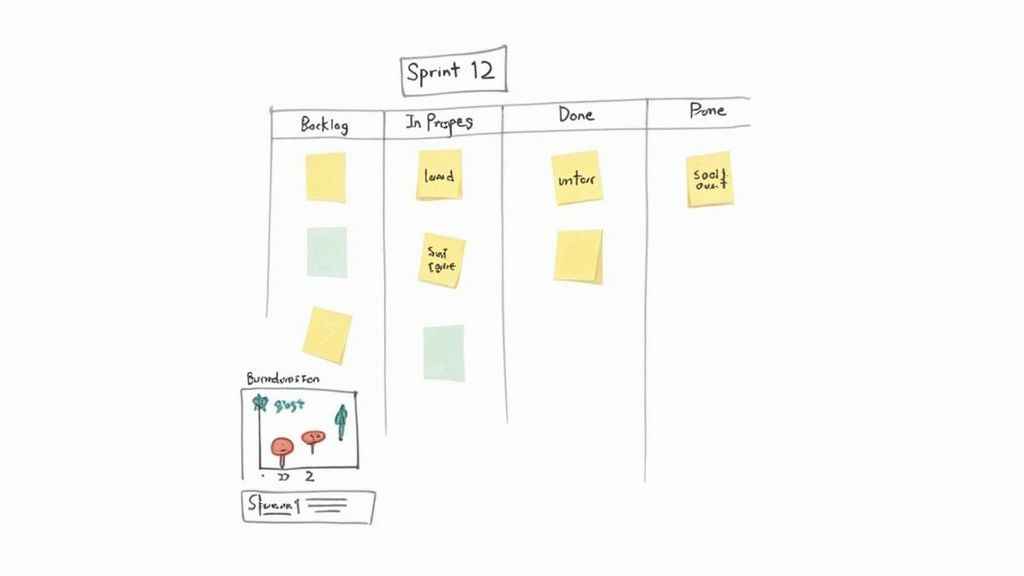
Diese Struktur priorisiert die Erfassung von Hindernissen (Blockern), Verpflichtungen für den aktuellen Arbeitszyklus (Sprint) und unmittelbare nächste Schritte. Sie verzichtet auf Formalitäten zugunsten der Funktion und lebt oft auf einem digitalen Whiteboard oder innerhalb eines Projektmanagement-Tools wie Jira. Ziel ist es, eine dynamische, gut sichtbare Aufzeichnung zu erstellen, die das Team auf Kurs und für seine Sprint-Ziele verantwortlich hält, was sie zu einer unverzichtbaren Besprechungsprotokoll-Vorlage mit Aktionspunkten für moderne Entwicklungs- und Projektteams macht.
Strategische Analyse: Das "Drei B's"-Framework
Diese Vorlage ist optimiert um das, was wir das "Drei B's"-Framework der agilen Ausführung nennen: Backlog (Rückstand), Blockers (Blocker) und Burndown (Fortschrittsverfolgung).
- Backlog: Die Protokolle beziehen sich direkt auf Elemente aus dem Produkt- oder Sprint-Backlog. Aktionspunkte sind oft mit spezifischen User Stories oder Aufgaben verknüpft, um sicherzustellen, dass jede Aktion zum definierten Umfang beiträgt.
- Blockers: Ein eigener Abschnitt für Hindernisse ist die wichtigste Komponente. Er kennzeichnet sofort Probleme, die den Fortschritt behindern, und weist einen Verantwortlichen zu, um sie zu lösen, was die Geschwindigkeit des Teams schützt.
- Burndown: Obwohl nicht immer schriftlich festgehalten, unterstützt die Vorlage das Konzept des Burndown (Verfolgung abgeschlossener Arbeit im Verhältnis zur Zeit). Aktionspunkte sind darauf ausgelegt, das Projekt auf seinem geplanten Kurs zum Sprint-Ziel zu halten.
Wichtige Erkenntnis: Der Wert dieser Vorlage liegt in ihrem Fokus auf Fluss und Beseitigung von Hindernissen. Sie behandelt Besprechungsprotokolle nicht als historische Dokumente, sondern als lebendiges Werkzeug zur Verwaltung des unmittelbaren Arbeitsablaufs und zur Aufrechterhaltung des Sprint-Schwungs.
Umsetzbare Erkenntnisse
Um dieses agile Format effektiv in den Prozess Ihres Teams zu integrieren, befolgen Sie diese Richtlinien:
- Blocker frühzeitig identifizieren: Machen Sie "Was blockiert Sie?" zu einer obligatorischen Frage in jedem Stand-up. Weisen Sie sofort einen Aktionspunkt zur "Blocker-Beseitigung" mit einem einzigen Verantwortlichen zu.
- Zeitlich begrenzt halten: Halten Sie sich strikt an Zeitlimits, insbesondere an die 15-Minuten-Regel für tägliche Stand-ups, um die Diskussion auf kritische Updates und Aktionen zu konzentrieren.
- Aktionen mit Aufgaben verknüpfen: Verknüpfen Sie jeden Aktionspunkt mit einer spezifischen User Story, einem Bug oder einer Aufgabe in Ihrem Projektmanagement-System. Dies bietet wichtigen Kontext und Rückverfolgbarkeit.
- Fortschritt visualisieren: Verwenden Sie ein physisches oder digitales Kanban-Board als visuelles Zentrum der Besprechung. Die Protokolle sollten die Bewegungen und Diskussionen widerspiegeln, die auf dem Board stattfinden.
4. Protokollvorlage für Vorstandssitzungen mit Governance-Vorlage
Für hochkarätige Governance-Besprechungen ist die Protokollvorlage für Vorstandssitzungen mit Governance-Vorlage das wesentliche, rechtlich einwandfreie Format. Diese Vorlage geht über die einfache Aufgabenverfolgung hinaus; sie erstellt eine offizielle, überprüfbare Aufzeichnung, die regulatorische Anforderungen, Erwartungen von Aktionären und Gesellschaftsrecht erfüllt. Ihre Hauptfunktion ist die Dokumentation formeller Anträge, Abstimmungen und Beschlüsse mit unerschütterlicher Genauigkeit und rechtlicher Präzision.
Diese Struktur ist für formelle Verfahren wie die vierteljährliche Sitzung des Verwaltungsrats, die jährliche Hauptversammlung der Aktionäre oder spezialisierte Ausschusssitzungen wie Audit- und Vergütungsausschüsse nicht verhandelbar. Das strenge Format der Vorlage stellt sicher, dass alle Entscheidungen formell festgehalten werden, und bietet so einen rechtlichen Schutzschild für das Unternehmen und seine Direktoren. Sie betont formelle Sprache, strikte Einhaltung parlamentarischer Verfahren (wie Robert's Rules of Order) und detaillierte Aufzeichnungen aller getroffenen offiziellen Maßnahmen.
Strategische Analyse: Das "Drei R's"-Framework
Diese Vorlage basiert auf einem Framework, das wir die "Drei R's" nennen: Record (Aufzeichnung), Resolution (Beschluss) und Ratification (Bestätigung).
- Record: Im Gegensatz zu informellen Notizen dokumentieren diese Protokolle offiziell die Anwesenheit, die Feststellung der Beschlussfähigkeit, erklärte Interessenkonflikte und die genaue Wortwahl von Anträgen.
- Resolution: Jede Hauptentscheidung wird als formeller Beschluss festgehalten. Dies beinhaltet den Namen der Person, die den Antrag gestellt hat, wer ihn unterstützt hat, und das Endergebnis der Abstimmung (dafür, dagegen, Enthaltungen).
- Ratification: Die Protokolle dienen als formelle Bestätigung der Handlungen des Vorstands. Nach der Genehmigung in einer nachfolgenden Sitzung werden sie zu einem permanenten und rechtlich bindenden Bestandteil der Unternehmensunterlagen.
Wichtige Erkenntnis: Diese Besprechungsprotokoll-Vorlage mit Aktionspunkten ist im Grunde ein juristisches Dokument, nicht nur ein Produktivitätswerkzeug. Ihr Wert liegt in der Schaffung einer eindeutigen, nachvollziehbaren Aufzeichnung der Governance, die das Unternehmen und seine Führung vor Haftung schützt.
Umsetzbare Erkenntnisse
Um diese auf Governance ausgerichtete Vorlage ordnungsgemäß auszuführen, befolgen Sie diese kritischen Schritte:
- Standardisierte Beschlussformulierungen verwenden: Arbeiten Sie mit Rechtsberatern zusammen, um vorab genehmigte Vorlagen für gängige Anträge und Beschlüsse zu erstellen, um Konsistenz und rechtliche Konformität zu gewährleisten.
- Abstimmungen präzise dokumentieren: Halten Sie das genaue Ergebnis jeder Abstimmung fest. Bei sensiblen Angelegenheiten kann es notwendig sein, festzuhalten, wie jeder einzelne Direktor abgestimmt hat.
- Rechtliche Überprüfung sicherstellen: Lassen Sie die Entwurfsfassung der Protokolle von der Rechtsabteilung des Unternehmens überprüfen, bevor sie endgültig erstellt und zur Genehmigung verteilt werden, insbesondere bei Besprechungen, die wichtige finanzielle oder rechtliche Entscheidungen betreffen.
- Sichere Archivierung pflegen: Bewahren Sie unterzeichnete Originalkopien an einem sicheren, feuerfesten Ort oder in einem zertifizierten digitalen Archiv auf. Diese Dokumente müssen gemäß den gesetzlichen Bestimmungen viele Jahre lang aufbewahrt werden.
5. Protokollvorlage für Kunden-/Stakeholder-Besprechungen
Bei Besprechungen mit externen Parteien wird die Protokollvorlage für Kunden-/Stakeholder-Besprechungen zu einem unverzichtbaren Werkzeug für das Beziehungsmanagement und die professionelle Dokumentation. Dieses Format wurde speziell entwickelt, um interne Aufzeichnungen mit externer Kommunikation in Einklang zu bringen und sicherzustellen, dass alle Parteien ein gemeinsames Verständnis von Erwartungen, Liefergegenständen und Entscheidungen haben. Es dient als formelle Aufzeichnung von Verpflichtungen und hilft, Scope Creep zu verhindern.
Diese Vorlage ist entscheidend für hochkarätige Interaktionen wie vierteljährliche Geschäftsüberprüfungen (QBRs), Kick-off-Meetings für Kundenprojekte oder Leistungsbewertungen von Lieferanten. Sie verlagert den Fokus von rein internen Aufgaben auf gemeinsam vereinbarte Ergebnisse und fördert Vertrauen und Klarheit. Die Struktur dokumentiert wichtige Diskussionen und Entscheidungen und rahmt Aktionspunkte als kollaborative nächste Schritte, was die Partnerschaft stärkt.
Strategische Analyse: Das "A-C-D"-Framework
Diese Vorlage basiert auf dem "A-C-D"-Framework: Alignment (Abstimmung), Commitment (Verpflichtung) und Documentation (Dokumentation).
- Alignment: Die Protokolle fassen Diskussionen zusammen, um zu bestätigen, dass beide Parteien auf Projektziele, Status und Herausforderungen abgestimmt sind. Sie übersetzt Gespräche in eine gemeinsame Perspektive.
- Commitment: Jede Entscheidung und jeder Aktionspunkt stellt eine formelle Verpflichtung dar. Die klare Dokumentation mit Verantwortlichen (von beiden Seiten) und Fälligkeitsterminen verwandelt mündliche Vereinbarungen in nachvollziehbare Aufgaben.
- Documentation: Die Protokolle dienen als offizielle Aufzeichnung für die Beziehung. Dies ist entscheidend für die Verfolgung des Projektfortschritts, die Verwaltung von Änderungen am Umfang und die Bezugnahme auf frühere Vereinbarungen.
Wichtige Erkenntnis: Im Gegensatz zu internen Protokollen ist diese Vorlage ein diplomatisches Dokument. Ihre Hauptfunktion ist der Aufbau von Vertrauen und die Aufrechterhaltung einer positiven, zukunftsorientierten Beziehung, indem eine einzige Quelle der Wahrheit geschaffen wird, die beide Parteien unterstützen können.
Umsetzbare Erkenntnisse
Um diese Besprechungsprotokoll-Vorlage mit Aktionspunkten effektiv in einem kundenorientierten Umfeld zu nutzen, wenden Sie diese Strategien an:
- Entwurf und Überprüfung: Senden Sie immer einen Entwurf der Protokolle zur Überprüfung und Genehmigung an den Kunden oder Stakeholder, bevor Sie sie finalisieren. Dieser kollaborative Schritt gewährleistet Genauigkeit und Zustimmung.
- Positive Sprache verwenden: Formulieren Sie Diskussionen und Aktionspunkte mit lösungsorientierter, positiver Sprache. Anstatt "Kunde meldete einen Fehler", verwenden Sie "Vereinbarte nächste Schritte zur Behebung des gemeldeten Problems".
- Alle Liefergegenstände klären: Seien Sie explizit darüber, was geliefert wird, von wem und wann. Dies ist besonders wichtig für die Dokumentation von Änderungen oder Ergänzungen zum ursprünglichen Leistungsumfang.
- Persönlich nachfassen: Ergänzen Sie die formellen Protokolle durch eine kurze, persönliche E-Mail oder einen Anruf. Dies stärkt die Beziehung und zeigt ein hohes Maß an Engagement und Sorgfalt. Weitere Informationen hierzu finden Sie in diesen Best Practices für die Protokollführung bei Besprechungen.
6. HR/Personal Besprechungsprotokoll-Vorlage
Bei der Behandlung sensibler Mitarbeiterangelegenheiten ist die HR/Personal Besprechungsprotokoll-Vorlage ein unverzichtbares Werkzeug. Dieses spezialisierte Format wurde entwickelt, um Diskussionen mit rechtlichen und persönlichen Auswirkungen zu dokumentieren, wie z. B. Leistungsbeurteilungen, disziplinarische Maßnahmen oder Genehmigungsanfragen. Es priorisiert Vertraulichkeit, sachliche Richtigkeit und die Einhaltung von Arbeitsgesetzen, um eine nachvollziehbare Aufzeichnung zu gewährleisten.
Diese Struktur ist entscheidend für jede Besprechung, bei der der Status, die Leistung oder die Rolle eines Mitarbeiters das zentrale Thema ist. Sie bietet einen formellen Rahmen, um nicht nur Entscheidungen, sondern auch deren Begründung und die Reaktion des Mitarbeiters festzuhalten. Die Schlüsselkomponenten umfassen Besprechungsdetails, eine klare Angabe des Zwecks, eine Zusammenfassung der Diskussion, die subjektive Sprache vermeidet, die Kommentare des Mitarbeiters und eine spezifische Reihe von Aktionspunkten oder nächsten Schritten sowohl für das Management als auch für den Mitarbeiter.
Strategische Analyse: Das "FACT"-Framework
Diese Vorlage basiert auf dem "FACT"-Framework, um sicherzustellen, dass die Dokumentation rechtlich einwandfrei und professionell gehandhabt wird: Factual (Sachlich), Acknowledged (Bestätigt), Confidential (Vertraulich) und Time-bound (Zeitgebunden).
- Factual: Die Protokolle müssen objektive Fakten und Verhaltensweisen aufzeichnen, nicht Meinungen oder Annahmen. Anstatt "schlechte Einstellung", dokumentieren Sie "war dreimal 15 Minuten zu spät".
- Acknowledged: Es ist entscheidend, einen Abschnitt aufzunehmen, in dem der Mitarbeiter seine Kommentare hinzufügen oder bestätigen kann, dass er die Informationen erhalten hat, auch wenn er damit nicht einverstanden ist.
- Confidential: Die Vorlage signalisiert inhärent, dass das Dokument vertraulich ist und die Verteilung streng auf wesentliches Personal beschränkt sein muss, um die Privatsphäre zu schützen und das rechtliche Risiko zu verringern.
- Time-bound: Alle Aktionspunkte, wie z. B. "Leistungsverbesserungsplan bis [Datum] abschließen", müssen klare Fristen haben, um einen formellen Zeitplan für die Lösung festzulegen.
Wichtige Erkenntnis: Diese Besprechungsprotokoll-Vorlage mit Aktionspunkten dient weniger dem Projektmanagement als vielmehr dem Risikomanagement. Ihre Hauptfunktion ist die Schaffung einer klaren, unvoreingenommenen Aufzeichnung, die das Unternehmen schützen und sicherstellen kann, dass der Mitarbeiter fair und konsistent gemäß Unternehmensrichtlinien und Gesetz behandelt wird.
Umsetzbare Erkenntnisse
Um die HR/Personal Besprechungsprotokoll-Vorlage effektiv zu nutzen, wenden Sie diese kritischen Praktiken an:
- Als vertraulich kennzeichnen: Kennzeichnen Sie das Dokument deutlich mit "Vertraulich" oben und in der Fußzeile, um seinen sensiblen Charakter zu unterstreichen.
- Verteilung einschränken: Teilen Sie die Protokolle nur mit Personen, die ein direktes und berechtigtes Bedürfnis haben, sie zu kennen, wie z. B. dem direkten Vorgesetzten des Mitarbeiters, dem HR-Vertreter und gegebenenfalls der Rechtsabteilung.
- Mitarbeiterreaktion dokumentieren: Bieten Sie immer einen Raum für den Mitarbeiter, um zu antworten oder seine Perspektive darzulegen. Dies ist ein entscheidender Schritt für Verfahrensgerechtigkeit.
- Sichere Speicherung und Aufbewahrung: Bewahren Sie diese Aufzeichnungen an einem sicheren, zugangskontrollierten Ort (wie einem dedizierten HRIS) auf und halten Sie die gesetzlichen Anforderungen für Aufbewahrungsfristen ein.
7. Projektmanagement Besprechungsprotokoll mit Gantt-Integration
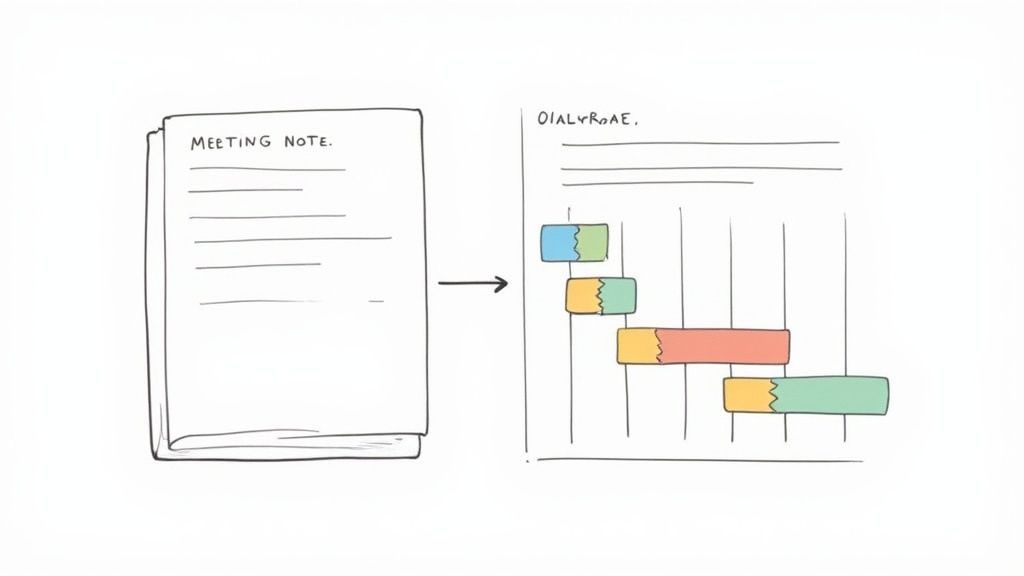
Für komplexe Initiativen hebt die Vorlage Projektmanagement Besprechungsprotokoll mit Gantt-Integration Standarddokumentationen in ein dynamisches Projektmanagement-Werkzeug. Dieses fortschrittliche Format verknüpft Besprechungsergebnisse und Aktionspunkte direkt mit einem visuellen Projektzeitplan, wie einem Gantt-Diagramm. Es wurde entwickelt, um Abhängigkeiten zu verwalten, Meilensteine zu verfolgen und die Abstimmung über mehrere Arbeitsströme hinweg aufrechtzuerhalten, was es für groß angelegte Projekte unverzichtbar macht.
Dieser Ansatz ist entscheidend für wöchentliche Projektstatusbesprechungen, Phase-Gate-Reviews und Lenkungsausschusssitzungen, bei denen der Fortschritt im Verhältnis zum Zeitplan von größter Bedeutung ist. Durch die Verknüpfung von Diskussionen und Entscheidungen mit spezifischen Projektliefergegenständen und Zeitplänen wird sichergestellt, dass jede Besprechung das Projekt auf messbare Weise vorantreibt. Die Kernkomponenten sind Standard-Besprechungsprotokolle, ergänzt durch einen direkten Verweis oder ein Update des Gantt-Diagramms des Projekts, das Risiken und Ressourcenbedarf kennzeichnet.
Strategische Analyse: Das "Timeline, Task, and Transparency"-Framework
Dieses Format ist leistungsstark, da es die "Drei T's" erzwingt: Timeline (Zeitplan), Task (Aufgabe) und Transparency (Transparenz).
- Timeline: Jeder Aktionspunkt wird auf seine Auswirkungen auf den Projektzeitplan hin bewertet. Diskussionen drehen sich um Meilensteine, Fristen und den kritischen Pfad.
- Task: Aktionspunkte sind nicht nur Aufgaben; sie sind direkt mit spezifischen Liefergegenständen oder Arbeitspaketen im Projektplan verknüpft, was ihren Zweck klärt.
- Transparency: Die Integration von Protokollen mit einem visuellen Werkzeug wie einem Gantt-Diagramm macht den Projektstatus, einschließlich Risiken und Verzögerungen, für alle Stakeholder sofort ersichtlich.
Wichtige Erkenntnis: Dieses Format verwandelt Besprechungsprotokolle von einer statischen Aufzeichnung in ein lebendiges Dokument, das das Projekt aktiv steuert. Es schließt die Lücke zwischen Diskussion und Ausführung, indem es den Projektzeitplan zum zentralen Punkt der Verantwortlichkeit macht.
Umsetzbare Erkenntnisse
Um diese Besprechungsprotokoll-Vorlage mit Aktionspunkten effektiv zu implementieren, beachten Sie diese Strategien:
- Aktionspunkte mit Liefergegenständen verknüpfen: Verknüpfen Sie jeden neuen Aktionspunkt explizit mit einer spezifischen Aufgaben-ID oder einem Meilenstein in Ihrer Projektmanagement-Software (z. B. MS Project, Smartsheet).
- Auswirkungen auf den kritischen Pfad kennzeichnen: Identifizieren und dokumentieren Sie während der Besprechung alle Aktionspunkte oder Entscheidungen, die den kritischen Pfad des Projekts beeinflussen könnten, und heben Sie sie zur sofortigen Beachtung hervor.
- Gantt-Diagramm nach der Besprechung aktualisieren: Der Projektmanager sollte das offizielle Gantt-Diagramm unmittelbar nach der Verteilung der Protokolle aktualisieren, um neue Zeitpläne, Ressourcenverschiebungen oder Abhängigkeiten widerzuspiegeln. Für komplexe Diskussionen kann die Verwendung der besten Transkriptionssoftware für Besprechungen dazu beitragen, dass bei diesem Prozess keine kritischen Details verloren gehen.
- Risiken im Verhältnis zum Zeitplan überprüfen: Widmen Sie einen Abschnitt der Protokolle der Dokumentation neuer Risiken und der Überprüfung bestehender Risiken, wobei insbesondere deren potenzielle Auswirkungen auf den Zeitplan hervorgehoben werden.
8. Virtuelle Besprechungsprotokoll-Vorlage (Hybrid/Remote-Format)
Der Wandel hin zu hybrider und Remote-Arbeit hat die Virtuelle Besprechungsprotokoll-Vorlage notwendig gemacht. Dieses moderne Format wurde speziell entwickelt, um die einzigartigen Herausforderungen verteilter Teams zu bewältigen, wie z. B. die Verwaltung von Aufzeichnungen, die Berücksichtigung asynchroner Teilnahme und die Verfolgung digitaler Interaktion. Es erweitert die traditionelle Vorlage um Elemente wie Links zu Aufzeichnungen, Zusammenfassungen von Chat-Protokollen und digitale Zeitstempel, was sie zu einem unverzichtbaren Werkzeug für die heutige Arbeitswelt macht.
Diese Struktur ist entscheidend für jedes Unternehmen mit verteilten Teammitgliedern, sei es für wöchentliche Remote-Stand-ups, All-Hands-Webinare oder kundenübergreifende Präsentationen über Zeitzonen hinweg. Sie stellt sicher, dass diejenigen, die nicht live teilnehmen konnten, den vollständigen Kontext erhalten und dass virtuell getroffene Entscheidungen präzise dokumentiert werden. Wichtige Ergänzungen sind die Zustimmung zur Aufzeichnung, Links zu digitalen Assets und klare Nachverfolgungsanweisungen für asynchrone Zuschauer.
Strategische Analyse: Das "Drei C's"-Framework
Diese Vorlage lebt davon, sich auf die "Drei C's" der Remote-Zusammenarbeit zu konzentrieren: Context (Kontext), Clarity (Klarheit) und Continuity (Kontinuität).
- Context: Durch die direkte Verknüpfung mit der Besprechungsaufzeichnung und die Einbeziehung von Zeitstempeln bieten die Protokolle einen beispiellosen Kontext. Teilnehmer können den genauen Moment wieder aufrufen, in dem eine Entscheidung getroffen wurde.
- Clarity: Sie zentralisiert alle besprechungsbezogenen Assets. Links zu geteilten Dokumenten, Chat-Transkripten und Präsentationsfolien sind enthalten und schaffen so eine einzige Quelle der Wahrheit.
- Continuity: Die Vorlage ist für asynchrone Arbeit konzipiert. Sie enthält Zusammenfassungen und klare Aktionspunkte, damit Teammitglieder in verschiedenen Zeitzonen beitragen und auf Kurs bleiben können, ohne live teilnehmen zu müssen.
Wichtige Erkenntnis: Der Wert der Vorlage liegt in ihrer Funktion als Multimedia-Archiv. Sie verwandelt die Protokolle von einem statischen Dokument in einen interaktiven Hub, der sowohl Echtzeit- als auch asynchrone Zusammenarbeit unterstützt, was ein Kennzeichen einer effektiven Besprechungsprotokoll-Vorlage mit Aktionspunkten ist.
Umsetzbare Erkenntnisse
Um die Effektivität dieser Remote-First-Vorlage zu maximieren, implementieren Sie die folgenden Taktiken:
- Alles mit Zeitstempel versehen: Notieren Sie während der Besprechung den Zeitstempel für wichtige Entscheidungen oder die Delegation von Aktionspunkten. Dies ermöglicht es jedem, der die Aufzeichnung überprüft, direkt zum relevanten Moment zu springen.
- KI-Tools nutzen: Verwenden Sie KI-gestützte Tools, um automatisch Transkripte und Zusammenfassungen zu erstellen. Viele Plattformen können sogar Aktionspunkte für Sie identifizieren. Um dies weiter zu vertiefen, erfahren Sie mehr darüber, wie ein KI-Notiznehmer für Zoom diesen Prozess optimieren kann.
- Klare Etikette festlegen: Um sicherzustellen, dass Ihre virtuellen Besprechungsprotokolle wirklich produktive Diskussionen erfassen, sollten Sie diese 10 kosmischen Regeln für virtuelle Besprechungen in Betracht ziehen.
- Eine TL;DR-Zusammenfassung einfügen: Fügen Sie oben einen Abschnitt "Zu lang; nicht gelesen" mit den wichtigsten Entscheidungen und Aktionspunkten für diejenigen hinzu, die ein schnelles Update benötigen, ohne das gesamte Dokument durchzulesen.
8-Vorlagenvergleich: Besprechungsprotokoll mit Aktionspunkten
| Vorlage | 🔄 Implementierungskomplexität | ⚡ Ressourcenanforderungen | 📊 Erwartete Ergebnisse | 💡 Ideale Anwendungsfälle | ⭐ Hauptvorteile |
|---|---|---|---|---|---|
| Basis Besprechungsprotokoll-Vorlage mit Aktionspunkten | Gering 🔄 | Minimal – einfache Dokumente/Tabellenkalkulationen | 📊 Klare Aktionsverfolgung und Anwesenheitsliste | Kleine Team-Stand-ups, Abteilungsbesprechungen, Kick-offs | ⭐⭐ Einfach zu übernehmen; flexibel |
| Harvard Business School Besprechungsprotokoll-Format | Hoch 🔄🔄🔄 | Moderat–hoch – geschulter Notiznehmer, Überprüfungsworkflow | 📊 Formelle, verantwortliche, rechtlich einwandfreie Aufzeichnungen | Geschäftsleitungs-/Vorstandssitzungen, strategische Sitzungen | ⭐⭐⭐ Starke Verantwortlichkeit und Compliance |
| Agile/Scrum Besprechungsprotokoll-Vorlage | Mittel 🔄🔄 | Moderat – agile Tools/Integration (Jira, etc.) | 📊 Sprint-Fortschritt, Blockersichtbarkeit, kontinuierliche Verbesserung | Tägliche Scrums, Sprint-Planungen, Retrospektiven | ⭐⭐⭐ Iterationsfokussiert; schnelle Beseitigung von Hindernissen |
| Protokollvorlage für Vorstandssitzungen mit Governance-Vorlage | Sehr hoch 🔄🔄🔄 | Hoch – Expertise in Recht/Governance, sichere Speicherung | 📊 Umfassende Prüfspur; durchsetzbare Beschlüsse | Jährliche Hauptversammlungen, Audit-/Vergütungsausschüsse | ⭐⭐⭐ Rechtliche Konformität und Haftungsschutz |
| Protokollvorlage für Kunden-/Stakeholder-Besprechungen | Mittel 🔄🔄 | Moderat – Überprüfungszyklen, polierte, extern vorbereitete Dokumente | 📊 Klare Erwartungen, reduzierte Missverständnisse, verfolgte Liefergegenstände | Kunden-Kick-offs, QBRs, Lieferantenüberprüfungen | ⭐⭐ Stärkt Beziehungen; reduziert Scope Creep |
| HR/Personal Besprechungsprotokoll-Vorlage | Hoch 🔄🔄🔄 | Hoch – HR/rechtliche Überprüfung, strenge Vertraulichkeitskontrollen | 📊 Rechtlich konforme Personalakten; dokumentierte Entscheidungen | Leistungsbeurteilungen, disziplinarische oder Kündigungsgespräche | ⭐⭐⭐ Schützt Mitarbeiter/Arbeitgeber rechtlich; Compliance |
| Projektmanagement Besprechungsprotokoll mit Gantt-Integration | Hoch 🔄🔄🔄 | Hoch – PM-Software-Integration (MS Project, Smartsheet), PM-Expertise | 📊 Abgestimmter Zeitplan, verfolgte Abhängigkeiten, Risikosichtbarkeit | Wöchentliche Projektstatus, Phase Gates, Lenkungsausschüsse | ⭐⭐⭐ Verbessert Zeitplanabstimmung und Stakeholder-Sichtbarkeit |
| Virtuelle Besprechungsprotokoll-Vorlage (Hybrid/Remote-Format) | Mittel 🔄🔄 | Moderat – Aufnahme-/Transkriptionswerkzeuge, Speicherung, Datenschutz | 📊 Zugängliche Transkripte, asynchrone Teilnahme, durchsuchbare Aufzeichnungen | Verteilt Stand-ups, All-Hands, zeitübergreifende Updates | ⭐⭐ Verbessert Zugänglichkeit und Remote-Zusammenarbeit |
Von Vorlagen zur Aktion: Optimieren Sie Ihren Besprechungs-Workflow
Wir haben eine umfassende Sammlung von Besprechungsprotokoll-Vorlagen mit Aktionspunkten durchlaufen, von der einfachen Basisvorlage bis hin zum auf Governance ausgerichteten Vorstandssitzungsprotokoll und der dynamischen Agile/Scrum-Struktur. Die zugrunde liegende Botschaft ist klar: Der Einheitsansatz bei der Besprechungsdokumentation ist veraltet. Die wahre Kraft liegt in der Auswahl und Anpassung einer Vorlage, die den spezifischen Zweck, das Publikum und die gewünschten Ergebnisse der Besprechung widerspiegelt.
Die Wahl der richtigen Vorlage beginnt mit der Art der Besprechung
Interne Team-Besprechungen
Am besten geeignet für einfache oder agile Vorlagen. Konzentrieren Sie sich auf schnelle Updates, Blocker und klar zugewiesene nächste Schritte, um den Schwung des Teams aufrechtzuerhalten.
Vorstands- und Geschäftsführungsbesprechungen
Erfordern formelle, strukturierte Protokolle mit dokumentierten Entscheidungen, Abstimmungsergebnissen und strategischen Begründungen für Governance und Compliance.
Kunden- und Stakeholder-Besprechungen
Benötigen polierte, teilbare Protokolle, die Ausrichtung, Verpflichtungen und Liefergegenstände bestätigen und gleichzeitig Beziehungen schützen.
Projekt- und Programmüberprüfungen
Funktionieren am besten mit zeitleistenbezogenen Protokollen, die Aktionspunkte mit Meilensteinen, Abhängigkeiten und Risiken verbinden.
Die Wahl des richtigen Frameworks ist Ihr erster strategischer Schritt. Ein Meeting mit einem Kunden erfordert ein anderes Detailniveau und einen anderen Ton als ein internes Projekt-Sync. Ebenso erfordert die formelle, rechtlich bindende Natur von Protokollen für Vorstandssitzungen eine weitaus starrere Struktur als eine kreative Brainstorming-Sitzung. Ihre Wahl der Vorlage ebnet den Weg für Klarheit, Verantwortlichkeit und effiziente Nachverfolgung.
Synthese der Kernstrategien
Über alle Beispiele hinweg traten einige universelle Wahrheiten zutage. Effektive Meeting-Protokolle sind nicht nur eine Aufzeichnung dessen, was gesagt wurde; sie sind ein Bauplan für das, was als Nächstes kommt. Sie wandeln Gespräch in Verpflichtung um, indem sie Verantwortlichkeiten und Fristen klar definieren.
- Klarheit vor Quantität: Die besten Protokolle sind prägnant. Sie filtern Gesprächsgeräusche heraus, um wichtige Entscheidungen, kritische Erkenntnisse und vor allem umsetzbare Aufgaben hervorzuheben.
- Verantwortlichkeit ist nicht verhandelbar: Jeder Aktionspunkt muss einen designierten Verantwortlichen haben. Die Formulierung "das Team wird..." ist ein Rezept für Untätigkeit. Die Zuweisung eines spezifischen Namens schafft eine direkte Verantwortlichkeitslinie.
- Fristen treiben den Schwung: Ein Aktionspunkt ohne Fälligkeitsdatum ist lediglich ein Vorschlag. Das Anhängen eines spezifischen Zeitplans wandelt eine vage Absicht in eine messbare Verpflichtung um und schafft Dringlichkeit und einen klaren Zeitplan für die Nachverfolgung.
Die versteckten Kosten vager Aktionspunkte
Nicht zugewiesene oder undatierte Aufgaben töten lautlos den Schwung. Wenn die Zuständigkeit unklar ist, verschwinden Nachverfolgungen, die Verantwortlichkeit schwindet und die Besprechungen verlieren mit der Zeit an Glaubwürdigkeit.
Jenseits der manuellen Notizen
Der wahre Wert der Beherrschung von Besprechungsprotokollen ist der Wettbewerbsvorteil, den sie bietet. Es geht darum, Projektzeitpläne zu beschleunigen, Kundenbeziehungen zu stärken, die Einhaltung von Vorschriften sicherzustellen und eine Kultur der Ausführung zu fördern. Wenn Besprechungen durchweg klare, umsetzbare Ergebnisse liefern, arbeitet das gesamte Unternehmen mit größerer Geschwindigkeit und Präzision. Hier werden moderne Arbeitsabläufe und Technologie zu unverzichtbaren Verbündeten.
Die bereitgestellten Beispiele sind Ihre grundlegenden Werkzeuge, aber ihre konsistente Implementierung kann zeitaufwendig sein. Der administrative Aufwand für das Transkribieren von Diskussionen, die Identifizierung von Sprechern und das manuelle Herausziehen von Aktionspunkten kann selbst die organisiertesten Fachleute ausbremsen.
Funktionen, die manuelle Besprechungsarbeit eliminieren
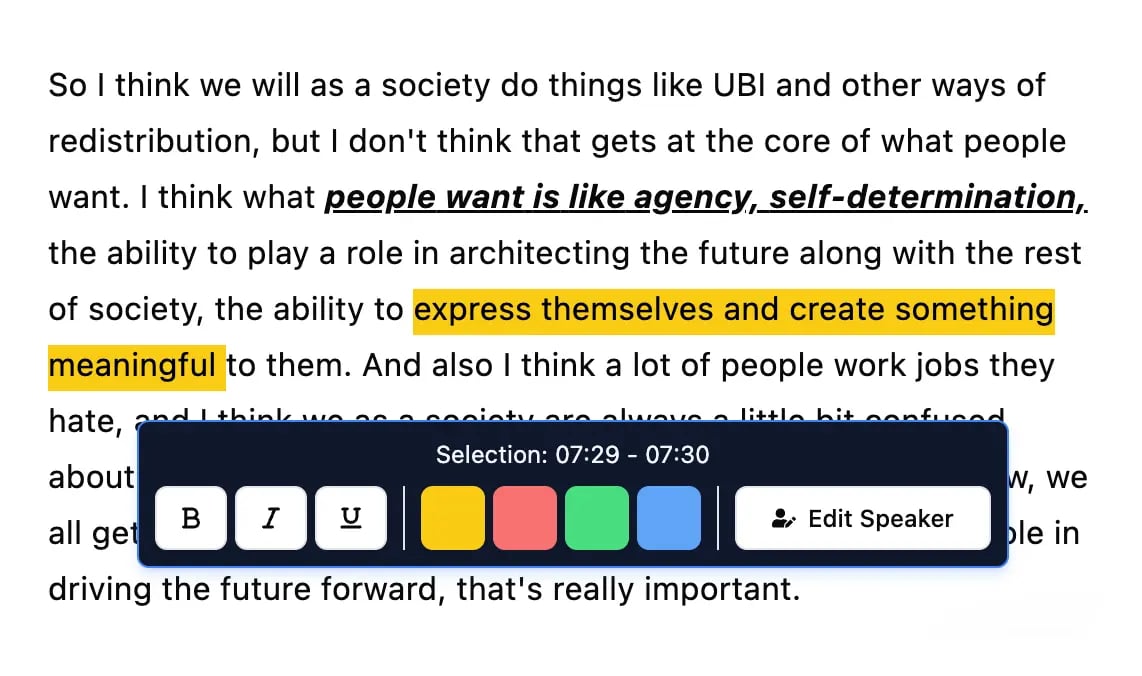
Bearbeitungswerkzeuge
Bearbeite Transkripte mit leistungsstarken Werkzeugen wie Suchen und Ersetzen, Sprecherzuordnung, Rich-Text-Formate und Hervorhebungen.
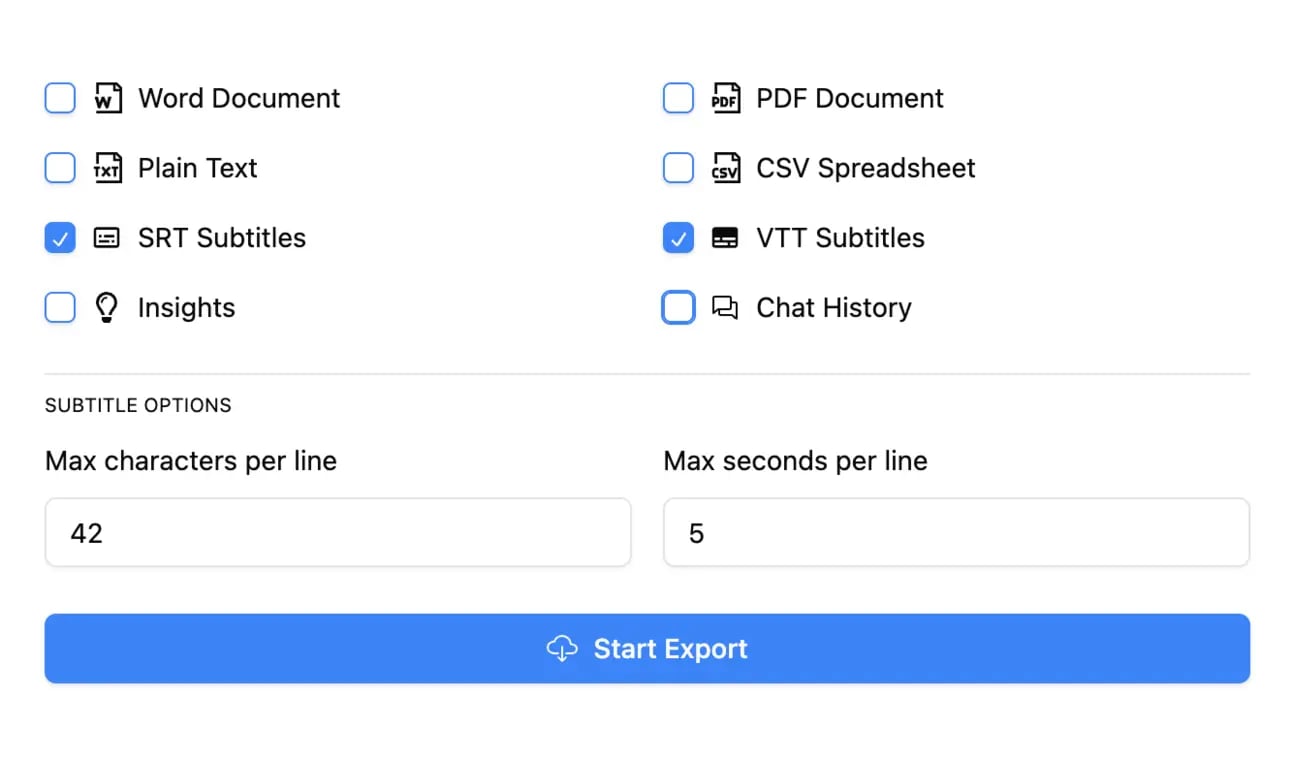
In mehreren Formaten exportieren
Exportiere deine Transkripte in mehreren Formaten, einschließlich TXT, DOCX, PDF, SRT und VTT mit anpassbaren Formatierungsoptionen.
Zusammenfassungen und Chatbot
Erstelle Zusammenfassungen und andere Erkenntnisse aus deinem Transkript, wiederverwendbare benutzerdefinierte Prompts und Chatbot für deine Inhalte.
Integrationen
Verbinde dich mit deinen bevorzugten Tools und Plattformen, um deinen Transkriptions-Workflow zu optimieren.
Dies ist der entscheidende Punkt, an dem Sie entweder mit manuellen Prozessen fortfahren oder Technologie nutzen können, um Ihren Arbeitsablauf zu automatisieren und zu verbessern. Die Integration eines leistungsstarken Tools, das die schwere Arbeit erledigt, ermöglicht es Ihnen, sich auf die strategischen Elemente der Besprechung selbst zu konzentrieren, anstatt sich in den Details der Dokumentation zu verlieren.
Durch die Kombination einer starken grundlegenden Vorlage für Besprechungsprotokolle mit Aktionspunkten mit intelligenter Automatisierung schließen Sie die Lücke zwischen Diskussion und Ausführung. Sie schaffen ein nahtloses System, das sicherstellt, dass keine kritische Aufgabe untergeht, und befähigt Ihr Team, mit Zuversicht und vereintem Zweck voranzukommen. So verwandeln Sie Besprechungen von einer notwendigen Pflicht in eine leistungsstarke Triebkraft für das Unternehmenswachstum.
Automatisieren Sie Ihre Besprechungsprotokolle, sofort
Transcript.LOL transkribiert automatisch Besprechungen, identifiziert Sprecher, extrahiert Aktionspunkte und generiert strukturierte Zusammenfassungen – damit Ihre Besprechungen zu Ausführung führen und nicht zu mehr Verwaltungsarbeit.
Sind Sie bereit, die manuelle Notiznahme zu eliminieren und sicherzustellen, dass jeder Aktionspunkt erfasst wird? Transcript.LOL verwendet KI, um Ihre Besprechungen zu transkribieren, wichtige Aufgaben zu identifizieren und automatisch strukturierte Zusammenfassungen zu generieren. Hören Sie auf, Notizen nachzujagen, und beginnen Sie, Ergebnisse zu erzielen, indem Sie Transcript.LOL besuchen, um Ihre Besprechungsproduktivität noch heute zu steigern.